Wildlife Removal in Fort Pierce, FL
Something thumps in the chimney at night, scratching carries through a bungalow wall, or a heavy snake is holding the shady side of the dock. Fort Pierce houses have a century of openings in them. Describe what you have found, and we will tell you honestly which animal it fits.
Why Fort Pierce homes see the wildlife they do
Fort Pierce is the county seat and calls itself the Sunrise City, and its layout still tells its history. The Army built a fort here in 1838; Henry Flagler's railroad arrived in 1893 and made it a shipping town; and in 1921 the cutting of the Fort Pierce Inlet gave it a deepwater port that still works today. Between downtown and the inlet, the Indian River Lagoon runs the length of the city — not a river at all, but a broad, shallow estuary whose mangrove edges, docks and seawalls form a wildlife corridor with street addresses on it.
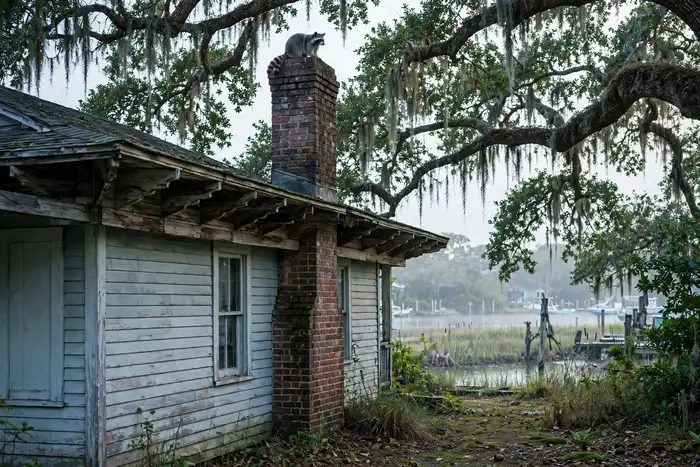
The housing that corridor serves is old by Florida standards. Near downtown stand restored 1920s bungalows and cottages from the railroad and citrus booms; beyond them, older rentals and mid-century blocks stretch toward White City and Fort Pierce South, and working citrus groves begin where the western streets end. Old construction fails in old ways: chimney crowns crack, wood soffits rot soft at the corners, houses sit up on pier foundations with crawlspaces underneath, and each detail is an animal entrance a newer slab home does not have.
We are licensed & insured, and the work is removal performed under FWC Rule 68A-9.010 with the property owner's authorisation. On a Fort Pierce job the inspection is half the craft, because the animal is usually exploiting a feature built before your grandparents were born — a flue never capped, a soffit caulked over instead of replaced, a crawlspace vent rusted out in some forgotten summer. Find the feature, deal with the animal, and repair the feature properly: that sequence is the whole service.
The lagoon and the inlet move everything
Stand on any lagoon-front street at dusk and the traffic is visible: raccoons working the seawall rocks, herons stalking the shallows, water snakes crossing between docks. The inlet concentrates it further — jetties, channel edges and the port waterfront give fish-eating animals a rich, narrow beat, and the residential streets behind the waterfront sit directly on that beat. A Fort Pierce home two blocks from the lagoon is, for wildlife purposes, a lagoon home, and its sealing has to account for the corridor.
An anatomy lesson in old-house openings
Chimneys come first here. Bungalows built for fireplaces that are now used twice a year — or fitted with inserts that left the original flue open — offer raccoons a vertical den and bats a warm stack to roost behind. Wood soffits come second: a decade of wet summers softens the corners until a rat or a squirrel pushes through what looks, from the ladder, like paint. Third are the crawlspaces under pier-and-beam floors, entered through vents and doors failing quietly for years. Our inspections run in exactly that order, because the calls do.
Citrus groves press on the western edge
Fort Pierce grew up shipping citrus, and groves still stand west of the city where the neighborhoods thin out. Grove-edge homes in and around White City inherit a particular pressure: roof rats that live in the grove canopy all year and commute into attics when fruit ripens or a grove is pushed, armadillos working the sandy grove margins, and snakes hunting the frogs and rodents the groves support. A house at the grove line needs its roofline sealed to a higher standard than a mid-city house — the supply of animals across the fence is agricultural, not hypothetical.
Storms, winter residents and houses that sit
Hurricane season, June through November, hits older housing hardest: a lifted shingle or a soffit torn loose on a 1920s roof is a new entrance cut in a night, and displaced animals try it within the week — which is why a pre-season exclusion pass in March, April or May is worth more here than on a new house. The second rhythm is seasonal occupancy. Winter residents and winter rentals fill from late fall; a house that sat closed through the humid summer can greet its people with an attic colony, a chimney tenant, or a smell in the crawlspace that nobody can ignore. Return inspections in October and November catch all three while they are still small jobs.
Wildlife we remove in Fort Pierce
From lagoon-front streets and the historic blocks downtown to grove-edge homes in White City, these are the ten calls Fort Pierce homeowners make to us most often.
🐀 Rodents
Roof rats — the fruit rat of the groves — travel from citrus canopy and lagoon-side palms into the wood soffits and attics of older Fort Pierce homes. Fine droppings in a bungalow attic are the classic first sign. Fort Pierce rodent removal
🦝 Raccoons
Fort Pierce raccoons specialize in chimneys: uncapped flues on 1920s houses make vertical dens a raccoon reads as a hollow tree. Heavy steps on the roof and soot-dark prints at the fireplace give the tenancy away. Fort Pierce raccoon removal
🦇 Bats
Brazilian free-tailed and evening bats roost in the attics and chimney gaps of the older housing stock and hunt insects over the lagoon. One-way exclusion only, and only between Aug 15 and Apr 15. Fort Pierce bat removal
🐿️ Squirrels
Gray squirrels own the live oaks over the historic streets and drop from them onto bungalow roofs with soft eaves. Morning noise overhead and a worked soffit corner are the usual report. Fort Pierce squirrel removal
🐾 Opossums
Crawlspace tenants under pier-foundation houses, porch sleepers near the lagoon, and wanderers off the grove edges. Gentle and seldom a rabies worry, but a den under a floor makes itself known. Fort Pierce opossum removal
🦔 Armadillos
On the big sandy lots of White City and Fort Pierce South, nine-banded armadillos dig burrows under porches and slabs and root up lawns after rain. Nonnative in Florida — which decides how removal must end. Fort Pierce armadillo removal
🐍 Snakes
Identification first: banded water snakes at the docks, racers in the rock and garden edges, and cottonmouths where fresh water meets the marsh. Most Fort Pierce snakes are harmless; we will tell you which yours is. Fort Pierce snake removal
🕊️ Dead animals
In an old house the hiding places are legion — a chimney flue, a wall over the fireplace, a crawlspace nobody has entered in years. We trace the odor, retrieve the animal, sanitize and close its route in. Fort Pierce dead animal removal
🐦 Birds
Muscovy ducks patrol the neighborhood ponds and lagoon parks, while pigeons gather on downtown ledges near the old theatre and starlings claim unscreened vents each spring. Physical exclusion and lawful duck work. Fort Pierce bird removal
🦎 Iguanas
Green iguanas are increasingly reported on Fort Pierce seawalls, docks and canal banks near the lagoon — a prohibited species, still thin on the ground this far north, and best removed while that is true. Fort Pierce iguana removal
Animal-specific help in Fort Pierce
Deep, local guides for the problems we get called about most — with our wildlife crew behind every one.
How to get help in Fort Pierce
Tell us what you're hearing
Scratching in the attic, a snake by the porch, holes in the yard — call with your problem and your Fort Pierce address.
We connect you locally
Call us and tell us about the job — we will confirm the local crew for your county before any work starts.
They solve it — for good
Inspection, humane removal, full exclusion and cleanup — handled by our wildlife crew, following Florida rules.
Common wildlife removal questions in Fort Pierce
Our house is a 1920s bungalow. Does its age change the wildlife work?+
What does the first visit involve, and what does it cost me?+
If you catch a raccoon, where does it go?+
We rent our house out in winter and it sits empty in summer. What should we watch for?+
A neighbor said he saw a skunk by the lagoon. Do you trap skunks?+
How is pricing figured for Fort Pierce wildlife work?+
Serving all of St. Lucie County
Fort Pierce is one part of St. Lucie County. See wildlife removal in St. Lucie County, FL for the county-wide picture — the animals we get called about most, and the other towns we cover.
One call to your Fort Pierce wildlife crew
Whether it's squirrels in an older in-town attic or a raccoon in a new subdivision crawlspace, the fastest fix is our wildlife crew, who knows St. Lucie County wildlife. Call us and tell us about the job — we will confirm the local crew for your county before any work starts.
- Local to St. Lucie County. FWC-compliant handling — call to ask about licensing and insurance.
- One company, one call. Call us and tell us about the job.
- Done right. Removal, exclusion and cleanup.