Wildlife Removal in St. Lucie County, FL
One county, two opposite cities: historic Fort Pierce on the inlet and fast-growing Port St. Lucie spread across the flatwoods below it. Call us and tell us about the job — we will confirm the local crew for St. Lucie County before any work starts.
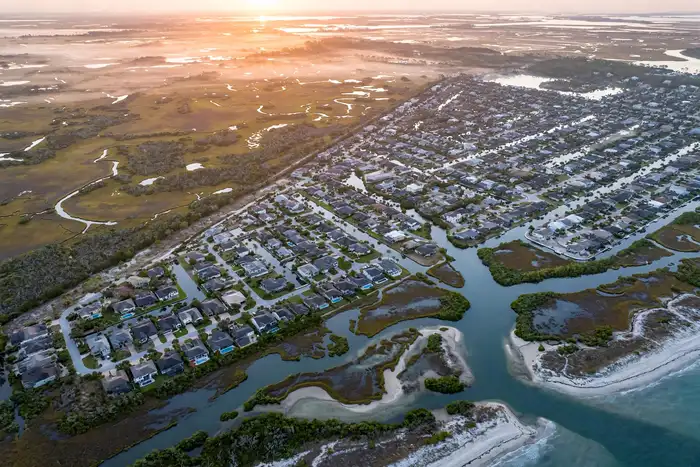
Why St. Lucie County homes see the wildlife they do
Fort Pierce, the Sunrise City, is the county's old pole: a settlement that grew from an 1838 fort, a Flagler railroad town from the 1890s, and a working city built around Fort Pierce Inlet and its deepwater port. Its housing runs from restored 1920s bungalows downtown to tired rentals and older blocks in White City and Indian River Estates, with a century of roof gaps and additions. The older city's calls are the classic ones: attics, chimneys, crawlspaces.
Port St. Lucie is the deliberate opposite. Incorporated in 1961 by the General Development Corporation on pine flatwoods, it grew into Florida's sixth-largest city on a grid of single-family lots — thousands of them scattered, no-HOA parcels still being built on today — layered with planned communities — St. Lucie West, Tradition, Riverland — and spring training at Clover Park. St. Lucie is the Treasure Coast's growth county, up more than twenty-two percent since 2020, larger than the other two counties combined, and the youngest of the three. Between the cities sit the Savannas Preserve marsh and the North Fork of the St. Lucie River, an aquatic preserve amid all that building.
Wildlife we remove in St. Lucie County
A century-old port city and a city still being built make a long list in St. Lucie County. These are the regulars.
🐀 Roof rats
Roof rats — also called fruit rats, palm rats and citrus rats here — are the county's highest-volume attic animal. In Port St. Lucie, building on scattered vacant lots pushes rats out of the flatwoods and into the newest roofs on the street. In Fort Pierce they run citrus ground and alleys into bungalow attics. Sealing one entry on a rat route is only a pause, so the inspection covers palms, canal banks and every soffit gap.
🦝 Raccoons
Raccoons den across the whole county: chimneys and torn soffits in Fort Pierce's older streets, attics in Port St. Lucie subdivisions, and anywhere a canal edge meets a roofline. A mother with kits in spring is the careful job, with every young animal accounted for before the den closes. Where a native animal is removed, Florida allows release on site, or within the same county onto 40 or more contiguous acres with written landowner permission, within 24 hours.
🦇 Bats
Brazilian free-tailed bats and evening bats roost in the barrel-tile roofs of new Port St. Lucie subdivisions and the tall attics of older Fort Pierce homes. Exclusion is the only method, fitted between August 15 and April 15. Maternity season, mid-April to mid-August, overlaps the start of hurricane season here, so the pattern is summer inspection and planning, then fall exclusion once the young are flying.
🦔 Armadillos
New subdivisions are armadillo ground. Fresh sod and soft new landscaping in Port St. Lucie's infill streets and planned communities draw armadillos in to dig for grubs; burrows appear under new slabs, pool cages and sidewalks. Armadillos are nonnative in Florida and are never relocated. Removal, plus filling burrows and screening gaps under structures, stops the pattern on a lot.
🐍 Snakes
Pond and canal landscaping puts snakes and people side by side. Most reports are the harmless banded water snake — mistaken for a cottonmouth more often than any other snake here. The venomous set is the cottonmouth, the eastern diamondback rattlesnake, the coral snake, and the small, secretive dusky pygmy rattlesnake, a real risk in landscaping near the Savannas Preserve. Nothing is handled on a guess.
🕊️ Dead animals
Dead-animal-in-the-wall is a high-volume call here, because so much housing is single-storey subdivisions where an animal that enters a soffit and cannot get out dies inside a bedroom wall. The smell localises to one room and worsens in the heat. The job is to pinpoint it, remove it, disinfect and seal the entry it used.
🦎 Iguanas
Iguanas in St. Lucie County are an emerging report, not an established population: animals are seen along canals and around docks in Fort Pierce and southern Port St. Lucie, and cold snaps still knock them back. Early calls are worthwhile — a few animals on a canal bank are a smaller job than a dug-in colony. Iguanas are nonnative and are never relocated or released once removed.
Wildlife removal by city in St. Lucie County
City-level guides for the places we get called about most in this county.
Common wildlife removal questions in St. Lucie County
Who do I call for wildlife removal in St. Lucie County?+
There is an alligator in our retention pond. Is that a removal call?+
Our house is brand new. Why are there already animals around it?+
How much does wildlife removal cost in St. Lucie County?+
One call to your St. Lucie County wildlife crew
Whether it's squirrels in an older in-town attic or an iguana burrowing under a seawall, the fastest fix is our wildlife crew, who knows St. Lucie County wildlife. Call us and tell us about the job — we will confirm the local crew for your county before any work starts.
- Local to St. Lucie County. FWC-compliant handling — call to ask about licensing and insurance.
- One company, one call. Call us and tell us about the job.
- Done right. Removal, exclusion and cleanup.