Raccoon Removal in Fort Pierce, FL
Thumps and chattering from the fireplace, soot-smudged prints on the hearth, a face looking down the flue at the damper. Fort Pierce chimneys are raccoon real estate. Call before anyone lights a fire or reaches for a damper — the order of operations matters here.
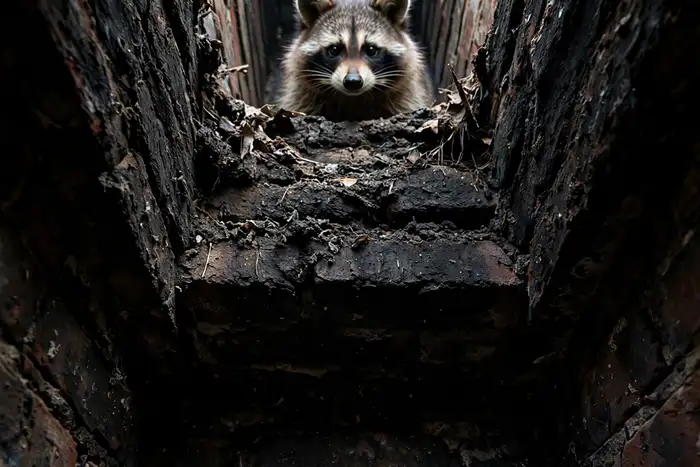
Raccoons in your Fort Pierce home
If Port St. Lucie raccoons belong to the canals, Fort Pierce raccoons belong to the chimney. The city's older housing is full of masonry flues built for daily fires and now used on a handful of cool nights — or not at all since an insert went in — and almost none of them wear caps. To a raccoon, an uncapped flue with a smoke shelf reads exactly like the hollow tree her ancestors denned in: vertical, dry, defensible, and warm from the house below.
The lagoon feeds these animals and the attics of the historic blocks shelter the overflow, so chimney work here travels with attic work. Raccoons are a rabies-vector species and powerful enough to dismantle casual repairs, which is why the handling is professional work performed under FWC Rule 68A-9.010 with the property owner's authorisation — and why every Fort Pierce raccoon plan ends in masonry, steel and a cap, not in hope.
Why this city produces chimney raccoons
Most Florida subdivisions built after air conditioning have no chimneys at all; Fort Pierce's older neighborhoods have them on street after street, many serving fireplaces sealed off or forgotten during renovations. Add a lagoon-side food supply and big roost trees, and each spring's mothers shop the flues like a row of ready dens. The pattern is so reliable that our spring inspections begin by counting uncapped chimneys on the block — a capped street is a quiet street.
Signs the flue is occupied
A denning raccoon announces herself through the fireplace: scratching and chattering from behind the damper, a musky odor on humid days, flies gathering at the hearth, and occasionally a sooty handprint where a youngster explored the firebox. On the roof, look for a dislodged or missing cap on the neighbor's flue and claw-worn shingles around your own. Any of these means one firm rule until we arrive — no fires, not even a small one to 'smoke it out,' which endangers the animals and the house alike.
Getting a family out of a vertical den
Kits are born on the smoke shelf, unable to climb the flue for their first weeks, so the method respects the mother's schedule: she leaves nightly to feed, and the removal is arranged around her absences and her ability to relocate the litter herself, with direct retrieval from the cleanout or damper where the flue's design allows. What never happens is a cap fitted over an occupied chimney — we verify emptiness from inside and out, in daylight and at dusk, before steel goes anywhere near the top.
Attics, eaves and the overflow dens
Not every Fort Pierce raccoon chooses a flue. Softened eaves on older homes get peeled back, and an attic over a garage in Fort Pierce South serves when the chimneys are taken. The sign is heavier than a squirrel's in every way — trampled insulation paths, a latrine corner, an entry you can fit a fist through. Attic jobs follow the same family-first sequencing, and the repair closes the eave in material that matches the house's age problem: sound wood and metal, not a patch over rot.
Latrines in old attics: cleanup with judgment
A raccoon that winters in an attic concentrates its droppings in one area, and in an old house that area often sits over a bedroom ceiling that has already been patched twice. The contaminated insulation needs to come out and the spot needs treating, because the droppings can carry parasite eggs that outlast the raccoon by years. We draw the boundary with you, in the attic, flashlight in hand — some Fort Pierce latrines are a few square feet, and the honest scope is the small one surprisingly often.
After the cap: living on a raccoon corridor
The lagoon is not moving, so the street's raccoons are a standing fact. What a proper job changes is your house's position in their ranking: flue capped in heavy-gauge material, crown cracks pointed up, eaves sound, trash carts latched, and no pet food on the back porch. A mother shopping the block next spring tests your chimney, finds steel, and takes the uncapped one two doors down — which is why we happily tell you which neighbor to warn.
Common raccoon questions in Fort Pierce
Can I light a fire to drive the raccoon out of the chimney?+
How do you get babies out of a chimney they cannot climb?+
Will a chimney cap really keep them out?+
Where will the raccoon family end up?+
What does raccoon removal cost in Fort Pierce?+
Other Fort Pierce problems that come with raccoons
Our wildlife crew handles these closely related problems — the ones that most often turn up with a raccoon issue.
Got more than raccoons in Fort Pierce?
Raccoons are rarely the only thing using an attic or yard in Fort Pierce. See everything we handle locally on the Fort Pierce wildlife removal hub, or jump to Florida wildlife removal.
Serving all of St. Lucie County
Fort Pierce is one part of St. Lucie County. See wildlife removal in St. Lucie County, FL for the county-wide picture — the animals we get called about most, and the other towns we cover.
One call to your Fort Pierce raccoon crew
The longer raccoons stay in the attic, the more they chew and the bigger the cleanup. Call us and tell us about the job — we will confirm the local crew for your county before any work starts.
- Local to St. Lucie County. FWC-compliant handling — call to ask about licensing and insurance.
- Humane exclusion. One-way doors and steel sealing, not poison.
- Done right. Removal, exclusion and cleanup.