Wildlife Removal in Vero Beach, FL
Scratching above the ceiling at dawn, droppings along the pool cage, or a snake you cannot name beside the canal — tell us what you are seeing on the mainland or the island, and we will walk through what it most likely is.
Why Vero Beach homes see the wildlife they do
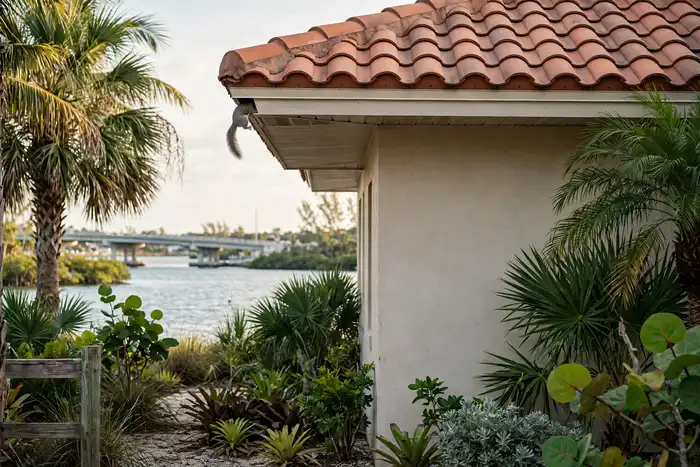
Vero Beach is really two towns stitched together by lagoon bridges. West of the water are the mainland streets, the county offices, and the neighbourhoods that mail as Vero even when their names say otherwise — Vero Beach South, Florida Ridge and the West Vero Corridor all search, shop and call as Vero Beach, which is why this page is written for that whole catchment and not only the small city boundary. East of the bridges is the barrier island: quiet lanes, deep lots, and homes built to face the ocean while their rooflines face the lagoon.
Wildlife reads that split as opportunity from both directions. The Indian River Lagoon feeds raccoons, opossums and wading birds along its mangrove edge, while the grove country to the west — the source of the legally recognised Indian River citrus appellation, grown in a lagoon-warmed microclimate on shell-rich soils — feeds roof rats, squirrels and armadillos. Even as citrus greening has shrunk the groves, the backyard grapefruit and orange trees that remain keep the rat calendar turning, and across the lagoon sits Pelican Island National Wildlife Refuge, established in 1903 as the first refuge of its kind in the country, a reminder that this shoreline was protected for wildlife long before it was built on.
Our work here is licensed & insured, and removal is performed under FWC Rule 68A-9.010 with the property owner's authorisation. The method does not change from Riomar to Florida Ridge: identify the animal correctly, remove it without cruelty, seal the opening it used in material that holds, and clean what it left. Green iguanas are only occasionally reported in Indian River County — report sightings to FWC's IveGot1 — so there is no iguana service promised on this page, only honest identification if you send a description.
A lagoon city, with wildlife arriving by water and by grove
Most Treasure Coast towns have one wild edge. Vero Beach has two that meet at the bridges. From the lagoon side come raccoons commuting out of the mangroves at dusk, opossums following the seawall shadows, and water snakes working the canal banks. From the west come animals raised on grove and hammock — roof rats in the citrus, armadillos rooting the sandy lawns, gray squirrels in the live oaks. A house near the river can receive visitors from both lists in the same week, which is why an inspection here checks the roofline, the dock side and the yard, not just the hole somebody noticed first.
Barrel tile, wood soffits and roofs built in another era
The island housing stock is beautiful and, from a bat's point of view, generous. Barrel-tile roofs in Riomar and the older island estates create cool, shadowed channels underneath the tiles where Brazilian free-tailed bats roost happily, and the ridge lines lift and shift a fraction with every storm season. On the mainland, many older homes still carry wood soffits and fascia that soften in the humidity, separate at the corners, and open exactly the slot a squirrel or roof rat needs. Add pool-cage rooflines, where the cage aluminium meets the house roof in a seam that is rarely sealed well, and Vero Beach attics are entered at the edges far more often than through dramatic holes in the middle of a roof.
The seasonal house: empty all summer, occupied all winter
Indian River County has the oldest population on this coast, and a large share of its homes sit empty through the hot months while their owners are north. An empty house is a quiet house, and quiet houses get tenants: rats in the attic, a raccoon testing the chimney, an opossum under the deck, with nobody home to hear the first week of it. The discovery usually happens in the October and November return — a smell, a stain, droppings in the garage. The counterpart matters just as much: a pre-departure seal in spring, soffits and vents checked before the house is closed, prevents most of those autumn surprises. Where lagoon-side properties are part of the area's ongoing septic-to-sewer conversion, we keep our work to the structure itself and leave that system to its own contractors.
Hurricane season rearranges the map every year
From June through November, storms do two things at once in Vero Beach: they tear at rooflines — lifting tiles, bending cage frames, cracking soffits — and they displace the animals that lived in the flooded hammocks and mangroves, sending them looking for high, dry shelter in the days after the wind. The practical season for prevention is March through May, before the storms, when exclusion work can be finished calmly and completely. After a storm, the order reverses: make the house safe, identify what moved in during the chaos, remove it, and only then rebuild the entry stronger than the weather found it.
Wildlife we remove in Vero Beach
From island estates to grove-edge streets on the mainland, these are the nine calls Vero Beach homeowners make to us most often.
🐀 Rodents
Roof rats — also called fruit rats, palm rats and citrus rats here — travel the palm fronds and citrus branches onto Vero Beach roofs and nest in attics above the pool cage. Droppings in the garage and gnawed fruit in the yard are the usual first evidence. Vero Beach rodent removal
🦝 Raccoons
Lagoon-fed raccoons den in mainland chimneys and island attics, raise litters in spring, and treat unlatched carts along the seawall streets as a nightly route. Strong hands make short work of thin vent covers, so the repair has to be stronger than the animal. Vero Beach raccoon removal
🦇 Bats
Brazilian free-tailed and evening bats roost under barrel tiles and behind lifted ridge caps, feeding over the lagoon at dusk. Exclusion uses one-way devices only, in the legal window outside maternity season, and bats are never harmed. Vero Beach bat removal
🐿️ Squirrels
Gray squirrels own the live-oak canopy on both sides of the bridges and drop onto roofs daily, chewing wood soffits to reach warm attics. Dawn and dusk noise overhead, plus shredded insulation at the eaves, is the classic Vero Beach report. Vero Beach squirrel removal
🐾 Opossums
Slow night foragers out of the lagoon hammocks that settle under island decks, in mainland garages and beneath pool equipment pads. Mild by temperament and unlikely to carry rabies, but a resident fouling a den still needs removing properly. Vero Beach opossum removal
🦔 Armadillos
Nine-banded armadillos root up sandy lawns and garden beds from Florida Ridge to the grove-edge streets, digging for grubs overnight and burrowing beside foundations and air-conditioning pads. The damage is read in the lawn at sunrise. Vero Beach armadillo removal
🐍 Snakes
Identification comes first here: harmless racers and rat snakes share this county with cottonmouths near the canals and the banded water snake that is so often mistaken for one. We name the snake before anyone decides what happens next. Vero Beach snake removal
🕊️ Dead animals
Florida heat and humidity make a carcass in a wall or attic impossible to ignore, and seasonal homes often reveal one on the owners' return in autumn. We locate the source, remove it, sanitise the void and seal the entry that admitted the animal. Vero Beach dead animal removal
🐦 Birds
Muscovy ducks gather on the ponds of Vero Beach's planned communities, while pigeons and starlings work the rooflines, vents and pool cages. The answer is exclusion — netting, spikes and vent caps — fitted to the building, not a short-lived scare. Vero Beach bird removal
Animal-specific help in Vero Beach
Deep, local guides for the problems we get called about most — with our wildlife crew behind every one.
How to get help in Vero Beach
Tell us what you're hearing
Scratching in the attic, a snake by the porch, holes in the yard — call with your problem and your Vero Beach address.
We connect you locally
Call us and tell us about the job — we will confirm the local crew for your county before any work starts.
They solve it — for good
Inspection, humane removal, full exclusion and cleanup — handled by our wildlife crew, following Florida rules.
Common wildlife removal questions in Vero Beach
Do you cover the island as well as mainland Vero Beach?+
What does the free inspection actually involve?+
Can a trapped raccoon or squirrel just be released across the county?+
I think I saw a skunk near the lagoon. Is that likely?+
We are heading north for the summer. How do we protect the empty house?+
How are you licensed for this work in Florida?+
Serving all of Indian River County
Vero Beach is one part of Indian River County. See wildlife removal in Indian River County, FL for the county-wide picture — the animals we get called about most, and the other towns we cover.
One call to your Vero Beach wildlife crew
Whether it's squirrels in an older in-town attic or a raccoon in a new subdivision crawlspace, the fastest fix is our wildlife crew, who knows Indian River County wildlife. Call us and tell us about the job — we will confirm the local crew for your county before any work starts.
- Local to Indian River County. FWC-compliant handling — call to ask about licensing and insurance.
- One company, one call. Call us and tell us about the job.
- Done right. Removal, exclusion and cleanup.