Wildlife Removal in Indian River County, FL
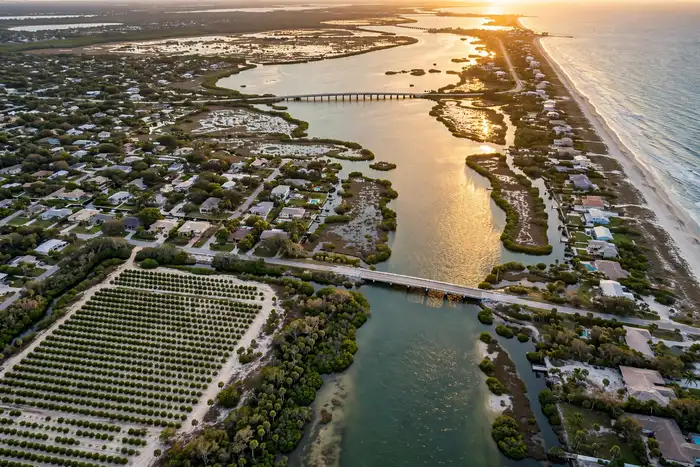
Citrus groves, a lagoon and a barrier island shape this county, from island homes in Vero Beach to river lots in Sebastian and farm ground around Fellsmere. Call us and tell us about the job — we will confirm the local crew for Indian River County before any work starts.
Why Indian River County homes see the wildlife they do
Indian River County is named for its water, but its land made its name first. “Indian River citrus” is a recognised district, built on a lagoon-warmed microclimate and shell-rich soils that produced famous grapefruit, and grove edges and old citrus trees still run through the housing as greening and development shrink the groves. Across the water lies the Indian River Lagoon — a 156-mile barrier-island estuary, not a river at all — with Pelican Island, the first National Wildlife Refuge in the country, set aside in 1903 off Sebastian.
Vero Beach splits between mainland streets and the island across the lagoon bridges, older homes on one side, condos and estates on the other. Sebastian, on the St. Sebastian River near Sebastian Inlet, is a fishing and river town of large, riverfront lots. Fellsmere, inland, is the opposite pole: agriculture, ranches and manufactured homes. This is also the oldest Treasure Coast county, with residents 65 and over at roughly 37 percent — many houses stand empty in summer while their owners are north, and an empty house here is an open invitation. Green iguanas are not established here; an occasional lagoon-side sighting is a report to FWC through IveGot1, not a removal call.
Wildlife we remove in Indian River County
Grove edges, lagoon water and older, seasonally empty housing write the Indian River County list. These are the regulars.
🐀 Roof rats
The county rat is the roof rat, called the fruit rat, palm rat or citrus rat locally. They live high — in palm crowns, citrus trees and attics — and older Vero Beach and Sebastian homes near grove ground offer all three in one yard. Vacant summer homes add a quieter route: dried-out drain traps can let rats up through the plumbing, so a house closed for months can show activity no roof gap explains.
🦝 Raccoons
Raccoons work the lagoon and grove edges and den in the warmest structure nearby: an attic over an island condo garage, a chimney in mainland Vero, a soffit in a Sebastian river house. In spring a mother raises kits inside, and the whole family is accounted for before any opening is closed.
🦇 Bats
Two bats roost in this county's buildings: the Brazilian free-tailed bat and the evening bat, hunting lagoon insects at dusk from roosts in barrel-tile roof voids, gable ends and attics in older homes. Bats are handled by exclusion only, and only from August 15 to April 15. From mid-April to mid-August, maternity colonies hold flightless young, and exclusion waits until the young are flying.
🐿️ Squirrels
Gray squirrels travel the oaks and palms over older Vero Beach streets and Sebastian's big lots, step onto the roof, and chew in at vents and eaves. Daytime attic noise is the classic report, and closing only the hole in use just moves a squirrel to the next soft board.
🦔 Armadillos
On the county's large lots — Fellsmere ranch ground, Florida Ridge, Vero Lake Estates — armadillos root up lawns, beds and soil along foundations, and dig burrows under slabs and pool decks. The digging is most of the damage, and a burrow can undermine a foundation over a season. Armadillos are nonnative in Florida and are never relocated; removal is the end of the job.
🐍 Snakes
Identification comes first on every river and preserve-edge call. The harmless banded water snake is the snake most often reported near docks and canals, and it is regularly mistaken for the venomous cottonmouth it resembles at a glance. The county's venomous set is the cottonmouth, the eastern diamondback rattlesnake, the small dusky pygmy rattlesnake and the coral snake. Identification is from a safe distance, and the gaps that let a snake indoors are sealed.
🕊️ Dead animals
This county's version of the call follows the snowbird calendar. An animal that got into a wall void or attic of a closed home is found by smell the week the owners return in the fall. The job is tracing it, removing it, disinfecting the spot and sealing the entry it used.
Wildlife removal by city in Indian River County
City-level guides for the places we get called about most in this county.
Common wildlife removal questions in Indian River County
Who do I call for wildlife removal in Indian River County?+
Can a raccoon trapped at my house be released out by a preserve?+
There is a large burrow in my yard. Could it be a gopher tortoise?+
How much does wildlife removal cost in Indian River County?+
One call to your Indian River County wildlife crew
Whether it's squirrels in an older in-town attic or an iguana burrowing under a seawall, the fastest fix is our wildlife crew, who knows Indian River County wildlife. Call us and tell us about the job — we will confirm the local crew for your county before any work starts.
- Local to Indian River County. FWC-compliant handling — call to ask about licensing and insurance.
- One company, one call. Call us and tell us about the job.
- Done right. Removal, exclusion and cleanup.