Rodent Removal in Vero Beach, FL
Gnawed grapefruit on the lawn, droppings along the pool-cage track, scratching that moves across the ceiling after dark. In Vero Beach that pattern has a name, and it is not a mouse. Describe the sign and we will confirm it.
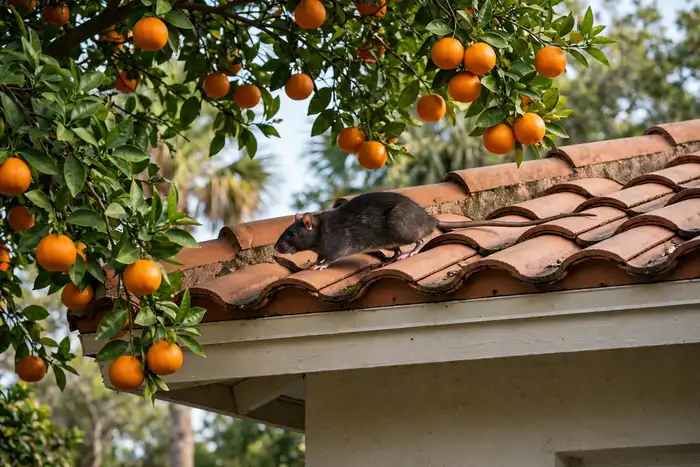
Rodents in your Vero Beach home
Ask a longtime Vero Beach gardener what is eating the grapefruit and you will hear three names for the same animal: roof rat, fruit rat, palm rat — citrus rat in the grove rows. It is one lean, climbing rat that lives the way squirrels do, in the canopy and the roof, and Indian River County was practically designed for it. Backyard citrus ripens from September through March, palms lean over rooflines in every neighbourhood from Riomar to Vero Beach South, and a warm attic waits at the end of every frond that touches a tile.
The house mouse plays only a minor part here, and the Norway rat is rare in this county's residential streets — a line we add because callers often arrive with a northern name for a Florida problem. The work that matters in Vero Beach is roof-rat work: trap the animals using the attic, then seal the house at rat scale so the next litter born in the neighbour's palm finds your roofline closed. Poison is not part of that method, for reasons this page will explain.
The palm-frond highway and the skirt problem
A roof rat rarely climbs a wall when a palm will deliver it. Fronds arc, touch the tiles or the cage roof, and become a bridge used nightly. The rough skirt of old frond bases below the crown — the palm-frond skirt — is itself a harborage, a dry thatch hotel a few feet from the eaves. Our inspections start by reading that geometry: which palms touch, which skirts overhang the roof, and where the rub marks on the fascia show the landing point. Trimming and skirt work, paired with sealing, breaks a route that trapping alone cannot hold.
Pool cages, soffits and the seam nobody sealed
Vero Beach's signature structure is also its signature entry. Where a pool cage meets the house, the roofline seam is often closed with little more than a strip of screen and optimism, and rats follow that seam straight into the soffit. From there the attic is open. Wood soffits on older mainland homes offer a second route, softened corners that a rat enlarges in a night or two. We seal with metal-backed materials fitted to tile, aluminium and wood alike, because a patch a rat can chew through is only a delay with an invoice attached.
Citrus season writes the calendar
Calls climb as the fruit colours. A tree carrying ripening grapefruit through winter feeds a rat population at exactly the months it breeds fastest, and gnawed, hollowed fruit on the ground under the tree is the survey marker. Fallen fruit collected promptly, the tree pruned back from the roof, and trapping timed to the season turn a property from a feeding station into a poor prospect. Grove-edge streets in Florida Ridge feel this first, but a single backyard orange in Riomar runs the same arithmetic on a smaller scale.
The seasonal-home sewer route
One Vero Beach pattern surprises returning owners every autumn: rats that never touched the roof at all. In houses left empty for months, the water in seldom-used drain traps dries out, and a dry trap is an open door from the sewer into the house. Rats appear in a toilet bowl or behind a vanity in a home whose roofline is tight. The fix combines our sealing with simple water discipline — traps kept wet or fitted properly — and it is a large part of why return inspections here include the bathrooms of a closed house, not just its attic.
Trap and seal, in that order, without poison
Our sequence is deliberate: set traps where the attic runs show travel, remove the resident animals, then close every entry we catalogued. We do not use poison in Vero Beach attics. A poisoned rat dies in a wall void and becomes a dead-animal call, and poison placed outdoors moves into the lagoon's food web — into the owls and hawks that hunt these rats nightly. Trapping plus sealing ends the infestation at its doorway instead of scattering it through the walls and the neighbourhood.
Common rodent questions in Vero Beach
How do I know these are roof rats and not mice?+
Will cutting back my palms solve it on its own?+
Is a free inspection available for a rat problem?+
Why do the rats keep coming back to this street?+
Can roof rats damage the house itself?+
Other Vero Beach problems that come with rodents
Our wildlife crew handles these closely related problems — the ones that most often turn up with a rodent issue.
Got more than rodents in Vero Beach?
Rodents are rarely the only thing using an attic or yard in Vero Beach. See everything we handle locally on the Vero Beach wildlife removal hub, or jump to Florida wildlife removal.
Serving all of Indian River County
Vero Beach is one part of Indian River County. See wildlife removal in Indian River County, FL for the county-wide picture — the animals we get called about most, and the other towns we cover.
One call to your Vero Beach rodent crew
The longer rodents stay in the attic, the more they chew and the bigger the cleanup. Call us and tell us about the job — we will confirm the local crew for your county before any work starts.
- Local to Indian River County. FWC-compliant handling — call to ask about licensing and insurance.
- Humane exclusion. One-way doors and steel sealing, not poison.
- Done right. Removal, exclusion and cleanup.