Wildlife Removal in Thomaston, GA
Mill-era framing, damp river-bottom soil and rock-ribbed ridges shape every animal job in Thomaston, so we start by reading your house and ground, not by guessing from the truck.
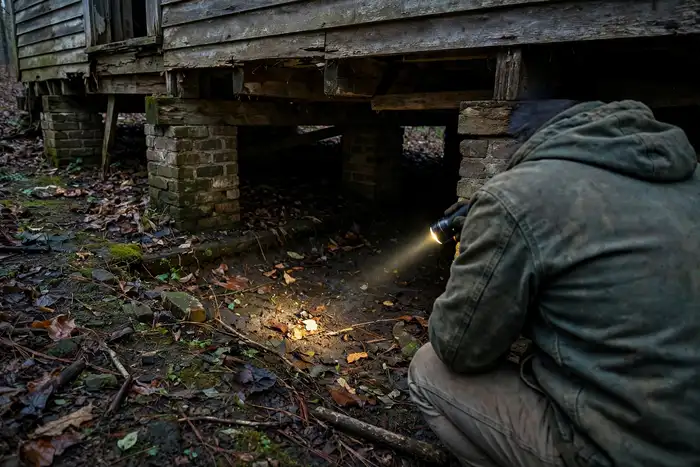
Why Thomaston homes see the wildlife they do
Thomaston grew up around mills, and that history still sits inside its walls. Many in-town houses carry pier foundations, shallow crawlspaces, patched rooflines and lumber that has expanded and shrunk through decades of Georgia summers. Those tiny shifts open knotholes, eave gaps and vent seams that a newer slab house simply does not offer, and wildlife finds them first.
Outside town the ground changes the job again. Low ground toward the Flint River stays damp long after rain, feeding insects, frogs and the predators that hunt them, while higher ground toward the Pine Mountain ridge and the Sprewell Bluff country turns rocky, thin-soiled and full of ledges, stacked stone and retaining edges. A raccoon working a river-bottom trash area and a snake holding in sun-warmed ridge rock are living in two different Thomastons, and we treat them that way.
Call us and tell us what you are hearing, smelling or finding in the yard. We will confirm the local crew for your county before any work starts, walk the roofline, crawlspace and lot edges with you, and explain what we found in plain language before any trapping, exclusion or cleanup begins.
Why mill-era Thomaston houses invite animals in ways newer houses do not
Older in-town framing rarely fails in one big place. It fails in twenty small ones: a fascia board softened at the corner, a gable vent whose screen rusted through, a chimney flashing seam lifted by heat, a crawlspace door that no longer sits square in its frame. Squirrels chew the softened corner, bats slip the vent seam, rodents follow the plumbing penetrations under the floor. Our inspection in Thomaston therefore moves slowly around the whole shell, top to bottom, because sealing only the hole you noticed leaves the other nineteen ready for the next animal.
Porches, additions and lean-to storage built in different decades add more junctions. Where an old porch roof meets the main wall, where a later bathroom addition ties into original siding, animals get a sheltered ledge and a hidden entry in the same spot. We photograph those junctions, show you which ones show gnawing, droppings or rub marks, and close them in an order that keeps animals from simply moving sideways into the next gap.
Flint River bottom ground and what damp Upson County soil brings to a yard
Low Thomaston lots near river-bottom ground hold moisture in a way ridge lots never do. Earthworms, grubs and burrowing insects thrive there, armadillos dig there, and snakes follow the frogs and rodents that gather there. After heavy rain, displaced animals also move uphill, turning up in garages, woodpiles and crawlspaces on ground that stayed dry. If your problem started right after a wet spell, tell us — that timing changes where we look and what we expect to find.
We also look hard at drainage. A downspout dumping beside a foundation, a low spot pooling against a crawlspace vent, or leaf litter matted thick against siding creates damp shelter touching the house itself. Fixing the animal without fixing that damp edge invites a repeat, so our recommendations for river-adjacent Thomaston properties always pair the removal work with simple drainage and litter changes you control.
Ridge, rock and retaining edges on the high side of Upson County
On rocky ground outside Thomaston, the shelter is stone rather than lumber. Rock piles, old retaining edges, broken concrete, stacked fieldstone and sunny ledges along the Pine Mountain ridge country give snakes warmth, give rodents protected runs, and give predators a hunting lane right beside a home. Clearing or sealing a ridge lot the way you would an in-town lot misses the point — the stone itself is the habitat.
For those properties we map the stone features before we map the house. Which pile sits closest to the door, which retaining edge connects to the crawlspace, which sunny slab sits beside the steps your family uses daily. That map decides what gets removed, what gets re-stacked tighter, and what simply gets monitored, so the work reduces encounters without tearing up ground you want to keep.
Older in-town buildings, rentals and vacant Thomaston properties
Thomaston has older commercial buildings, rentals between tenants and houses that sit quiet while families settle an estate. Quiet is exactly what bats, raccoons and rodents want. A vacant building can host a whole maternity colony or a winter rodent population before anyone walks in and notices the smell. If you manage, inherit or are preparing to sell an older Upson County property, call us before renovation starts — clearing animals and sealing entries is far simpler before new drywall, paint and insulation go in over old evidence.
For landlords and sellers we keep the paperwork plain: what species, where it entered, what was removed, what was sealed, and what still needs a roofer, mason or carpenter rather than a wildlife crew. That honest split keeps you from paying us for trade work we do not do, and keeps the next buyer or tenant from inheriting a hidden problem.
Wildlife we remove in Thomaston
These are the animals we are called about most often in Thomaston — each one tied to the mill-era housing, river-bottom ground or rocky ridge terrain that defines Upson County.
🐿️ Squirrels
In-town Thomaston squirrels commute from mature street trees straight onto aging rooflines, then chew softened fascia and eave corners to reach attic warmth. Listen for daytime scrambling above ceilings in mill-era homes, especially where a big limb hangs close enough to act as a bridge.
🦝 Raccoons
River-bottom foraging, in-town trash and open chimney flues make Thomaston ideal raccoon country. A female who finds a quiet attic or flue in spring will defend it hard, so we check for young before any removal and treat chimneys as nurseries until proven otherwise.
🦇 Bats
Big older Thomaston homes and older in-town buildings offer bats tall attics, loose ridge caps and vent seams at exactly the height colonies prefer. Guano staining below a gable or a chittering sound at dusk points us to the entry long before we ever need to enter the attic.
🐍 Snakes
Flint River bottoms feed snakes frogs and rodents, while rocky ridge ground gives them sunning stone and winter shelter. Most Thomaston snake calls involve harmless species hunting near foundations, rock piles or retaining edges — identification comes before any handling on every visit.
🐀 Rodents
Rats and mice exploit mill-era crawlspaces, older in-town storage and river-adjacent ground cover, travelling along pipes and joists into kitchens and pantries. Droppings in a seldom-opened closet or gnawed stored goods are often the first Thomaston sign, not a sighting.
🦔 Armadillos
Soft, damp river-bottom lawns in and around Thomaston let armadillos dig shallow feeding holes night after night and burrow beside foundations and porches. Fresh torn turf at dawn and a burrow mouth under a low step are their usual calling cards here.
🪦 Dead Animals
When an animal dies inside a mill-era wall void or under a Thomaston crawlspace, the odour follows plumbing chases and old framing channels into rooms far from the carcass. Locating it takes patience with that old framing, not guesswork and not random drywall cuts.
Animal-specific help in Thomaston
Deep, local guides for the problems we get called about most — with our wildlife crew behind every one.
How to get help in Thomaston
Tell us what you're hearing
Scratching in the attic, a snake by the porch, holes in the yard — call with your problem and your Thomaston address.
We connect you locally
Call us and tell us about the job — we will confirm the local crew for your county before any work starts.
They solve it — for good
Inspection, humane removal, full exclusion and cleanup — handled by our wildlife crew, following Georgia rules.
Common wildlife removal questions in Thomaston
Why do animals keep getting into my older mill-era house in Thomaston when my neighbour in a newer house has no trouble?+
We live on low ground near the Flint River and animals show up after every heavy rain. Is that a pattern?+
I keep finding snakes around rock piles and a retaining edge on my ridge property. Should all the rock go?+
What does wildlife removal in Thomaston cost?+
Can a raccoon found in Thomaston just be released somewhere else in Upson County?+
We are about to renovate a vacant older house in Thomaston. When should wildlife work happen?+
Serving all of Upson County
Thomaston is one part of Upson County. See wildlife removal in Upson County, GA for the county-wide picture — the animals we get called about most, and the other towns we cover.
One call to your Thomaston wildlife crew
Whether it's squirrels in an older in-town attic or a raccoon in a new subdivision crawlspace, the fastest fix is our wildlife crew, who knows Upson County wildlife. Call us and tell us about the job — we will confirm the local crew for your county before any work starts.
- Local to Upson County. Georgia DNR-compliant handling — call to ask about licensing and insurance.
- One company, one call. Call us and tell us about the job.
- Done right. Removal, exclusion and cleanup.