Armadillo Removal in Thomaston, GA
Soft, damp river-bottom soil around Thomaston is full of grubs and worms, and an armadillo will plough a lawn a few inches at a time all night to reach them.
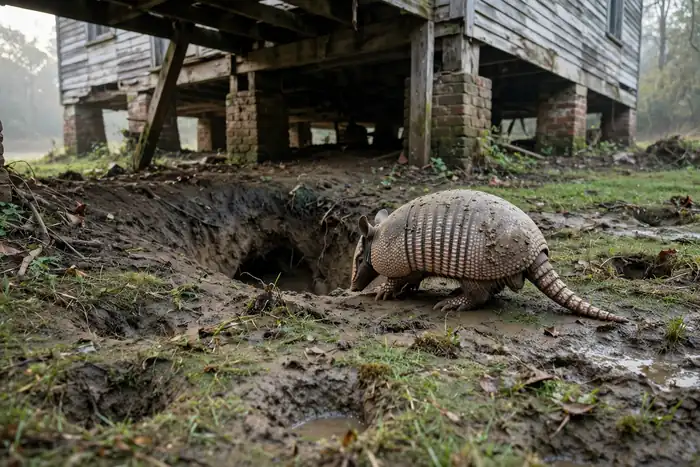
Feeding holes across a soft Thomaston lawn and a burrow at the foundation
An armadillo is a digging specialist following its nose. In Thomaston the richest feeding is where the soil stays soft and damp — river-bottom lawns, low shaded yards, ground below leaking outdoor taps and the earth along drainage lines. Grubs, earthworms and soil insects concentrate there, and the armadillo excavates them with a scatter of shallow holes that can make a cared-for lawn look rototilled in a week.
Feeding holes annoy; burrows matter more. For shelter an armadillo digs a larger burrow, frequently under a porch, beside a pier, at the edge of a slab or beneath a low deck — exactly the places where digging undermines support and opens routes under a Thomaston house. Our assessment separates the two problems: where it feeds will change with the seasons, but where it burrows is the address to solve, and that is where we concentrate.
Why soft river-bottom Thomaston lawns get dug first and worst
Dry ridge soil resists claws; damp bottom soil does not. After rain, invertebrates rise toward the surface of low Thomaston ground and armadillo digging peaks, which is why damage often erupts suddenly in a wet week after months of quiet. Lawns that are watered heavily or sit over a high water table read as permanent feeding grounds. We will ask about watering, drainage and recent rain when you call, because that pattern tells us whether one animal is resident or several are visiting the buffet.
Finding the Thomaston burrow: porches, piers and slab edges
Look for a hole roughly the width of the animal, with a fan of excavated soil, tucked against structure rather than in open lawn. Under-porch burrows in mill-era Thomaston homes are common because the soil there is dry, sheltered and undisturbed, and the porch skirt hides the entrance. We inspect those edges with a light, probe the burrow direction, and check whether it connects to the crawlspace — a burrow that breaks through under the house changes both the trapping plan and the closure work.
How we trap an armadillo that has no interest in bait
Armadillos hunt live soil prey and largely ignore the baits that work for other animals, so placement beats menu. We position traps along the burrow mouth, fence lines, porch edges and the funnel routes an armadillo walks nightly, using guides that steer the animal in as it travels. On a Thomaston lot that means reading the print trails and dig lines first. A trap dropped in the middle of a dug lawn catches nothing but weather, and we will not waste your time that way.
Closing a Thomaston armadillo burrow so it stays closed
Once the animal is removed, an open burrow is an engraved invitation to the next armadillo or to a skunk or opossum looking for ready shelter. We backfill and pack the burrow in layers, address any void running under a porch or slab, and repair skirt or lattice gaps that hid the digging. If the burrow undermined a support or a walkway edge, we show you the extent plainly — some of that repair is masonry or carpentry, and we would rather flag it than bury the evidence.
Lawn and soil changes that discourage the next Thomaston digger
You cannot make river-bottom soil stop growing worms, and we will not sell you a treatment that claims otherwise. What helps: fixing leaks and dripping outdoor taps, improving drainage in the soggiest corner, reducing heavy evening watering, and treating lawn grubs where a genuine infestation is driving repeated digging. Combined with the burrow closure, those changes make your Thomaston yard a less reliable nightly stop than the damp ground beyond it.
Armadillos and Thomaston gardens, beds and burial of surprises
Mulched beds are soft, moist and full of prey, so Thomaston armadillos root through them, upending young plants and scattering mulch onto paths. Low temporary edging around a new planting, firming mulch after rain, and prompt removal of the resident animal protect a garden better than repellents, which wash off river-adjacent soil quickly. Also keep dogs from investigating burrows — an armadillo cornered by a curious dog can injure it with strong digging claws despite its shy nature.
Common armadillo questions in Thomaston
Why did armadillo digging in my Thomaston yard start all at once?+
Can I just fill the burrow under my Thomaston porch with dirt?+
Are armadillos dangerous to my family or pets in Thomaston?+
Will removing one Thomaston armadillo end the digging for good?+
Do grub treatments stop Thomaston armadillos?+
An armadillo burrowed beside my Thomaston foundation. Is the house at risk?+
Other Thomaston problems that come with armadillos
Our wildlife crew handles these closely related problems — the ones that most often turn up with a armadillo issue.
Got more than armadillos in Thomaston?
Armadillo burrows at Thomaston foundations often open the same crawlspace edges rodents and snakes use, so we flag any gaps at piers and vents we find while burrow work is underway. See everything we handle locally on the Thomaston wildlife removal hub, or jump to Georgia wildlife removal.
Want the background before you call? Read our statewide guide: Armadillos tearing up your Georgia lawn.
Serving all of Upson County
Thomaston is one part of Upson County. See wildlife removal in Upson County, GA for the county-wide picture — the animals we get called about most, and the other towns we cover.
One call to your Thomaston armadillo crew
Our Thomaston armadillo work removes the digger and closes the burrow, rather than chasing holes around the lawn.
- Local to Upson County. Georgia DNR-compliant handling — call to ask about licensing and insurance.
- Burrow-led trapping and closure. We set our effort at the burrow and the travel edges the animal actually uses on your Thomaston lot, not randomly in open grass, then close and pack the burrow once the animal is out so the shelter does not advertise itself to the next armadillo.
- Done right. Removal, exclusion and cleanup.