Bat Removal in Thomaston, GA
Tall gables, layered rooflines and quiet attics in Thomaston older buildings are exactly what a bat colony searches for — we find every seam they use, then time the work lawfully.
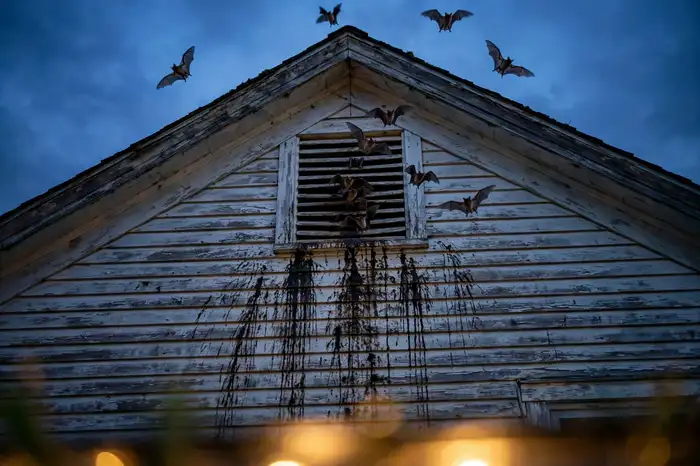
A colony roosting in a tall Thomaston gable or older in-town attic
Bats favour height, warmth and undisturbed darkness, and Thomaston supplies all three in its larger older homes, church and commercial buildings in town, and farm structures on the county edge. A colony does not need a wide opening. A gap along a ridge cap, a lifted gable vent, a seam where two roof planes from different building eras meet — a bat folds into spaces a homeowner would dismiss as too tight to matter.
Most Thomaston discoveries happen indirectly: droppings peppered below a gable, a musky odour in an upstairs room on a hot day, faint scratching or chittering in a wall at dusk, or a single bat found in a living space. Each clue points a different direction, and a colony can be sizeable before any of them appear. If you find a bat indoors, keep people and pets in another room, close the interior door if safe, and call us rather than handling it.
Gables, ridge caps and layered rooflines on big Thomaston houses
Large older Thomaston homes have more roofline geography than a simple house: multiple gables, dormers, porch roofs at lower heights and additions built decades apart. Bats exploit the junctions between those eras because flashing and trim rarely align perfectly there. We inspect every junction in daylight for staining and droppings, then confirm the active ones with an evening watch, since a seam that looks used may be historic while the colony now exits two gables away.
Older in-town Thomaston buildings: quiet attics above busy ground floors
A building can be busy at street level and completely undisturbed above the top ceiling, which suits a colony perfectly. Older in-town Thomaston structures may also have unused chimneys, elevator or utility chases and vent stacks that connect roost space to lower floors. Our survey for such buildings traces those vertical routes, advises the owner on which areas to restrict, and plans exclusion access that respects tenants and business hours below.
The April to July rule that governs every Thomaston bat job
In Georgia, bat exclusion is restricted from April 1 through July 31, the maternity season when flightless young are in the roost and cannot leave through a one-way device. Sealing or excluding during that window traps young inside, which is both unlawful and a practical disaster for the building. If you call us in that period, we will survey, identify entries, prepare the plan and schedule the exclusion for the lawful window, and we will advise on any bat found in living space in the meantime.
Guano, odour and what a long Thomaston roost leaves behind
A colony that has used a Thomaston attic for years leaves droppings concentrated below roosting beams, staining along entry seams and an odour that heat pushes into rooms below. We map those deposits rather than guessing from smell alone, identify insulation that is heavily affected, and explain cleanup options after the bats are out. Cleanup before exclusion is wasted effort — the colony will simply refresh the mess — so sequencing matters here too.
One-way exits and the full seal on a Thomaston roofline
Exclusion works by letting bats follow their normal dusk departure through a device they cannot re-enter, night after night, until the roost empties. That only works if every secondary seam is sealed first; otherwise the colony relocates along the same Thomaston roofline and the dusk show simply moves to a new corner. Once exit activity stops and we have verified the roost is empty, we remove the devices and make the final closures permanent.
A single bat in a Thomaston bedroom: what to do tonight
Keep the room closed off, keep pets away, and do not try to catch or handle the bat with bare hands or a towel. If anyone or any pet may have had contact, or the bat was present while someone slept, tell us and also seek medical and public-health guidance promptly, because that contact question changes what should happen to the animal. Otherwise we will advise on safely isolating the room until help arrives.
Common bat questions in Thomaston
It is June and bats are in my Thomaston attic. Why can exclusion not start right away?+
How do bats get into an older Thomaston house through such small gaps?+
I found one bat in a Thomaston living space. Does that mean a colony lives here?+
Can I seal the Thomaston gable gap myself this weekend?+
Will bats return to my Thomaston house next year after exclusion?+
Our older in-town Thomaston building has tenants. How disruptive is bat work?+
Other Thomaston problems that come with bats
Our wildlife crew handles these closely related problems — the ones that most often turn up with a bat issue.
Got more than bats in Thomaston?
Bat gaps in Thomaston often sit inches from squirrel-chewed eaves and raccoon-lifted soffits on the same older roofline, so a bat visit is also a good moment to have us report on the whole upper shell. See everything we handle locally on the Thomaston wildlife removal hub, or jump to Georgia wildlife removal.
Want the background before you call? Read our statewide guide: Bats in your attic: Georgia law, maternity season and what exclusion costs.
Serving all of Upson County
Thomaston is one part of Upson County. See wildlife removal in Upson County, GA for the county-wide picture — the animals we get called about most, and the other towns we cover.
One call to your Thomaston bat crew
Our Thomaston bat work is patient by design: full seam mapping, lawful timing, then a complete seal.
- Local to Upson County. Georgia DNR-compliant handling — call to ask about licensing and insurance.
- Watch, wait for the lawful window, then seal everything. We observe the evening exit, fit one-way devices that let bats leave but not re-enter when the season allows, and only seal the final seams after the roost is confirmed empty — a rushed seal in Thomaston just moves a colony deeper into the building.
- Done right. Removal, exclusion and cleanup.