Wildlife Removal in Monticello, GA
Call us when scratching carries down a chimney wall, something thumps in an attic that predates modern wiring, or a yard at the edge of pasture starts showing damage overnight. Our crew works the contrast that defines Monticello: very old houses in town, and woodland pressing close on every side of them.
Why Monticello homes see the wildlife they do
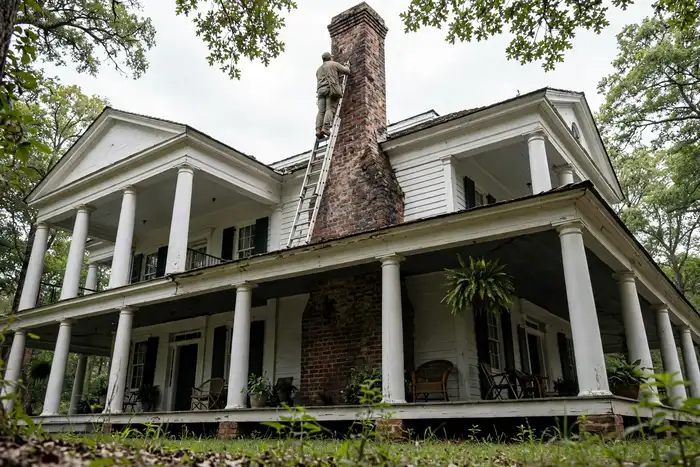
Monticello grew up around its courthouse square, and many houses near that square still stand on the bones they were built with: tall brick chimneys, hand-cut framing, deep porches on piers, and crawlspaces that were dug for a different century. Those features give the town its character. They also give wildlife a set of openings that a newer subdivision house simply does not offer, from mortar that has softened between bricks to vent screens that were fitted long before anyone worried about flying squirrels.
Step a short distance out of town and the setting changes fast. Streets give way to pasture, pine and hardwood woodland, brushy fence lines, and, toward the western side of Jasper County, the low margins around Jackson Lake. Animals do not respect that town-to-country line. A raccoon denning in a hollow tree at a pasture edge can be on a Monticello roof the same night, and a snake following frogs along a damp ditch can end up under a porch steps from the square.
That is why our work here starts with the age of the building and the ground around it, not with a trap set by habit. Call us, tell us whether the noise is in a chimney, a wall, or under the floor, and we will confirm the local crew for your county before any work starts. Then we walk the roofline, the chimney stack, the porch skirt, and the crawlspace door, and we explain what entered, how it got in, and what sealing will keep the next animal from using the same route.
Tall Chimneys and Deep Porches on Monticello's Oldest Houses
A chimney on a pre-war Monticello house is rarely just a chimney. It can be a wide masonry stack with more than one flue, a ledge where the flashing pulled away decades ago, and a cap that was never fitted at all. Raccoons climb straight to that opening. Bats slip into the seam where brick meets siding. Squirrels follow a leaning hardwood limb to the top and drop into a void that connects, in older construction, to wall spaces a homeowner would never suspect.
Porches create a second route at ground level. A deep porch on piers shades a cool, dry cavity underneath, and the skirt boards or lattice around it often have a broken corner nobody notices from the yard. Skunks, opossums, snakes, and mother raccoons use that sheltered cavity as a daytime den, and from there the step into a crawlspace is short. On our visit we look under porch edges with the same care we give the roof, because in Monticello the lowest opening is as busy as the highest one.
Where Monticello's Streets End and Jasper County Woodland Begins
Few Georgia towns make the change from pavement to pasture as abruptly as Monticello does. One block can hold a tall house with a manicured hedge, and a few minutes beyond it there is a hay field, a barn with feed inside, and a tree line thick enough to hide deer at midday. That edge habitat is exactly where wildlife concentrates. Food, water, and cover sit side by side, and the houses in between become the warmest, driest shelter on the route.
Jackson Lake adds another pull on the county side of that edge. Low, wet margins draw frogs and rodents, rodents draw snakes, and snakes and rodents together draw larger predators. Properties that back onto a creek run, a pond, or a brushy drainage feel that chain first. We ask where water sits near your lot, which side of the house faces open woodland, and whether outbuildings hold feed or seed, because those answers often explain a Monticello call better than the species name alone.
Crawlspaces, Wall Voids, and Chimney Chases in Pre-War Monticello Homes
Older Monticello framing leaves spaces that modern construction seals shut. Balloon-framed walls can run open from a crawlspace to an attic. A chimney chase can hide a vertical tunnel beside the flue. Flooring laid over old sills can leave a gap at the foundation line that mice find in a single night and raccoons widen over a season. When a homeowner hears movement that seems to travel from the basement to the bedroom ceiling, that connected void system is usually the reason.
Finding an animal in that system takes patience rather than noise. We listen for the hour and direction of movement, check droppings and rub marks at the crawlspace door and in the attic, and look for daylight at eaves that should be tight. Removal then follows the route the animal actually uses, and sealing follows the age of the house: mesh and mortar repairs suited to old brick, vent covers fitted to openings that were never a standard size, and porch and foundation gaps closed without trapping anything inside.
Monticello Barns, Feed Rooms, and Country Lots Beyond the Square
Plenty of our Jasper County calls never involve the main house at all. A barn loft makes a quiet raccoon nursery. A feed room with a lifted door threshold invites rats that later move into the house walls in winter. A woodpile stacked against a pasture fence shelters snakes, and a low outbuilding roof gives squirrels a launch point toward the home beside it. Treating only the house while leaving the outbuilding route open is a short-lived fix on a country lot.
So we survey the whole property the way an animal crosses it: fence line to woodpile, woodpile to barn, barn to porch, porch to roof. That walk shapes our recommendations, from moving attractants and trimming a limb that bridges to a chimney, to screening a barn vent and repairing a crawlspace door. Call us even if the animal is only in an outbuilding for now. In Monticello, outbuilding problems have a habit of becoming attic problems once cold weather or a litter of young changes the animal's priorities.
Wildlife we remove in Monticello
The animals below are the ones our crew is called about most in Monticello, and each one uses the town's old houses and Jasper County's wooded edges in a different way. Start with the page that matches your noise, damage, or sighting.
🐿️ Squirrels
Gray squirrels ride the big hardwoods shading streets near the square straight onto tall roofs, while flying squirrels arrive after dark and slip through gaps no wider than a thumb at old eave joints. Chewing at a chimney flashing or a porch column is often the first visible clue.
🦝 Raccoons
Raccoons treat an uncapped masonry chimney in Monticello the way they treat a hollow den tree in the surrounding woodland, and they commute from barn lots and creek runs to reach it. A female with young in a flue or attic is strong, defensive, and destructive to insulation and ductwork.
🦇 Bats
Antebellum attics in Monticello offer bats a high, undisturbed roost, and aged mortar joints give them entry points all along a chimney stack. Guano staining below a gable vent or a faint chattering at dusk usually means a colony, not a single stray bat.
🐍 Snakes
Lake-edge ground, pasture margins, and brush piled along Jasper County fence lines support the rodents and frogs snakes hunt, and porches and crawlspaces offer the cool shelter they seek afterward. Most encounters involve harmless species, but no snake should be handled on a guess.
🐭 Rodents
Rats and mice exploit the open wall runs and foundation gaps of old in-town houses, and they follow feed and seed storage on country lots into wall voids and pantries. Gnawed wiring, shredded insulation, and droppings along a baseboard are warnings worth acting on early.
🦔 Armadillos
Armadillos root through pasture-edge lawns and soft country soil in Jasper County hunting grubs, leaving shallow holes across a yard in a single night and sometimes digging beneath a porch or outbuilding slab. The damage looks sudden because the digging usually happens after midnight.
🐾 Dead Animals
When an animal dies inside a chimney void or a sealed wall of a very old Monticello house, the odor moves through the connected framing and can seem to come from every room at once. Locating the exact cavity matters, because opening the wrong wall helps nobody.
Animal-specific help in Monticello
Deep, local guides for the problems we get called about most — with our wildlife crew behind every one.
How to get help in Monticello
Tell us what you're hearing
Scratching in the attic, a snake by the porch, holes in the yard — call with your problem and your Monticello address.
We connect you locally
Call us and tell us about the job — we will confirm the local crew for your county before any work starts.
They solve it — for good
Inspection, humane removal, full exclusion and cleanup — handled by our wildlife crew, following Georgia rules.
Common wildlife removal questions in Monticello
Our Monticello house is more than a hundred years old. Does that change how wildlife gets in?+
Why do animals keep coming to our in-town home from the surrounding Jasper County woodland?+
We hear something in our chimney but nothing in the attic. What could it be?+
Can you check a barn or feed room as well as the house itself?+
How much will wildlife removal in Monticello cost?+
What should we do before your crew arrives at our Monticello home?+
Serving all of Jasper County
Monticello is one part of Jasper County. See wildlife removal in Jasper County, GA for the county-wide picture — the animals we get called about most, and the other towns we cover.
One call to your Monticello wildlife crew
Whether it's squirrels in an older in-town attic or a raccoon in a new subdivision crawlspace, the fastest fix is our wildlife crew, who knows Jasper County wildlife. Call us and tell us about the job — we will confirm the local crew for your county before any work starts.
- Local to Jasper County. Georgia DNR-compliant handling — call to ask about licensing and insurance.
- One company, one call. Call us and tell us about the job.
- Done right. Removal, exclusion and cleanup.