Rodent Removal in Port St. Lucie, FL
Gnawing after dark, droppings along the attic insulation, hollowed oranges under the backyard tree. That is the roof rat, and in this city it is the most common animal living over anyone's ceiling. Describe the sign and we will walk you through the next step.
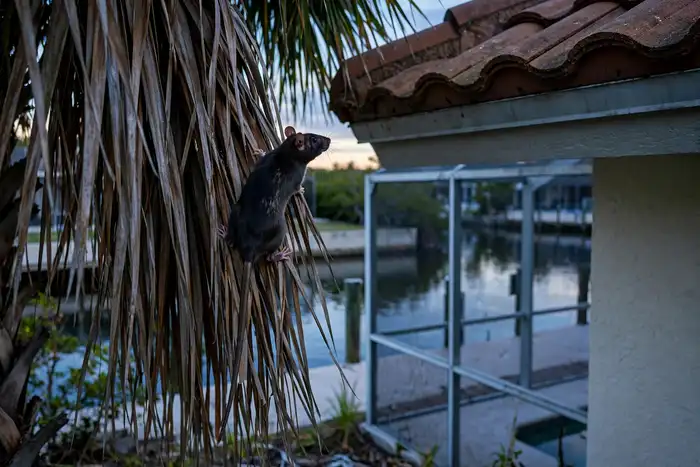
Rodents in your Port St. Lucie home
Ask three Port St. Lucie neighbors about the rat in their attic and you may hear three names — roof rat, fruit rat, palm rat, citrus rat — for a single animal, the black rat that UF/IFAS calls the worst rodent pest in Florida. It climbs as readily as it runs: up a palm trunk, across the fronds, onto the roof, and in through the soffit. Neighborhoods from St. Lucie West to Torino give it everything it needs — palms at every house, backyard citrus, bird feeders, and canal banks for cover.
Our method here is trap-and-seal, with no poison. Bait would kill rats without closing a single opening, and a poisoned rat that dies inside a wall becomes a second, smellier job. Instead the attic population is trapped out, the entries are shut at rat scale, and the routes — palms touching the roof, cage lines, utility penetrations — are corrected so the next rat finds a closed building. The house mouse appears here only as a minor indoor extra; the Norway rat is rare on this coast and accounts for very few local calls.
Palm skirts and the roofline highway
A palm that has not been trimmed carries a skirt of dead fronds, and that skirt is roof-rat housing: dry, elevated and safe from owls. From the skirt a rat crosses a living frond onto the roof edge and follows the gutter to the soffit. Port St. Lucie yards are planted thick with palms, which is why trimming fronds back off the roofline and clearing old skirts appear on almost every rodent plan we write here — habitat work, not cosmetics.
Citrus season, September through March
Backyard citrus ripens across the fall and winter, and roof rats time their breeding pressure to it. The tell is fruit hollowed out on the tree or dropped with a neat gnawed opening, plus night activity in the canopy when the tree is quiet by day. Older sections with mature grapefruit and orange trees see the heaviest attic traffic in these months. Harvesting promptly and clearing fallen fruit will not empty an attic, but leaving fruit to rot will refill one.
The pool cage is part of the roof
Rats treat a pool cage as scaffolding. They run its aluminum beams, cross to the house roof where the cage ties in, and enter through the same soffit and vent openings — or chew the cage screen itself for a shortcut. Inspections here walk the cage attachment line as carefully as the main roofline, and sealing covers the tie-in gap that production builders so often leave open on new homes in Riverland and Wylder.
The vacant-house sewer route
Port St. Lucie's seasonal homes sit empty through the summer, and a house that uses no water lets its drain traps dry out. A dried trap is an open door from the sewer, and roof rats use it — UF/IFAS documents this entry route in vacant Florida homes. Owners return in October to droppings in a house that was sealed tight above ground. Our vacant-home check includes running water through every drain and confirming the traps hold, alongside the roofline work.
New construction keeps supplying rats
Every cleared lot displaces the rats living on it, and Port St. Lucie clears lots every week. Streets in the southern and western build-out zones can seal one house and watch the neighbors' rats test it within the month. That is why sealing here is specified heavily — galvanized materials at the soffit and vents, not foam and hope — and why we tell homeowners on active-build streets to expect a follow-up check after the next lot on the block is cleared.
How a rodent job is sequenced
Trapping comes first, set in the attic runs the sign identifies, and checked on a proper interval. Sealing follows once activity stops — reversing that order walls live rats in to die in the framing, which is the outcome the whole sequence exists to avoid. Contaminated insulation around heavy runs is removed where it is fouled, and the entry list is photographed so you can see each closed opening rather than take it on trust.
Common rodent questions in Port St. Lucie
Fruit rat, palm rat, roof rat — how many kinds do I have?+
Why will you not just put out poison?+
Our house sat empty all summer and now there are droppings everywhere. How?+
Does trimming my palms really matter?+
What does roof rat removal cost in Port St. Lucie?+
Other Port St. Lucie problems that come with rodents
Our wildlife crew handles these closely related problems — the ones that most often turn up with a rodent issue.
Got more than rodents in Port St. Lucie?
Rodents are rarely the only thing using an attic or yard in Port St. Lucie. See everything we handle locally on the Port St. Lucie wildlife removal hub, or jump to Florida wildlife removal.
Serving all of St. Lucie County
Port St. Lucie is one part of St. Lucie County. See wildlife removal in St. Lucie County, FL for the county-wide picture — the animals we get called about most, and the other towns we cover.
One call to your Port St. Lucie rodent crew
The longer rodents stay in the attic, the more they chew and the bigger the cleanup. Call us and tell us about the job — we will confirm the local crew for your county before any work starts.
- Local to St. Lucie County. FWC-compliant handling — call to ask about licensing and insurance.
- Humane exclusion. One-way doors and steel sealing, not poison.
- Done right. Removal, exclusion and cleanup.