Rat & Mouse Control in Willoughby, OH
Scrabbling behind a parlor wall, pellets along a cellar shelf, or burrow mouths appearing in the bank behind the garage? Downtown food, river cover and century-old cellars overlap in Willoughby — and each rodent exploits a different part of that overlap. Call us and tell us about the job — we will confirm the local crew for your county before any work starts.
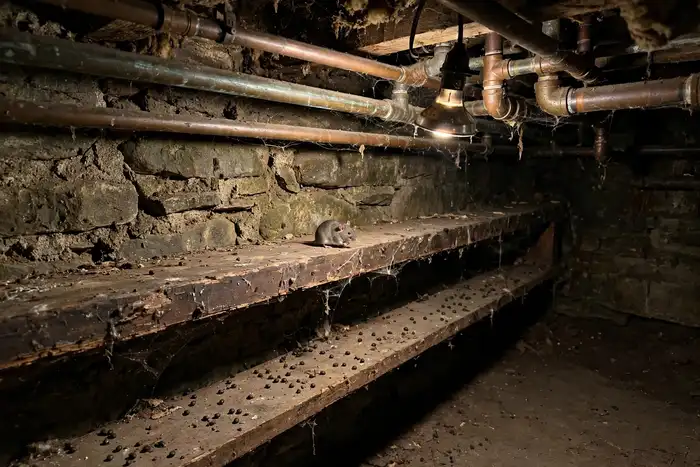
Rodents in your Willoughby home
Begin downtown, after closing time. Shared dumpsters behind shops and eateries, grease and crumbs along loading areas, and bins awaiting morning collection subsidize a rat population that does not respect the line between a commercial alley and the residential streets a block away. Add the riverbank — permanent cover, water and forage — and the oldest housing in town, with cellars pierced by a hundred years of plumbing changes, and Willoughby's rodent map draws itself.
Mice play a different game on the same board. They care less about alleys than about warmth: a cellar bulkhead that does not quite latch, a gap where a new water line replaced an old one, a holiday bin of seed and suet in the garage. Voles, meanwhile, ignore houses entirely and farm the lawns under snow. Naming which animal you host — by sign, season and location — is the diagnostic step everything else depends on.
Alley-fed rats and the short commute into nearby homes
Rats are homebodies with a foraging radius. A colony burrowed in a riverbank or beneath a dumpster pad makes nightly circuits — alley, fence line, woodpile, cellar wall — and memorizes every food stop. Houses on streets backing onto commercial blocks or the corridor therefore see burrow mouths at rear foundations, runs worn along the back steps, and droppings in cellar corners nearest the alley side. Control that ignores the outdoor subsidy and treats only the cellar will disappoint; bins secured, spills cleaned and harborage cleared behind the house are part of the prescription, alongside sealing and trapping.
Cellars with a plumbing history: every era left a hole
Peel back a Willoughby cellar and you read the house's renovation diary in its walls: a capped iron pipe beside a newer copper line, a square patch where a coal chute once fed the furnace, a bored hole for cable, then another for fibre. Rodents read the same diary as a menu of entrances, because caps loosen, patches shrink and bored holes are rarely packed tight. The sealing circuit here is archaeological — find every generation's penetration, pack it with gnaw-proof mesh and finish it in mortar — rather than a quick pass with a foam gun at the one hole with droppings beneath it.
Plaster walls as vertical highways for house mice
Balloon and early platform framing, lath-and-plaster surfaces and boxed pipe chases give mice sheltered vertical travel from cellar to attic without ever crossing an open room. That is why a Willoughby mouse problem can present as pellets in an upstairs linen cupboard while the cellar traps stay empty, or scratching that seems to move floors overnight. Effective trapping follows the highways — beside vertical pipes, along top plates, at attic hatch edges — and sealing concentrates at the cellar entry points that feed the whole system from below.
Snow-country voles and the gardens they re-landscape
Away from the river, the winter complaint belongs to voles. Under a reliable snow blanket they graze bark at the crowns of young fruit trees, tunnel through perennial beds and emerge in spring to a yard engraved with their road system. Girdled shrubs that leaf out weakly are often vole work misattributed to winter kill. Yard measures — trunk guards on young trees, mulch pulled back from crowns, cover reduced beside beds, and targeted trapping where damage concentrates — protect plantings far better than indoor-style baiting ever will.
Trapping in occupied historic homes: placement beats quantity
Dozens of traps scattered hopefully catch less than a dozen placed on evidence: rub marks darkening a pipe run, pellets clustering at a wall base, a run polished through cellar dust. Snap traps perpendicular to walls, secured where pets roam, checked on a rhythm — that is the unglamorous core of clearing animals already inside. Glue boards and loose poison have no place in a house with children, dogs and plaster voids where a poisoned animal can die out of reach; a professional plan says so plainly and offers the method that avoids manufacturing an odor call next month.
Pantries, pet food and the cellar larder tradition
Older Willoughby homes often store food the way they always have — cellar shelves of preserves, bulk pet food in a garage bin, birdseed in a paper sack by the back door. Rodents simply join that tradition. Glass and metal containers with real lids, seed kept indoors in a sealed can, and pet meals served rather than left down overnight remove the steady calories that turn a passing mouse into a breeding resident. Sanitation does not replace sealing, but sealing without sanitation leaves the invitation printed and posted.
Common rodent questions in Willoughby
Our house backs onto downtown — are the rats coming from the alleys?+
Pellets in an upstairs cupboard but nothing in the cellar — how?+
We had the cellar sealed two years ago and mice are back — what failed?+
Young shrubs died over winter — voles or weather?+
How much does rodent control cost in Willoughby?+
Other Willoughby problems that come with rodents
Our wildlife crew handles these closely related problems — the ones that most often turn up with a rodent issue.
Got more than rodents in Willoughby?
Cellar gaps that pass a mouse also pass cold air, insects and the snakes that hunt mice — a single sealing circuit pays off across several call types. See everything we handle locally on the Willoughby wildlife removal hub, or jump to Ohio wildlife removal.
Serving all of Lake County
Willoughby is one part of Lake County. See wildlife removal in Lake County, OH for the county-wide picture — the animals we get called about most, and the other towns we cover.
One call to your Willoughby rodent crew
Historic houses reward patience and punish shortcuts: every unsealed coal-era opening is a standing reservation for next season's rodents. Close the reservations and the bookings stop. Call us and tell us about the job — we will confirm the local crew for your county before any work starts.
- Local to Lake County. ODNR-compliant handling — call to ask about licensing and insurance.
- Masonry-tight sealing, targeted trapping. Copper mesh and mortar at cellar penetrations, snap trapping along proven runs, and sanitation that removes the downtown-edge food subsidy.
- Done right. Removal, exclusion and cleanup.