Chipmunk Removal in Cuyahoga Falls, OH
They race along the top of the retaining wall like they own it — and underneath, in the backfill your wall stands in, they are quietly proving the point. Call us and tell us about the job — we will confirm the local crew for your county before any work starts.
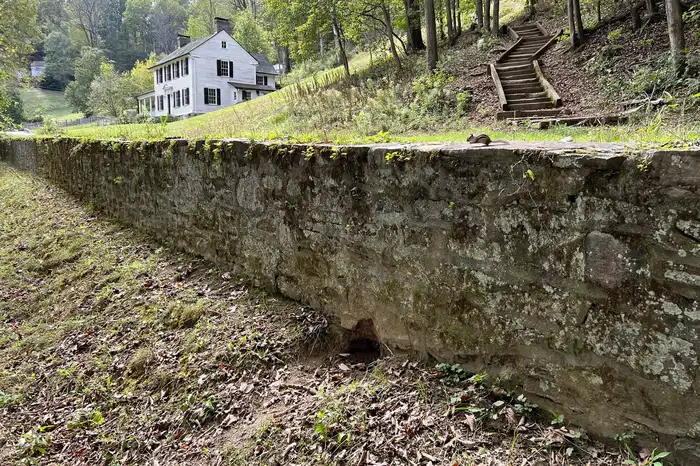
Chipmunks in your Cuyahoga Falls home
No animal is better matched to this city's terrain than the chipmunk. A Cuyahoga Falls lot is a stack of edges — the top and toe of retaining walls, the line where a walk meets a bank, foundation walls stepping down a hill, beds terraced into the slope — and edges are chipmunk habitat in its purest form. They den behind the walls, forage the beds above them, stash seed in chambers dug into the bank, and use the wall tops as elevated highways safe from cats. From the wooded slopes the population pressure is constant; every yard along the gorge rim is, in effect, a chipmunk subdivision with excellent transport links.
The charm wears off at the point the engineering shows. Chipmunk burrows are tidy, moundless and easy to underestimate — a clean two-inch hole at the toe of a wall — but the system behind that hole removes soil in volume, season after season, from exactly the places a terraced lot cannot spare it: behind retaining walls, beneath walk panels and stoops, along the foundation where it steps down the grade. What settles, cracks and leans afterward gets blamed on Ohio weather, with the actual contractor living in the wall.
Anatomy of a wall burrow
A chipmunk system behind a retaining wall typically runs horizontally in the backfill — the loose, diggable soil placed when the wall was built — with entrances at the drainage openings, at the wall's ends, or at any spot where the face has shifted enough to admit a two-inch tenant. Inside are a nest chamber, seed-storage chambers the animal fills obsessively each fall, and usually more than one exit, because a burrow with one door is a trap. As the system extends, the backfill migrates — soil carried out a cheek-pouch at a time and scattered so neatly that no spoil heap ever betrays the excavation. The void left behind is the problem: backfill is not decoration, it is part of how the wall stands and drains.
Telling chipmunk damage from its neighbors
Three diggers work Cuyahoga Falls lots and their signatures differ. The groundhog excavates on a grand scale — a big entrance, a mound you could fill a wheelbarrow with, tunnels a wall feels in its footing. The skunk digs the lawn itself, leaving shallow ragged cones overnight. The chipmunk leaves small, clean, moundless holes at hard edges — wall toes, stoop bases, the corners of steps — and works in broad daylight, commuting in and out while you watch from the porch. If the hole is neat, edged by concrete or stone, and its tenant dashes along the wall top at noon with its cheeks loaded, the case is closed. The remedy differs for each digger, which is why the identification comes first.
Their year: torpor, litters and the fall hoard
Chipmunks spend winter in a pattern of deep sleeps broken by trips to their own seed stores — not true hibernation, but close enough that a wall goes quiet from November and a homeowner assumes the tenants left. They did not. Spring brings mating and the first litter; a second litter follows in summer, so a wall with two chipmunks in April can host an extended family by August. Fall is the season of maximum excavation: every animal digs and hoards against winter simultaneously, and burrow systems get their year's growth in a few frantic weeks. Removal and proofing are therefore spring-through-fall work, done while the systems are occupied and their tenants can actually be cleared.
Clearing and proofing a sloped system
Our crew maps the system against the structures it threads — which wall runs, which walk panels, which foundation steps — and sets traps at the active entrances to clear it; chipmunks fall under Ohio's general nuisance rules that allow a licensed operator to release or handle them as the regulations provide, and we follow those rules on where animals may be let go. The proofing is terrain work: entrances at the structures are closed, and wall toes, stoop edges and foundation steps are armored with steel mesh buried vertically and flared outward, following the terraces, so the next chipmunk digging at the wall base hits a buried curtain instead of an open system. On stepped ground, the runs have to overlap at each level change — a gap at a terrace corner is where the re-invasion starts.
Feeders at the top of the wall
The single most common accelerant is a bird feeder mounted by a deck or wall, raining seed into the beds at the wall's base all day. Chipmunks organize their territories around such reliability, and a colony behind the wall below the feeder is not a coincidence. Shifting the feeder away from structures, sweeping the fall of seed, and storing seed in a sealed metal can in the garage will not empty an existing system — but once a system is cleared and proofed, feeder discipline is what keeps the wall's carrying capacity low enough that prospectors move along the slope instead of settling. In a city this wooded, you are managing pressure, not abolishing it — steel handles the burrows, and habits handle the surplus.
Common chipmunk questions in Cuyahoga Falls
Can chipmunks really damage a retaining wall?+
How do I know the holes in my yard are chipmunks?+
The wall went quiet in winter — did the chipmunks move out?+
Why not just collapse the burrows and fill the holes?+
Will proofing one wall just push them to another part of the yard?+
How much does chipmunk removal cost in Cuyahoga Falls?+
Other Cuyahoga Falls problems that come with chipmunks
Our wildlife crew handles these closely related problems — the ones that most often turn up with a chipmunk issue.
Got more than chipmunks in Cuyahoga Falls?
Chipmunks are rarely the only thing using an attic or yard in Cuyahoga Falls. See everything we handle locally on the Cuyahoga Falls wildlife removal hub, or jump to Ohio wildlife removal.
Serving all of Summit County
Cuyahoga Falls is one part of Summit County. See wildlife removal in Summit County, OH for the county-wide picture — the animals we get called about most, and the other towns we cover.
One call to your Cuyahoga Falls chipmunk crew
The longer chipmunks stay in the attic, the more they chew and the bigger the cleanup. Call us and tell us about the job — we will confirm the local crew for your county before any work starts.
- Local to Summit County. ODNR-compliant handling — call to ask about licensing and insurance.
- Humane exclusion. One-way doors and steel sealing, not poison.
- Done right. Removal, exclusion and cleanup.