Rodent Control in Cuyahoga Falls, OH
The first frost on the gorge is a starting bell: every mouse in the wooded banks begins shopping for a winter address, and the older houses on the rim are the listings. Call us and tell us about the job — we will confirm the local crew for your county before any work starts.
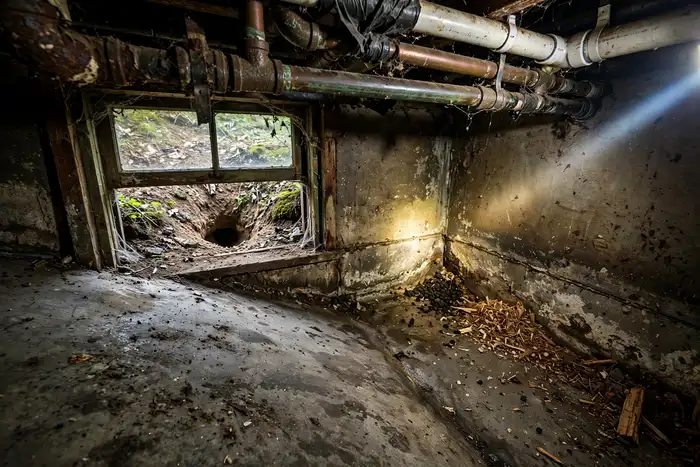
Rodents in your Cuyahoga Falls home
Cuyahoga Falls rodents enjoy a geography lesson most suburbs cannot offer. The wooded gorge and its ravines keep mice, voles and rats supplied with cover and food through the warm months; the houses on the rim, many of them a century into their service lives, stand a few yards from that cover with foundations full of history — pipe penetrations from three eras of plumbing, basement windows in wooden frames, mortar that freeze and thaw have been worrying since before the street was paved. The meeting of the two, every October, is the fall mouse invasion, and it is the most predictable wildlife event in the city.
Rats and yard rodents complete the cast. Norway rats hold the low ground — the river margins, older housing on the flats, outbuildings and crawlspaces — burrowing at foundations and following food waste. Above ground in winter, under the snow that lake effect delivers even this far south, voles spend the dark months grazing runways across lawns and gnawing the bark of young plantings, signing their work only when the melt reveals it. Each of the three wants a different response, and the droppings, burrows and trails tell our crew which one you are hosting.
The fall invasion, explained
House mice do not invade on a whim; they invade on a thermometer. The first hard frost kills off insects and seeds, nights lengthen, and a mouse that summered in the woodpile or the bank behind the house starts testing the foundation. It needs a gap of about a quarter inch — the diameter of a pencil — and an older Cuyahoga Falls foundation provides candidates at every pipe, wire and vent, plus the settling gaps where a house stepped down its slope meets the soil differently on each side. Mice that enter in October breed indoors all winter: the pair becomes a colony insulated from every predator the gorge contains. A house that 'gets mice every year' is a house whose quarter-inches were never inventoried.
Norway rats on the low ground
Rats work a lower, damper circuit. In Cuyahoga Falls they hold the river flats and the oldest housing, where crawlspaces stay cool and food waste is near. The signs are bold compared with mice: burrow entrances the size of a fist at a foundation's base, droppings like dark capsules along a run, greasy smears where rat bodies polish the same passage nightly, and gnawing on a scale mice cannot manage. Rats are wary, strong swimmers and committed burrowers; a rat problem is usually an infrastructure problem — a broken drain line, a foundation breach, a crawlspace open at grade — and it ends when the infrastructure is found and fixed, with trapping clearing the residents in the meantime.
Snowmelt evidence: voles and moles
Some springs, a Cuyahoga Falls lawn comes out of the snow looking mapped: dead grass in winding surface trails, a young shrub girdled at its base, mulch tunneled like a battlefield. That is vole work — months of grazing and traveling in runways between the grass and the snowpack, hidden all winter. It is chronically confused with mole damage, and the two are not the same animal or the same fix: moles tunnel below ground for worms and grubs, raising ridges and mounds and eating no plants at all, while voles travel the surface and eat the landscaping. Our crew reads a spring lawn before prescribing anything, because treating for the wrong one wastes the season.
The case against bait as a strategy
Bait answers the question 'how do I kill the mice I have?' and ignores the question that matters: 'why does my house admit mice?' Poisoned rodents die disproportionately where they live — inside wall voids, under floors, in the insulation — and in a sealed-up winter house that trades scratching for a dead-animal odor that runs for weeks. Meanwhile every entry gap remains open for the bank's next candidate, and bait placed around a home carries risks to the pets and the gorge's own predators that eat rodents for a living. Trapping absolutely has its role — clearing the indoor population once the house is sealed — but seal-first is the order that turns a yearly subscription into a finished job.
Sealing a hillside house
Exclusion on Cuyahoga Falls terrain means inspecting two addresses in one: the foundation at grade on the uphill side, where soil meets the house at nearly attic-of-the-basement height, and the exposed downhill face, where crawlspace vents, utility entries and basement windows stack up. Add the roofline — older river homes collect gaps at their staged junctions — and the chimney. Everything is closed in materials chosen to outlast chewing: steel mesh packed into penetrations, hardware cloth set in frames over vents, metal flashing where wood has failed. Foam and caulk alone are not sealing; to a rodent they are dental floss. With the house closed, trapping clears the inside, and a follow-up visit verifies the silence is real.
Common rodent questions in Cuyahoga Falls
Why does my Cuyahoga Falls house get mice every single fall?+
Are the droppings in my basement from mice or rats?+
My lawn has winding dead trails after the snow melts — moles?+
I put out poison and the scratching stopped, but now there is a smell. What happened?+
Can a hillside house really be sealed against mice?+
How much does rodent control cost in Cuyahoga Falls?+
Other Cuyahoga Falls problems that come with rodents
Our wildlife crew handles these closely related problems — the ones that most often turn up with a rodent issue.
Got more than rodents in Cuyahoga Falls?
Every mouse gap in a Cuyahoga Falls foundation is a future door for something larger that hunts mice. See everything we handle locally on the Cuyahoga Falls wildlife removal hub, or jump to Ohio wildlife removal.
Serving all of Summit County
Cuyahoga Falls is one part of Summit County. See wildlife removal in Summit County, OH for the county-wide picture — the animals we get called about most, and the other towns we cover.
One call to your Cuyahoga Falls rodent crew
An indoor mouse colony grows all winter, and the entries it used in October are still open in March. Sealing is the appointment that ends the cycle. Call us and tell us about the job — we will confirm the local crew for your county before any work starts.
- Local to Summit County. ODNR-compliant handling — call to ask about licensing and insurance.
- Seal, then trap. Steel at every foundation and roofline entry, the indoor population trapped out, and yard damage identified for what it actually is.
- Done right. Removal, exclusion and cleanup.