Dead Animal Removal in Cuyahoga Falls, OH
It began faintly, in one room, and it is not fading — in a house shut tight for an Ohio winter, that pattern has a source, and the source can be found. Call us and tell us about the job — we will confirm the local crew for your county before any work starts.
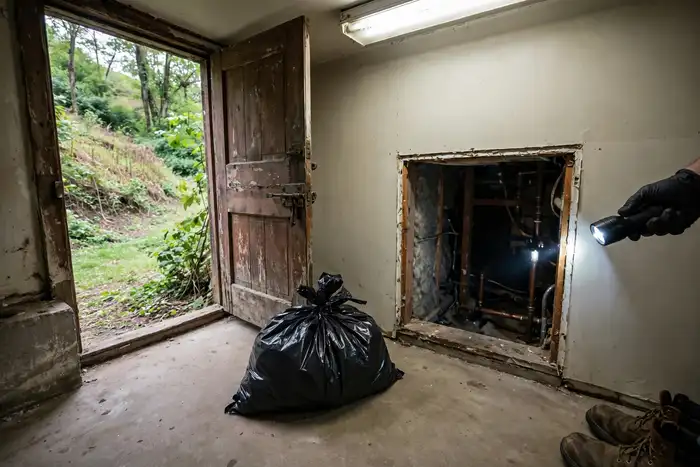
A dead animal in your Cuyahoga Falls walls, attic or chimney
Cuyahoga Falls' dead-animal season is the back half of winter, and its story starts in the fall. October's great move indoors filled attics, wall voids and chimneys all along the gorge with tenants — squirrels in the roof peak, mice in the walls, a raccoon family that took the tall flue. Not every tenancy ends in spring. An animal sickens, ages out, gets trapped in a void it entered one-way, or eats from a bait station and retreats to its nest in the wall. Then the furnace comes on, the house seals itself against the cold, and the result announces itself room by room.
The instinct to simply endure it is understandable and usually regretted: in a heated, closed house the odor commonly persists two weeks or more, longer when the animal is large, and it intensifies before it relents. The professional alternative is a search conducted properly — locate with evidence before opening anything, remove the animal and the material in contact with it, treat the spot at the source, and close the entry that made the whole episode possible. In this city's older, much-altered houses, the locate-first discipline matters most of all.
Hunting by odor in a house on a hill
Hillside houses move air in interesting ways: a carcass in a downhill crawlspace can perfume an uphill bedroom, and a chimney that serves as the house's tallest void drafts odor downward on cold nights. Our crew works the pattern rather than a hunch — which room is strongest, at what hours, whether the heating cycle changes it, where flies have gathered at a winter window, and what the fall's history was: the scratching that stopped in December, the mouse problem treated with bait, the chimney that has not had a fire in years. Attic and crawlspace cases are usually reached without cutting a thing. Wall cases are narrowed to the bay between two studs, and any opening is proposed to you — size, place, and the separate question of patching — before it is made.
Chimneys: the Falls specialty
Tall houses on slopes have tall chimneys, and an uncapped flue is the one vertical void in a home where an animal can fall in and genuinely not get out. Squirrels and birds are the common victims; a raccoon kit can end up on a smoke shelf beyond its mother's reach. The signature is an odor that centers on the fireplace and strengthens when the furnace or a fire in another flue warms the masonry. Chimney cases are worked from the top or through the cleanout and damper area by a crew equipped for flues, and they end the way chimney wildlife stories should always end — with a proper cap, so the flue stops being an entrance with a fatal exit policy.
The bait connection, one more time
Ask a room of wildlife operators for the most common cause of a January dead-animal call and the answer arrives in unison: rodent bait. A poisoned mouse or rat does not die considerately on the lawn; it dies in its nest, which is inside your wall, beneath your tub, or deep in the basement ceiling. The scratching stops — the bait 'worked' — and a week later the house smells. If that is your sequence, tell the crew when you call; it shortens the search considerably. It is also the standing argument for the seal-and-trap method on rodent jobs, which produces no such sequel.
Removal and cleanup, without melodrama
The work itself is brief and unshowy. The carcass comes out, insulation or material in direct contact goes with it, and the cavity or surface is cleaned and treated with an enzyme product that digests the odor source instead of masking it. The crew bags and removes everything from the property. Homeowners sometimes apologize for the state of things when they call — there is no need. Winter dead-animal work is one of the most routine calls in Summit County, and the crew has seen your exact situation, down to the room it is strongest in, many times before.
Sealing the obituary's cause
Every animal found indoors is evidence in a case against an opening: the capless chimney, the rusted vent screen, the soffit gap at the addition junction, the foundation crack wide enough for the mouse that started it all. Closing that opening in steel or proper masonry repair is written into our job, because an unsealed entry in gorge country does not stay vacant — it gets the next tenant, and that tenant's story can end the same way. The removal fixes the smell. The sealing fixes the pattern.
Common dead animal questions in Cuyahoga Falls
There is a dead-animal smell near my Cuyahoga Falls fireplace — what is it?+
How long will the smell last if I wait it out?+
Will walls have to be cut open in my older home?+
The smell started right after my mouse problem stopped — coincidence?+
Flies have appeared at one window in the middle of winter — is that related?+
How much does dead animal removal cost in Cuyahoga Falls?+
Other Cuyahoga Falls problems that come with dead animals
Our wildlife crew handles these closely related problems — the ones that most often turn up with a dead animal issue.
Got a live animal problem in Cuyahoga Falls too?
Whatever died inside entered through a real opening — in an older river home, that opening is usually still in service. See everything we handle locally on the Cuyahoga Falls wildlife removal hub, or jump to Ohio wildlife removal.
Serving all of Summit County
Cuyahoga Falls is one part of Summit County. See wildlife removal in Summit County, OH for the county-wide picture — the animals we get called about most, and the other towns we cover.
One call to your Cuyahoga Falls dead animal crew
Odor ends at the source, not at the air freshener — and the opening that admitted the animal is part of the same job. Call us and tell us about the job — we will confirm the local crew for your county before any work starts.
- Local to Summit County. ODNR-compliant handling — call to ask about licensing and insurance.
- Find it, remove it, close the way in. Odor mapping and access checks first, the smallest possible opening when one is needed, and steel on the entry afterward.
- Done right. Removal, exclusion and cleanup.