Dead Animal Removal in Chesterland, OH
A powerful odor in the house as the snow lets go, with no living animal ever seen? On a Chesterland lot, something likely denned for the winter — in a wall, a crawlspace, a porch void or the barn — and did not survive it. Spring is when those tenants are discovered. Call us and tell us about the job — we will confirm the local crew for your county before any work starts.
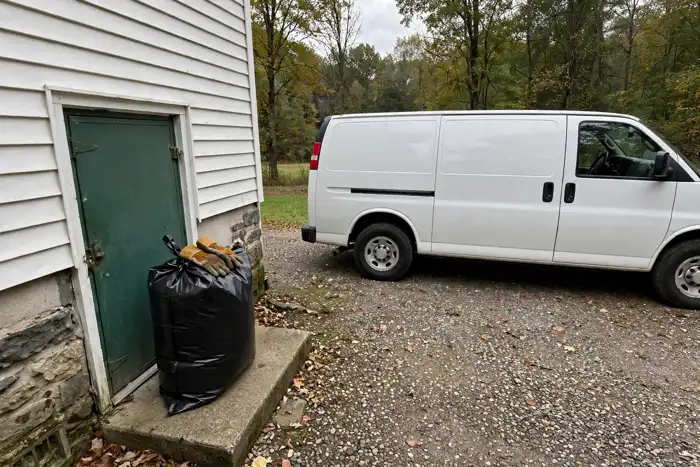
A dead animal in your Chesterland walls, crawlspace or barn
Dead-animal calls in Chesterland start with detective work across distance: an odor in the house, or the barn, or under the porch — sometimes with a second building faintly involved — that builds as the weather warms. The animal is hidden in a wall void, under attic or loft insulation, in a crawlspace or a porch den, and the job is finding it while disturbing as little of the building as possible, removing it and the fouled material with it, and treating the spot so the smell ends with its source.
The township pattern is winter denning at scale. With houses, barns, sheds and porches all offering shelter, animals den across the lot through the snow season; the ones that die — an opossum in a crawlspace, a raccoon in a chimney, squirrels or mice in walls, something under the barn floor — are preserved by the cold until the Geauga thaw resumes the evidence, sometimes months later and a building away from where anyone last saw an animal.
The likely locations on a township property
The search list follows the denning habits by building. In the house: wall voids and under-floor spaces for mice and rats, attics and chimneys for squirrels and raccoons, crawlspaces and porch voids for skunks and opossums. In the barn: loft insulation, wall cavities and beneath floor sections, where raccoons, opossums and barn cats' wild neighbors den. Under outbuildings: groundhog and skunk burrow systems where an animal died underground. Odor strength building by building, then room by room, ranks that list before anything is opened.
The thaw reveal, township edition
Cold preserves and thaw publishes. A carcass from January can be nearly silent through February, then surge during a March warm spell, subside in a cold snap and surge again — a rhythm households read as a plumbing or septic mystery until the flies arrive at one window and settle the question. To a crew, the thaw-timed odor is itself evidence: the animal denned for winter rather than entering recently, and the dens of the property, not its random wall space, are where the search belongs.
Poison, again, is a common author
A large share of in-wall and under-floor deaths begin with rodent bait — set in the house, the barn or a neighboring lot. A poisoned mouse or rat retreats to its nest inside a wall, beneath a floor or deep in insulation and dies unreachable. If bait was put out anywhere on the property over winter, say so when you call: it points to the species and the size of cavity involved, and it opens the sealing-and-trapping conversation that retires bait for good.
Searching several buildings without wrecking one
The method is comparative patience: odor ranked across the lot's buildings, fly activity noted at windows and loft doors, the cavities and chases of each structure reasoned through in turn. Once located, the carcass and heavily fouled material are removed and the area cleaned and treated. Most jobs require no cutting at all; where a small opening is the only way in, it is kept small and placed to do the least harm, whether the wall is house plaster or barn siding.
Ask what the job includes before it starts
If an opening does have to be made, know that most wildlife crews do not perform finish repairs — plaster and drywall in the house, siding or flooring in the barn. Ask up front what is included in the removal and what will be left for you or your carpenter, so the end of the odor does not come with an unplanned repair surprise.
Sealing the den that produced the call
The animal arrived alive — through a foundation gap, a broken vent, a porch opening, a loft door that never closed, an ice-lifted roofline joint. With the carcass out, that entry is found and closed in metal, and the den itself is screened below grade where it is a porch, deck or outbuilding floor. On a lot that offers this much shelter, removal without closing is how the same call happens next spring.
Common dead animal questions in Chesterland
There is a dead-animal smell somewhere on my Chesterland property — what do I do?+
How long will the smell last if we leave it alone?+
Nothing was seen all winter — how did an animal die in the walls?+
We put mouse bait in the barn last fall — could that be this smell?+
How much does dead animal removal cost in Chesterland?+
Other Chesterland problems that come with dead animals
Our wildlife crew handles these closely related problems — the ones that most often turn up with a dead animal issue.
Got a live animal problem in Chesterland too?
Whatever died in the building moved in alive, through an opening that is still open — sealing it is what keeps next winter's den from ending the same way. See everything we handle locally on the Chesterland wildlife removal hub, or jump to Ohio wildlife removal.
Serving all of Geauga County
Chesterland is one part of Geauga County. See wildlife removal in Geauga County, OH for the county-wide picture — the animals we get called about most, and the other towns we cover.
One call to your Chesterland dead animal crew
Left in place, a carcass perfumes a building for weeks and surges with every warm spell. Removed and cleaned, with the den sealed, the episode is over. Call us and tell us about the job — we will confirm the local crew for your county before any work starts.
- Local to Geauga County. ODNR-compliant handling — call to ask about licensing and insurance.
- Locate it, remove it, clean it out. Odor comparison across buildings and cavities narrows the search; the animal and fouled material come out, the area is treated, and the den is closed against the next winter tenant.
- Done right. Removal, exclusion and cleanup.