Rat & Mouse Control in Chesterland, OH
Droppings in the feed room, scratching in the house walls from the first frost, and a big lawn that emerges from the snow looking mapped by trails? A township lot can run all three rodent problems at once — mice, rats and voles — and each one is solved in a different place. Call us and tell us about the job — we will confirm the local crew for your county before any work starts.
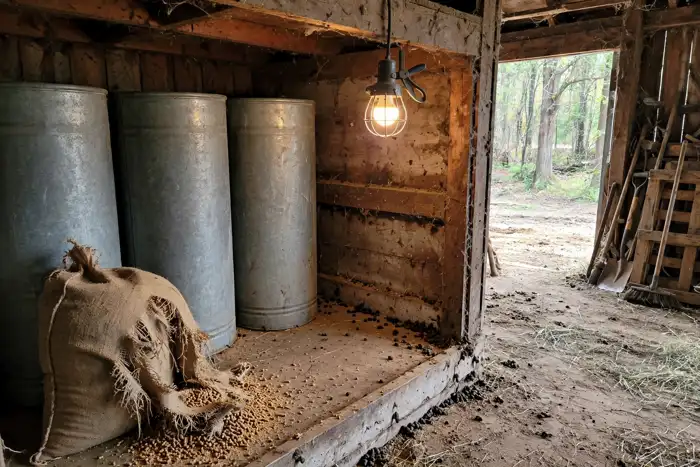
Rodents in your Chesterland home
Township rodent control is a three-front job. House mice and deer mice invade the buildings — house first, then barn and garage — when frost drives them in, and a long snowbelt winter gives them months to breed in walls and lofts. Norway rats colonize the ground level around barns, feed storage and older foundations, burrowing and traveling set runs. Voles ignore the buildings entirely and spend the winter under the snowpack, remodeling the lawn and girdling young trees and shrubs, invoiced at melt.
The unifying asset, from a rodent's perspective, is a lot full of food stored in permeable buildings: feed in paper bags, seed in open bins, pet food in the garage, plus foundations with pipe gaps and crawlspace vents that were never screened. Bait in that environment is a harvest, not a solution — the population and the entries both persist. Closing the buildings and securing the food is the actual control, with trapping as its second act.
Mice in the house and mice in the barn are one population
At first frost, mice test every building on the lot. The house offers pencil-width gaps at pipes, sills and basement windows; the barn offers everything larger. Inside, they run the plumbing and wiring between basement, walls and attic in the house, and nest in hay, stored equipment and feed sacks in the barn. Sealing the house alone while the barn breeds mice twenty yards away produces a slower, not smaller, problem. A township plan treats the buildings as one population with several addresses, sealing and clearing them in the same campaign.
Norway rats around feed and foundations
Rats are the heavy machinery of the rodent world: burrows along barn and house foundations, under slabs and feed-room floors, runs worn along walls, and entries wherever a line pierces an older foundation or a sill has rotted. Their evidence is at ground level and unmissable once looked for — droppings, gnawed bags and bins, rub marks, burrow mouths. Rat work is sealing that respects burrowing — metal and mortar, not foam — plus trapping along the runs and the unglamorous revolution of feed in sealed metal bins and spilled grain swept up.
Voles under the deepest snow in Ohio
Chesterland's snowpack is a vole metropolis roof: months of cover from predators, with grass, roots and bark available underneath. The spring reveal on large township lawns can be dramatic — trail systems webbing the turf, runways to every shrub, young trees and plantings girdled at the snow line. Moles push their own ridges and mounds in the same lawns hunting insects. The two need different responses, and telling the damage apart at melt — surface trails and gnawing versus raised tunnels and soil piles — is the first step of any yard plan.
Why bait fails where feed is stored
Poison in a barn competes with the feed itself, endangers the animals the feed is for, and still closes no entries — the lot's woods and fields supply replacements indefinitely. Its other product is carcasses in walls, under floors and in hay, with the odor and contamination that follow. On a working lot especially, the ordering matters: secure the food, seal the buildings in materials rodents cannot chew, trap the residents, verify silence. Bait, if used at all, belongs at the end of that list, not as the list.
Exclusion-first control across the whole lot
The crew inspects in lot order: house foundation and basement, garage, barn and feed storage, then the yard damage. Closures are metal and mortar — hardware cloth, flashing, fitted seals at pipe penetrations and vents — built to survive frost, livestock and gnawing. Traps clear the animals inside each structure, droppings are cleaned where they concentrate, and a follow-up confirms the quiet holds. The written homework is short: bins sealed, spills swept, clutter off the foundation walls, woodpile moved out.
Common rodent questions in Chesterland
We sealed the house but mice are back — where are they coming from?+
Droppings in the feed room — rats or mice?+
What carved the trails across my lawn all winter?+
Is poison safe to use around the barn?+
How much does rodent control cost in Chesterland?+
Other Chesterland problems that come with rodents
Our wildlife crew handles these closely related problems — the ones that most often turn up with a rodent issue.
Got more than rodents in Chesterland?
The gaps mice use into Chesterland houses and barns are the same gaps snakes, chipmunks and winter air use — one sealing pass serves them all. See everything we handle locally on the Chesterland wildlife removal hub, or jump to Ohio wildlife removal.
Serving all of Geauga County
Chesterland is one part of Geauga County. See wildlife removal in Geauga County, OH for the county-wide picture — the animals we get called about most, and the other towns we cover.
One call to your Chesterland rodent crew
Rodents on a lot with woods, feed and several buildings have endless reinforcements — the work only ends when the buildings stop admitting them. Call us and tell us about the job — we will confirm the local crew for your county before any work starts.
- Local to Geauga County. ODNR-compliant handling — call to ask about licensing and insurance.
- Close the buildings, clear the residents. Entries sealed in metal and mortar, feed and seed moved into sealed bins, then trapping for the rodents inside and follow-up until every structure is quiet.
- Done right. Removal, exclusion and cleanup.