Raccoon Removal in Akron, OH
Slow, heavy footsteps overhead in the evening — as if something sizeable is taking a walk in your attic? With valley woods at the back of so many Akron lots, a raccoon is rarely coming from far away. Call us and tell us about the job — we will confirm the local crew for your county before any work starts.
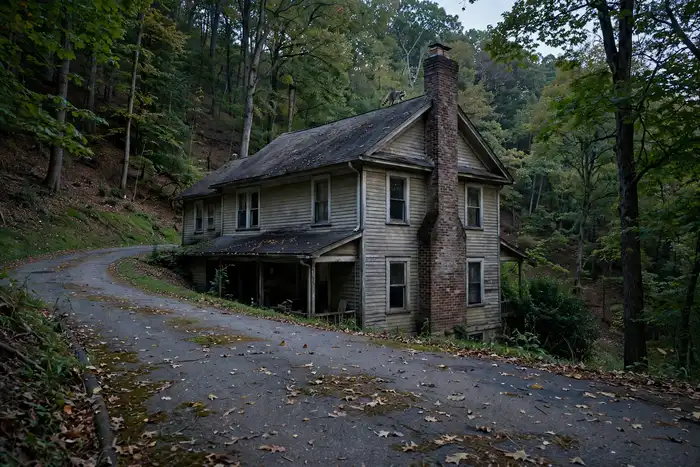
Raccoons in your Akron home
An Akron raccoon usually starts the night in a hollow tree on the slope or along the valley edge, crosses a backyard or two, and climbs — a downspout, a corner board, the brick of a chimney — onto the roof of an older house. What it wants up there is what the rubber-era stock offers in quantity: an unused chimney flue for a spring nursery, or a big attic reached through a soffit corner that decades of freeze and thaw have loosened. The walking-pace thumps overhead, and chattering when kits are present, are the sounds homeowners report.
Two facts govern the response. Biologically, a spring attic raccoon is almost always a mother whose kits cannot leave on their own. Legally, Ohio does not permit relocating raccoons at all. An Akron raccoon job is therefore planned around the family and the law together — improvised trapping satisfies neither.
From den tree to roofline
The valley's mature, hollow-bearing trees are excellent raccoon housing, and that cuts both ways: raccoons with good natural dens use houses less, but a female looking for a nursery in spring often prefers a chimney or attic — drier, safer from predators, and close to the food in the yards below. Once a female has raised kits in a flue, the site is remembered. Houses on wooded Akron lots should expect the chimney and the roofline to be checked every spring, not just after the first incident.
Ohio law: raccoons stay on the property or are not released at all
Ohio Administrative Code 1501:31-15-03(E)(3) requires a captured raccoon to be released on the same property or humanely euthanized. Relocation is unlawful, because raccoons are a primary rabies vector and moving them spreads the disease — northeast Ohio is part of the oral rabies vaccine baiting area working to hold raccoon-variant rabies at bay. Our crew's first tool is therefore exclusion: one-way doors and sealing that persuade a raccoon to leave the chimney or attic itself, with any captured animal handled strictly as the rule requires. A promise to release your raccoon in the countryside is a promise to break Ohio law.
Kits in the flue or the attic insulation
Litters arrive in spring, and kits spend their first weeks unable to climb the flue or follow their mother through a one-way door. Excluding or removing the mother alone strands them to die inside the structure — in a chimney that can mean a summer of odor at every fireplace in the house. The crew locates kits first, using cameras and inspection of the flue and attic, and sequences the job so the whole family is accounted for before any cap or seal goes on.
Latrines, roundworm and the big old attic
Raccoons concentrate their droppings in a latrine, and a spacious older attic lets one grow undisturbed. Raccoon droppings can carry roundworm eggs that persist in the environment and pose a real risk to people, especially children, so cleanup with proper protection is part of the job. What usually does not need to happen is wholesale insulation replacement; the contaminated area is removed and sanitized, and you are entitled to a clear explanation of why anything beyond that is being recommended.
Sealing a roof a raccoon has already opened
A raccoon is strong, patient and good with its hands. Repairs have to be heavy-gauge metal: a properly fitted chimney cap, reinforced vent screening, flashing at the porch-roof seam and roof returns, and soffit corners rebuilt rather than stuffed. On a house below a slope, the crew also checks the uphill elevation, where branches and the bank itself give a raccoon its easiest climb onto the roof.
Food and water on a valley lot
Raccoons commute between the woods and the yard's offerings: unsecured trash, pet food on a porch, fallen fruit, and the shallow water of a birdbath or a low spot that holds rain. Locking down the food does not empty the valley of raccoons, but combined with a capped chimney and a metal-sealed roofline it makes your house the least rewarding stop on the route — which is all it needs to be.
Common raccoon questions in Akron
There is a raccoon in my Akron attic — what should I do?+
Can you release a raccoon in the Cuyahoga Valley or out in the country?+
Why does a raccoon keep choosing my chimney?+
I saw a raccoon in my yard in the daytime — should I worry?+
How much does raccoon removal cost in Akron?+
Other Akron problems that come with raccoons
Our wildlife crew handles these closely related problems — the ones that most often turn up with a raccoon issue.
Got more than raccoons in Akron?
Raccoons are rarely the only thing using an attic or yard in Akron. See everything we handle locally on the Akron wildlife removal hub, or jump to Ohio wildlife removal.
Serving all of Summit County
Akron is one part of Summit County. See wildlife removal in Summit County, OH for the county-wide picture — the animals we get called about most, and the other towns we cover.
One call to your Akron raccoon crew
The longer raccoons stay in the attic, the more they chew and the bigger the cleanup. Call us and tell us about the job — we will confirm the local crew for your county before any work starts.
- Local to Summit County. ODNR-compliant handling — call to ask about licensing and insurance.
- Humane exclusion. One-way doors and steel sealing, not poison.
- Done right. Removal, exclusion and cleanup.