Dead Animal Removal in Akron, OH
An odor arriving with the spring thaw, strongest low in the house or near the porch, with no clear source? On Akron's sloped lots, that is often a winter death inside a structure making itself known. Call us and tell us about the job — we will confirm the local crew for your county before any work starts.
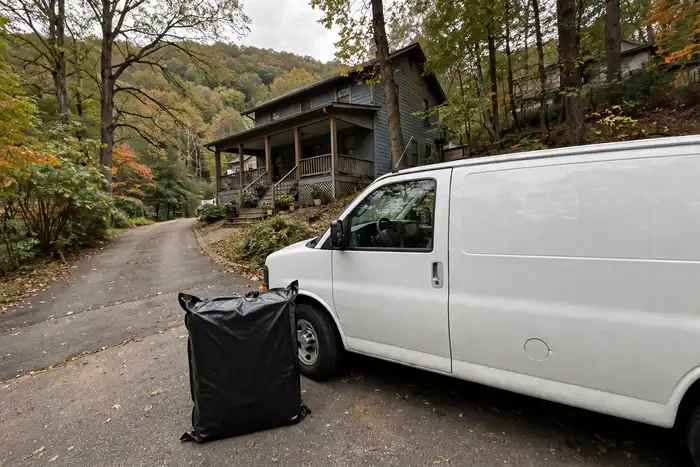
A dead animal in your Akron walls, attic or under the porch
Akron's dead-animal calls have a season. Through the cold months, animals den where they can — squirrels and flying squirrels in attics, a skunk or opossum under a porch or in a bank, mice inside walls, a raccoon in a chimney — and winter takes its share of them quietly. Cold suppresses the evidence. Then the thaw comes, temperatures climb the slope-facing walls, and households meet a strong odor with no recent noise to explain it. The animal has been there for weeks; only the announcement is new.
The work is the same careful sequence as anywhere, with a local complication: a hillside house moves odors in unexpected directions, through stepped foundations, porch voids at mid-height and chases between the buried and exposed sides of the structure. Locating the source is a process of reading the house, not just following your nose to the worst room.
Winter deaths and the thaw announcement
Understanding the calendar helps locate the animal. A smell that begins or surges in a mild spell or at spring thaw, in a house that heard attic noise in the fall or smelled skunk faintly in January, points backward to a winter death in a den site: attic, chimney, porch void, bank burrow against the foundation, or wall cavity. The crew uses that history — when noises were heard, in which part of the house, and what changed with the weather — as the first map of where to search.
Likely places on a sloped lot
Add the hillside sites to the usual list. Beyond attics, chimneys and wall voids, Akron carcasses are found under porches built over sloped voids, in the soil chambers behind retaining walls where an animal denned, and in basement recesses on the buried side of the house. An animal that died in a bank burrow against the foundation can perfume the basement while remaining technically outdoors — one reason a thorough search includes the grade line and the wall, not just the interior.
The poison pathway
As elsewhere, bait explains many in-wall deaths: a mouse or rat that ate poison retreats to its wall or floor void and dies there, often in heating season, when the furnace then distributes the odor efficiently. Any recent baiting — yours, a neighbor's, a previous service's — is worth stating plainly when you call, because it identifies the likely species and the scale of the space being searched.
Finding it with minimal opening
The search is deliberate and unsensational: odor strength compared room by room and level by level, flies noted where they gather at windows and lights, den sites and entries inspected in the order the season suggests. Once found, the carcass and heavily contaminated material are removed and the area cleaned and treated at the source. Where a small opening in a wall or ceiling is unavoidable, it is placed with care and kept small — particularly in the plaster of an older Akron home.
Ask what the quote includes
Two questions prevent most misunderstandings. Does the work include cleaning and treating the area, or removal only? And if a wall or ceiling must be opened, is patching included — knowing that most wildlife crews do not repair drywall or plaster, so a visible wall in a finished room may need your own plasterer afterward. Ask both before work begins, not after the opening is made.
Sealing against the sequel
A dead animal indoors is evidence of an open door: an animal entered alive, through the roofline, the foundation at the grade, or a porch void. After removal and cleanup, that entry is found and sealed with metal, and porch and wall-base screening is added where a den was the route. Without the sealing, the same shelter advertises to the next animal on the slope — and the household risks an encore next winter.
Common dead animal questions in Akron
A strong smell started in my Akron house at the thaw — what is it?+
How long does a dead-animal smell last if left alone?+
Could the animal be outside but still smell inside?+
I put out mouse poison this winter and now there is an odor — connected?+
Will the crew have to open a wall to reach it?+
How much does dead animal removal cost in Akron?+
Other Akron problems that come with dead animals
Our wildlife crew handles these closely related problems — the ones that most often turn up with a dead animal issue.
Got a live animal problem in Akron too?
Whatever died inside entered alive, through an opening on the roofline, the grade or the porch that is still open to the next animal. See everything we handle locally on the Akron wildlife removal hub, or jump to Ohio wildlife removal.
Serving all of Summit County
Akron is one part of Summit County. See wildlife removal in Summit County, OH for the county-wide picture — the animals we get called about most, and the other towns we cover.
One call to your Akron dead animal crew
An odor left to fade on its own can linger for weeks through a house, and on a sloped lot the source is rarely where the smell is strongest. Call us and tell us about the job — we will confirm the local crew for your county before any work starts.
- Local to Summit County. ODNR-compliant handling — call to ask about licensing and insurance.
- Find it, remove it, clean it. Working from odor pattern, fly activity and the structure of the house to the source, then removing and treating it rather than masking it.
- Done right. Removal, exclusion and cleanup.