Dead Animal Removal in Painesville, OH
A sweet-sour odor growing day by day in one room, strongest low or near the basement, with flies gathering at a window? Something has died inside the structure of your Painesville home — most often an animal that denned there for the winter. Call us and tell us about the job — we will confirm the local crew for your county before any work starts.
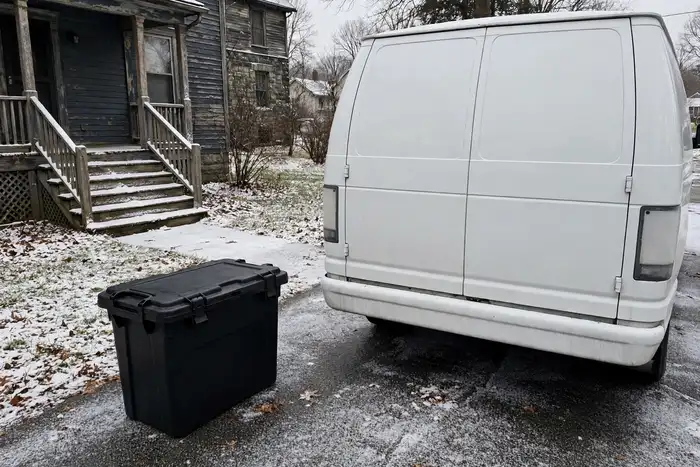
A dead animal in your Painesville walls, attic or under the porch
Painesville's dead-animal calls follow a script: an odor that starts faint in one part of the house, strengthens daily, and draws flies to a nearby window. The animal is hidden — in a wall cavity, under attic insulation, in a basement recess, beneath a porch — and the work is finding it while opening as little of the house as possible, taking it and the fouled material out, and cleaning the spot so the smell ends at its source.
Winter writes most of these jobs. Animals den in Painesville porches, chimneys, attics and basements through the cold, and some do not survive it; cold suppresses the evidence until a mild spell or the spring thaw lets the odor build and travel through the connected cavities of an older house. The strongest smell is frequently a room or two away from where the animal actually lies.
Where animals die in an older Painesville house
The locations follow the living habits. Mice and rats die in wall voids and beneath basement floors, very often after eating poison somewhere. Squirrels die in attics and in the wall runs they traveled. A raccoon can die in a chimney or a large attic. Skunks and opossums die in their winter dens under porches and in basement spaces. Matching the season and the odor's location to that short list is how a crew narrows a whole house to one section of wall or one porch bay.
Why a winter death surfaces in spring
Cold slows decomposition to a crawl, so an animal that died in a wall in January may say almost nothing until a February thaw or the real warmth of spring — at which point the household gets a strong odor with no recent animal noises to explain it. The crew works backward: where the odor peaks, where flies gather, which entries exist, and what was heard earlier in the winter. Expect the timeline of the smell to be part of the diagnosis.
The bait connection, stated plainly
A large share of in-wall deaths begin with rodent poison — placed by the homeowner, a neighbor or an earlier service. A poisoned mouse or rat retreats to where it lives, inside a wall or under a floor, and dies there. Mention any baiting when you call: it points strongly at the species, and therefore at the size of the cavity being searched, and it opens the conversation about sealing and trapping so poison is not needed again.
Locating the source without tearing the house apart
The search is comparative and patient: room-by-room odor strength, the windows where flies congregate, the way cavities and chases connect in this particular older house. Once the animal is located, the carcass and heavily fouled material around it are removed and the area cleaned and treated. Many jobs need no cutting at all; where a small opening is the only route in, it is kept small and placed where it does the least harm.
Ask who patches the wall before the work starts
If an opening does have to be made, know that most wildlife crews do not repair drywall or plaster — and older Painesville homes often have original plaster that deserves a proper patch. Ask up front what is and is not included, so a finished removal does not leave you with an unplanned repair in a visible room.
Closing the door it walked through
However it died, the animal entered alive: through a foundation gap, a broken vent, a porch opening or a roofline hole. With the carcass out, that entry is found and sealed in metal, and any porch void involved is screened. Removal, cleaning and sealing together make a complete job; any one of them alone leaves the story half finished.
Common dead animal questions in Painesville
There is a dead-animal smell in my Painesville house — what should I do?+
How long would the smell last if I did nothing?+
Why did this start in spring when nothing was heard all winter?+
I put out rat poison and now the smell is awful — connected?+
How much does dead animal removal cost in Painesville?+
Other Painesville problems that come with dead animals
Our wildlife crew handles these closely related problems — the ones that most often turn up with a dead animal issue.
Got a live animal problem in Painesville too?
Whatever died in the structure walked in alive through an opening that is still open — finding and sealing it is how the job is finished. See everything we handle locally on the Painesville wildlife removal hub, or jump to Ohio wildlife removal.
Serving all of Lake County
Painesville is one part of Lake County. See wildlife removal in Lake County, OH for the county-wide picture — the animals we get called about most, and the other towns we cover.
One call to your Painesville dead animal crew
Left in place, the odor can run for weeks, and cold weather pauses the process only to let a thaw restart it at full strength. Call us and tell us about the job — we will confirm the local crew for your county before any work starts.
- Local to Lake County. ODNR-compliant handling — call to ask about licensing and insurance.
- Trace it, remove it, treat it. Odor pattern and fly activity lead to the carcass; the animal and fouled material come out and the area is treated, rather than the smell being masked.
- Done right. Removal, exclusion and cleanup.