Wildlife Removal in North Ridgeville, OH
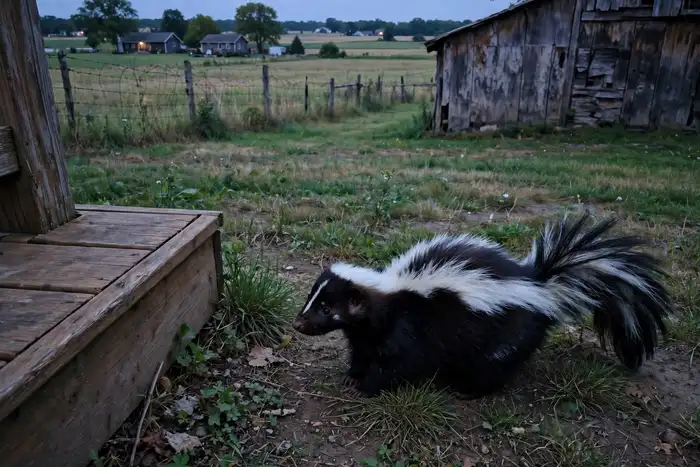
North Ridgeville is two landscapes sharing one map: a new subdivision on one side of the road, a working field, a barn and a farm pond on the other. Wildlife does not recognize the difference, and a house at that seam gets farm-country animal pressure with suburban shelter to offer. Call us and tell us about the job — we will confirm the local crew for your county before any work starts.
Why North Ridgeville homes see the wildlife they do
Ask a North Ridgeville homeowner where the animals come from and they can usually point. There is the ditch that runs behind the lot, the farm pond two properties over, the treeline along an old fencerow, the barn that still stands on a parcel the subdivisions have not reached yet. This is a city being built field by field, and the lots in between — part farm, part street — sit right in the travel lanes wildlife has used for generations.
The housing mix adds its own variety. Newer builds on old farmland stand near older farmhouses, ranch homes and properties with barns, pole buildings and sheds that have sheltered animals for decades. A raccoon may den in the barn and feed at the subdivision's trash cans. A groundhog may burrow at the field edge and extend the system under a new patio. Treating only the house, and ignoring the outbuildings and the lot's edges, misses how animals actually use a North Ridgeville property.
Our wildlife crew works the whole property picture here: the house and its basement, the outbuildings, the pond bank and the ditch line. We remove animals the way Ohio law requires, seal the house in materials that survive freeze and thaw, screen the structures animals shelter in, and tell you plainly which parts of the lot will keep drawing wildlife no matter what anyone does.
Field edges, ditches and fencerows are wildlife roads
Rural animals travel edges. A drainage ditch with brush in it, a fencerow left standing between fields, the unmowed strip along a pond — these are covered routes that let raccoons, skunks, opossums and foxes cross open country without exposing themselves. North Ridgeville's pattern of building keeps cutting new lots across those routes, and the animals keep using them, which is why a brand-new street can have established wildlife traffic from its first winter.
The ditch behind the lot deserves particular respect. It holds water after rain, grows the cattails and brush animals hide in, and often connects, culvert by culvert, to ponds and creek runs a mile away. A homeowner cannot fill or clear a drainage ditch — and should not try — but can decide what the ditch delivers animals to: a screened deck and a sealed foundation, or an open crawlspace vent and a pet-food bowl on the porch.
Field edges matter seasonally, too. Standing crops shelter animals all summer; harvest removes the cover in a week, and the displaced animals look for winter quarters in October — the same month attics and outbuildings get their hardest testing of the year.
Barns and outbuildings: the other half of the call
On many North Ridgeville properties the first wildlife address is not the house at all. A barn loft is a raccoon maternity ward with a decades-long reputation among local animals. A pole building with a gap at the sliding door shelters skunks and opossums. A shed on skids is a groundhog burrow waiting for its tenant, and stored equipment, hay and feed give all of them a reason to stay.
Outbuildings also act as a staging area for the house. Animals that den in a barn learn the property — the trash cans, the pet food, the deck — and graduate to the attic when the barn gets disturbed or a litter needs a warmer spot. A call that begins with raccoons in the barn is worth treating as a whole-property job, house included, rather than a single-structure one.
The work differs by structure. Barns and pole buildings get door gaps closed, loft access addressed and ground-level voids screened; sheds get the buried-metal treatment at their base. Feed storage gets a direct conversation, because an open feed bin will out-argue any amount of sealing.
Farm ponds: water, banks and the animals both draw
A farm pond concentrates wildlife the way a town square concentrates people. Raccoons hunt its edges, skunks work the banks for insects, groundhogs burrow into the dam and the bank where the digging is easy and the grass is close, and snakes — garter snakes and northern watersnakes, both harmless — patrol the shallows for frogs. Herons and geese visit; the resident nuisance cast is the four-legged one.
Bank burrowing is the structural concern. A groundhog system in a pond dam or bank can weaken the very earthwork that holds the water, and burrows that flood collapse and invite re-digging in a slightly worse place. Homeowners with a pond should treat fresh digging in the bank as a prompt call, not a curiosity.
Lots that merely neighbor a pond get a share of the traffic without the bank problem: animals commute from the water to the nearest shelter, which is often a deck, a shed or a crawlspace on the adjoining property. Screening and sealing carry the weight there.
Ohio rules every crew here has to work under
Removing nuisance wildlife for hire in Ohio requires an ODNR Commercial Nuisance Wild Animal Control Operator license, issued under Ohio Revised Code section 1531.40 — the credential that separates a licensed operator from a neighbor with a trap. Bats carry the tightest calendar in the rulebook: no exclusion from May 16 through July 31 when five or more bats are present, because the season's pups cannot fly, and none from October 15 through March 31, when big brown bats may be hibernating inside the attic itself — either period only with prior written ODNR permission. The lawful windows are April 1 to May 15 and August 1 to October 15.
Rabies draws the other bright line. Raccoons, skunks, foxes and bats are Ohio's principal rabies vectors, and Ohio Administrative Code 1501:31-15-03(E)(3) says a captured raccoon, skunk or opossum may not be carried off and released somewhere else: the lawful outcomes are release on the same property or humane euthanasia. That rule is why our crew builds jobs around exclusion — one-way doors and thorough sealing that let an animal walk out of a structure on its own where that can work — and handles everything else exactly as the rule requires.
Wildlife we remove in North Ridgeville
From a groundhog in the pond bank to bats in a barn loft, these are the calls North Ridgeville homeowners make most.
🐿️ Squirrels
Gray and fox squirrels work the fencerow trees and move into attics when harvest and first frost strip their cover. Complex rooflines and barn lofts both get tested, and fall is the peak entry season. See our full North Ridgeville squirrel removal guide →
🦝 Raccoons
Raccoons den in barn lofts, attics and chimneys across the city, feeding at ponds and trash cans. A rabies-vector species Ohio law does not allow to be moved off the property — exclusion first, litters accounted for. See our full North Ridgeville raccoon removal guide →
🦇 Bats
Big brown bats roost in attics and in quiet barn lofts, and they may hibernate in the same Ohio building. Exclusion is legal only April 1–May 15 and August 1–October 15 without written ODNR permission. See our full North Ridgeville bat removal guide →
🦨 Skunks
Skunks den under sheds, porches and barn edges and dig for grubs across big rural-suburban lawns. A rabies vector that cannot be carried off the property under Ohio law — on-site handling plus buried screening. See our full North Ridgeville skunk removal guide →
🦫 Groundhogs
Groundhogs burrow in pond banks and dams, along field edges and under decks and sheds, then vanish into hibernation for the winter. Spring emergence is when the digging — and the damage — restarts. See our full North Ridgeville groundhog removal guide →
🐾 Opossums
Opossums drift along ditches and fencerows and bed down in barns, garages and under decks. Ohio law does not allow them to be carried off the property, so removal comes with closing the shelter they chose. See our full North Ridgeville opossum removal guide →
🐿️ Chipmunks
Chipmunks tunnel along foundations, stoops and the stone edges of farmhouse porches, and colonize retaining walls in newer subdivisions. Small holes, steady undermining. See our full North Ridgeville chipmunk removal guide →
🐀 Rats, mice & voles
House mice invade from fields and outbuildings at first frost, voles trail lawns and pond edges under the snow, and Norway rats settle where feed and older farm buildings give them cover. See our full North Ridgeville rodent removal guide →
🐍 Snakes
Almost always harmless — garter snakes in the garden, rat snakes in barns after mice, northern watersnakes at the ponds. The honest call is identification and removal, not fear. See our full North Ridgeville snake removal guide →
🪰 Dead animals
A smell in one room, or around a barn or under a deck, usually means something died in a wall, a loft or a den over winter. Our crew locates it, removes it, cleans the area and closes the way in. See our full North Ridgeville dead animal removal guide →
Animal-specific help in North Ridgeville
Deep, local guides for the problems we get called about most — with our wildlife crew behind every one.
How to get help in North Ridgeville
Tell us what you're hearing
Scratching in the attic, a snake by the porch, holes in the yard — call with your problem and your North Ridgeville address.
We connect you locally
Call us and tell us about the job — we will confirm the local crew for your county before any work starts.
They solve it — for good
Inspection, humane removal, full exclusion and cleanup — handled by our wildlife crew, following Ohio rules.
Common wildlife removal questions in North Ridgeville
Who do I call for wildlife removal in North Ridgeville?+
Why does my property get so many animals compared with a regular suburb?+
Can bats be removed from my attic or barn in summer or winter?+
Will you trap a skunk or raccoon and release it on farmland?+
The animals are in my barn, not my house — is that still worth a call?+
How much does wildlife removal cost in North Ridgeville?+
Serving all of Lorain County
North Ridgeville is one part of Lorain County. See wildlife removal in Lorain County, OH for the county-wide picture — the animals we get called about most, and the other towns we cover.
One call to your North Ridgeville wildlife crew
Whether it's squirrels in an older in-town attic or a raccoon in a new subdivision crawlspace, the fastest fix is our wildlife crew, who knows Lorain County wildlife. Call us and tell us about the job — we will confirm the local crew for your county before any work starts.
- Local to Lorain County. ODNR-compliant handling — call to ask about licensing and insurance.
- One company, one call. Call us and tell us about the job.
- Done right. Removal, exclusion and cleanup.