Bat Removal & Exclusion in North Ridgeville, OH
Droppings beneath a gable vent, or a rustling in the barn loft at dusk? Big brown bats use houses and quiet outbuildings alike in North Ridgeville — and Ohio law fixes the dates when a colony may be put out. Call us and tell us about the job — we will confirm the local crew for your county before any work starts.
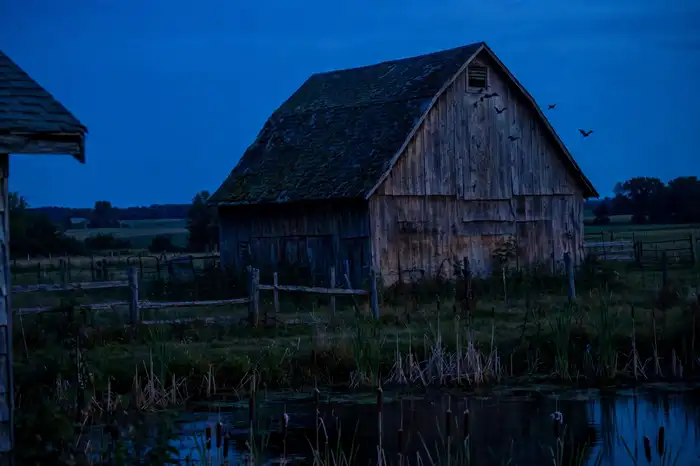
Bats in your North Ridgeville home
The bat colony in North Ridgeville belongs, almost always, to the big brown bat — a building bat by preference, as happy in a quiet barn loft as in a house attic, and hardy enough that instead of migrating to a cave it may simply stay, hibernating in a cold corner of the same structure it used all summer. Homeowners find colonies by the evidence rather than the animals: droppings collecting below an entry, staining at a vent, or one bat that has found its way into a bedroom.
Ohio surrounds this animal with the strictest rules in the trade. Exclusion — letting the bats leave on their own through one-way valves — is the only lawful removal method, only a licensed operator may perform it for hire, and two closed seasons limit when it may be done at all. The calendar is not red tape; it is written around the bats' biology, and working with it is what a clean removal looks like.
Two closed seasons, two working windows
Ohio Administrative Code 1501:31-15-03(H)(5) prohibits bat exclusion from May 16 through July 31 when five or more bats are present — maternity season, when the pups cannot fly — and from October 15 through March 31, when bats may be hibernating within the structure. Either closed season yields only to prior written permission from the Chief of the ODNR Division of Wildlife. The working windows are therefore April 1 to May 15 and August 1 to October 15. A discovery in June or January is still a reason to call now: the inspection, the entry map and the booking all happen in advance, so the exclusion runs on the first lawful day.
The winter colony nobody hears
A big brown bat in hibernation is silent, still and tucked into a crevice — behind a loft beam, in an attic corner, along a wall top. A North Ridgeville homeowner can share a house with overwintering bats for months and know nothing about it. That hidden presence is exactly why sealing a building shut in midwinter, on the comfortable assumption the bats have gone south, can entomb animals that never left, and why the October-to-March closed season exists. A winter inspection searches for sleepers, not just for holes.
Entries on houses — and on barns
A bat needs a gap roughly the width of a finger. Houses offer them at gable vents with tired screening, at flashing joints worked open by freeze and thaw, and behind trim. Barns and pole buildings offer more: gaps at sliding-door tracks, open eaves, spaces along a loft floor. Droppings on the ground or floor directly beneath a spot are the most trustworthy sign, and they separate the entries a colony actually uses from the dozens it merely could.
Guano, rabies and the indoor bat
Years of droppings under a roost are a cleanup that calls for proper protection, since dried guano can harbor the fungus associated with histoplasmosis — a real consideration in a barn where the space below is worked in daily. Bats are also Ohio's most frequently confirmed rabies species. A bat found in a room where someone was sleeping is therefore a health matter: do not handle it, shut the room, and take advice from your doctor or local health department. A colony roosting undisturbed is not aggressive; the risks are droppings and direct contact, nothing more theatrical.
How a lawful exclusion proceeds
Inside a working window, the crew seals every gap on the structure except the active entries, then fits those with one-way bat valves. The colony leaves at dusk to feed over the fields and ponds and finds the way back barred; night by night the building empties. When checks confirm no bats remain, the valves come off and the last entries are sealed permanently. The job is a sequence of visits, and the number of gaps on an older farmhouse or a barn decides how long the sequence runs.
Mistakes that make a colony a crisis
Sealing the found gap on sight is the principal one. In summer it imprisons flightless pups; in winter, sleeping adults; at any time of year with bats still inside, it redirects them into wall voids and living rooms. Mothballs, sprays and ultrasonic boxes do not move a colony and never have. The lawful sequence — inspect, schedule to the window, exclude one-way, seal — is slower on paper and faster in fact.
Common bat questions in North Ridgeville
I have bats in my North Ridgeville attic — how do they get out?+
Why can the bats not be removed in July, or in midwinter?+
A bat got into my house — what should I do?+
Can bats be in my barn but not my house?+
How much does bat removal cost in North Ridgeville?+
Other North Ridgeville problems that come with bats
Our wildlife crew handles these closely related problems — the ones that most often turn up with a bat issue.
Got more than bats in North Ridgeville?
A gap that admits bats to a North Ridgeville attic is rarely the only opening the winters have made in the building. See everything we handle locally on the North Ridgeville wildlife removal hub, or jump to Ohio wildlife removal.
Serving all of Lorain County
North Ridgeville is one part of Lorain County. See wildlife removal in Lorain County, OH for the county-wide picture — the animals we get called about most, and the other towns we cover.
One call to your North Ridgeville bat crew
Bats do not damage a building the way chewing animals do, but droppings accumulate under a roost for years, and sealing at the wrong season traps pups or hibernating bats inside. Call us and tell us about the job — we will confirm the local crew for your county before any work starts.
- Local to Lorain County. ODNR-compliant handling — call to ask about licensing and insurance.
- Timed, one-way exclusion. Bat valves in the April 1–May 15 or August 1–October 15 windows, then permanent sealing once the colony is confirmed out.
- Done right. Removal, exclusion and cleanup.