Squirrel Removal in Elyria, OH
Quick scratching and running overhead in the morning, then again near dusk — in Elyria that almost always means squirrels have moved into the attic for the season. Call us and tell us about the job — we will confirm the local crew for your county before any work starts.
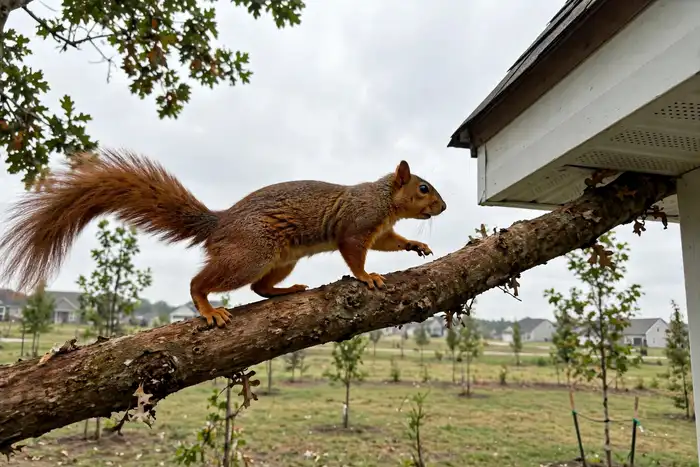
Squirrels in your Elyria home
Fall is squirrel season in Elyria. As the nights turn cold off Lake Erie, gray squirrels leave the big shade trees along the river and in the older neighborhoods and start testing rooflines for a winter den. The houses near downtown give them plenty to work with: wooden soffits and fascia worn by decades of freeze and thaw, gable vents whose screens rusted out years ago, and tall trees close enough to the roof that a squirrel barely has to jump. Once one gets in, the attic offers warmth, quiet and room to nest through the whole winter.
The newer homes on Elyria's edges are not exempt — they just fail differently. Squirrels there find construction gaps where roof sections meet, soffit corners that never fully closed, and vents cut a little large for their covers. Whether the house is a century old or nearly new, the result in the attic is the same: shredded insulation, droppings, and the steady gnawing of an animal whose teeth never stop growing, working on wood and wiring alike.
Which squirrel is in your attic?
Three kinds turn up in Elyria homes. Gray squirrels are the daytime standard in the older, tree-heavy parts of town. Fox squirrels, larger and rust-colored, favor the more open ground toward the edges of the city. And flying squirrels — small, nocturnal and easy to miss — live in colonies and come and go after dark, so the noise starts when the house goes to bed. Each needs a slightly different seal: flying squirrels pass through gaps a gray squirrel never could, so a job that only closes the big holes can leave the night shift still moving in.
How winter opens the door
Elyria winters do quiet damage to a roofline. Water gets into a small seam, freezes, and pushes it wider; flashing around an older chimney lifts a fraction at a time; a wooden soffit softens where a gutter has overflowed for years. None of it looks dramatic from the ground, and most of it happens out of sight at corners and joints. Squirrels in the fall are essentially inspectors of exactly this damage — they find the soft board and the lifted seam and chew them into a doorway. That is why our inspection reads the roofline as winter left it, not as it looked when the house was painted.
The chewing is the real problem
Noise is what gets the call made, but chewing is what makes it urgent. A squirrel gnaws constantly to wear down teeth that grow all its life, and an attic offers wiring, ductwork, stored boxes and the wood of the house itself. Gnawed electrical wire with its coating stripped is a recognized fire risk, and it tends to happen out of sight, above a ceiling. Squirrels also tear insulation into nests and mat the rest down, which costs heating money through a Lorain County winter. Letting a squirrel problem ride until spring usually means paying for the removal and the damage.
Babies in the attic change the plan
Gray squirrels raise litters in late winter and again in mid-to-late summer, and a mother in an attic in those seasons usually has young tucked in the insulation. Seal the entry with the babies still inside and you create two problems: young that die in the attic, and a mother who will chew a new hole — often a worse one — trying to get back to them. Our crew checks for litters before anything is closed, times the exclusion so the whole family leaves together, and only seals once the attic is confirmed empty.
How the removal works
The standard fix is a one-way door fitted over the active entry: squirrels leave to feed, the door swings shut behind them, and they cannot push back in. Every other opening on the house is sealed with steel — flashing, hardware cloth, metal mesh — at the same visit, so a locked-out squirrel cannot simply move to the second hole it had been using. Traps are used where a door will not work. A follow-up check confirms the attic is quiet and empty before the last opening is closed for good.
Keeping the next squirrel out
Squirrels remember good den sites, and the river corridor and mature trees around Elyria guarantee a next candidate. Lasting prevention is the metal work itself, plus a few habits: limbs trimmed back off the roof where practical, bird feeders kept away from the house (spilled seed under a feeder is a squirrel magnet), and a quick look at vents and soffits each fall before the cold arrives. A sealed house in squirrel country stays sealed — an unsealed one gets re-tenanted.
Common squirrel questions in Elyria
I hear scratching in my Elyria attic in the morning — is it squirrels?+
Why do squirrels move in during the fall?+
Can I just patch the hole myself?+
Are attic squirrels a fire hazard?+
Will squirrels come back after removal?+
How much does squirrel removal cost in Elyria?+
Other Elyria problems that come with squirrels
Our wildlife crew handles these closely related problems — the ones that most often turn up with a squirrel issue.
Got more than squirrels in Elyria?
Squirrels are rarely the only thing using an attic or yard in Elyria. See everything we handle locally on the Elyria wildlife removal hub, or jump to Ohio wildlife removal.
Serving all of Lorain County
Elyria is one part of Lorain County. See wildlife removal in Lorain County, OH for the county-wide picture — the animals we get called about most, and the other towns we cover.
One call to your Elyria squirrel crew
The longer squirrels stay in the attic, the more they chew and the bigger the cleanup. Call us and tell us about the job — we will confirm the local crew for your county before any work starts.
- Local to Lorain County. ODNR-compliant handling — call to ask about licensing and insurance.
- Humane exclusion. One-way doors and steel sealing, not poison.
- Done right. Removal, exclusion and cleanup.