Chipmunk Removal in Elyria, OH
They look like the harmless part of the yard — until the front stoop starts to settle and the sidewalk cracks along a neat line of little holes. Call us and tell us about the job — we will confirm the local crew for your county before any work starts.
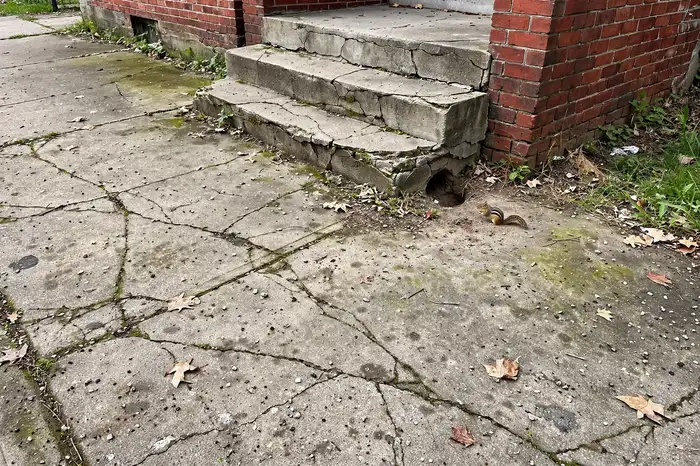
Chipmunks in your Elyria home
Chipmunks get a pass from most Elyria homeowners for years. They are small, quick, daytime animals, busy around bird feeders and flower beds, and a single chipmunk looks like nothing. The trouble is arithmetic. A chipmunk's burrow is an engineered system — a entrance or two at the surface, tunnels running several feet, a nest chamber and storage chambers for the seed it hoards all season — and a good site along a foundation hosts not one animal but a growing local population, each digging its own system into the same soil.
The older in-town neighborhoods are prime territory: stone and block foundations with soft mortar at grade, mature plantings and retaining edges, sidewalks and stoops bedded in soil a chipmunk can move a mouthful at a time. Because chipmunks carry the excavated dirt away in their cheek pouches and scatter it, their burrows often have no dirt mound at all — just a clean, round hole, a couple of inches wide, appearing at the base of a step or along a foundation wall. By the time concrete settles or a wall shows a crack at grade, the system underneath is well established.
The damage is under the concrete
Chipmunk harm is rarely about the garden, though they will raid bulbs and birdseed freely. It is about voids. A burrow system hollowing the soil beneath a stoop, a sidewalk panel, a patio or an AC pad removes the support that concrete was poured on, and freeze–thaw does the rest — water enters the void, freezes, and the panel heaves, cracks or drops. Burrows tight against a foundation can also channel surface water toward the wall and into a basement, which matters in Elyria's older homes, where the foundation may already have soft mortar at grade. Every season a system grows under a structure, the eventual repair gets larger.
Telling chipmunk work from other diggers
Homeowners mix up the diggers. A skunk leaves ragged, cone-shaped holes torn into the lawn overnight. A groundhog leaves a big entrance with a dirt mound you cannot miss. A chipmunk hole is small, tidy and moundless, usually at a hard edge — where a stoop meets soil, along a foundation, at the base of a retaining wall or a big tree. Chipmunks are also strictly daytime animals: if you watch the hole at noon and see the tenant dash in with its cheeks bulging, the identification is settled. That distinction matters, because the fix for each digger is different.
A seasonal rhythm of their own
Chipmunks do not truly hibernate the way groundhogs do — they sleep through the coldest stretches in their burrows, waking periodically to eat from the seed stores they spent the fall hoarding. So an Elyria chipmunk problem goes quiet in deep winter without being over. Spring emergence is busy and visible; two litters through the warmer months can multiply a foundation's population fast; and fall brings the most intense digging and hoarding, right along the house. The practical season for removal and proofing is while they are active — spring through fall — when the animals using a system can actually be cleared from it.
How our crew handles a chipmunk system
The work starts with mapping: which holes connect, where the system runs relative to the foundation and the concrete, and how many animals are using it. Removal uses traps set at the active entrances — chipmunks are in the category Ohio allows a licensed operator to release or handle under the general nuisance rules, and our crew follows those rules for where animals may be released. Then comes the part that makes it last: the burrow mouths at the structure are closed, and vulnerable runs along foundations, stoops and walls are proofed with buried steel mesh so a new chipmunk cannot reopen the same system. Filling holes with loose dirt, without clearing and proofing, is an afternoon's work the chipmunks undo in days.
Feeders, seed and making the yard less generous
No proofing discussion is complete without the bird feeder. A feeder over soil or mulch is a seed scatter that feeds chipmunks at the base of the house all day, and a population will organize itself around a reliable one. Moving feeders away from the foundation, cleaning up spilled seed, and storing seed and pet food in sealed metal containers in the garage all lower the carrying capacity of a yard. It will not empty an established burrow system by itself — but after removal and proofing, it is the difference between a quiet foundation and a new tenant prospecting the same wall by midsummer.
Common chipmunk questions in Elyria
Are chipmunks really damaging my Elyria home?+
How do I know the holes are chipmunks and not something else?+
The chipmunks vanished over the winter — did they leave?+
Can I fill the burrows with gravel or dirt myself?+
Will removing chipmunks hurt the birds or my garden?+
How much does chipmunk removal cost in Elyria?+
Other Elyria problems that come with chipmunks
Our wildlife crew handles these closely related problems — the ones that most often turn up with a chipmunk issue.
Got more than chipmunks in Elyria?
Chipmunks are rarely the only thing using an attic or yard in Elyria. See everything we handle locally on the Elyria wildlife removal hub, or jump to Ohio wildlife removal.
Serving all of Lorain County
Elyria is one part of Lorain County. See wildlife removal in Lorain County, OH for the county-wide picture — the animals we get called about most, and the other towns we cover.
One call to your Elyria chipmunk crew
The longer chipmunks stay in the attic, the more they chew and the bigger the cleanup. Call us and tell us about the job — we will confirm the local crew for your county before any work starts.
- Local to Lorain County. ODNR-compliant handling — call to ask about licensing and insurance.
- Humane exclusion. One-way doors and steel sealing, not poison.
- Done right. Removal, exclusion and cleanup.