Chipmunk Removal in Chesterland, OH
Neat little holes appearing along the house foundation, the barn sill and every stone pile on the lot, with the soil somehow nowhere to be seen? Chesterland chipmunks run colonies across whole township properties — and their burrows quietly move the ground your buildings stand on. Call us and tell us about the job — we will confirm the local crew for your county before any work starts.
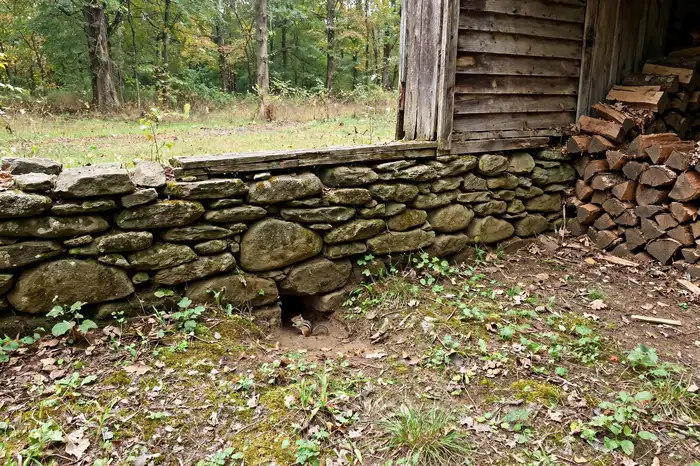
Chipmunks in your Chesterland home
A Chesterland lot is chipmunk infrastructure end to end: stone piles and old fieldstone walls for cover, retaining edges and barn sills for burrow sites, oak and hickory mast plus gardens and feeders for food, and foundations — house, barn and shed — whose sheltered soil is the easiest digging in any season. The burrow entrances stay deceptively tidy because chipmunks haul excavated soil away in their cheek pouches and broadcast it. What shows is a small clean hole; what exists below is a tunnel system with a nest and a pantry.
The concern is aggregate and architectural. One colony at one wall moves soil from against footings, stoops and sills, year after year; several colonies across a lot do it at every building simultaneously. The voids divert snowmelt down foundation walls in a county with snowmelt to spare, and where tunnels meet a foundation crack, mice inherit a finished highway into the building.
Burrowing where buildings meet the ground
Chipmunks choose the protected strip: soil under eaves that stays drier than the yard, the lee of a stone wall, the base of a barn sill or a porch footing. On septic-era township homes, that strip often runs beside crawlspaces and additions where the ground has been settling for decades — easy digging with a roof over it. Over seasons the excavation leaves stoop edges and sill sections short of support and gives meltwater a prepared channel down the wall.
A lot holds colonies, not a chipmunk
The animal scolding you from the woodpile is the ambassador, not the population. Burrow systems at a productive building typically hold several chipmunks, restocked by spring and summer litters, with cached seed and nuts in the chambers keeping the colony site-faithful through lean months. Removing the visible individual while the system, stores and entrances persist buys a brief quiet. The honest plan prices the colony and its closures, building by building.
Woodpiles, stone piles and the feeder by the door
Township landscaping is chipmunk urban planning: a woodpile is an apartment block, a stone pile is a fortress, and a feeder mounted by the house rains seed directly onto the foundation beds they burrow in. None of these features must go — but moving the feeder out into the clearing, stacking wood away from buildings and accepting that stone piles near the house will house chipmunks are the levers that move colony activity away from footings.
Trapping at the mouths, screening at the walls
Chipmunks fall in the group Ohio rules allow a licensed operator to release or euthanize, with the approach set per property. The working sequence runs building by building: traps at the active burrow mouths until activity stops, then buried metal screening trenched along the worked foundation and under stoop, porch and sill edges, bent outward underground so the next digger strikes metal. Packed dirt alone, in a colony's judgment, is a door left unlocked.
Distinguishing four kinds of digging on one lot
A township lot can host them all at once. Chipmunk holes: small, neat, soil vanished. Groundhog doors: large, with a dirt fan a wheelbarrow would notice. Vole sign: small holes and surface trails in open lawn, unveiled at snowmelt. Skunk work: digging at skirts and shed corners with an odor footnote. The crew identifies each before proposing its plan, because the four share little beyond the screening that finishes them.
Common chipmunk questions in Chesterland
Chipmunks are tunneling at my Chesterland house and barn — does it matter?+
How do you get rid of chipmunks across a whole lot?+
I fill the holes and they are open again by the weekend — why?+
Could the holes by the barn be from something bigger?+
How much does chipmunk removal cost in Chesterland?+
Other Chesterland problems that come with chipmunks
Our wildlife crew handles these closely related problems — the ones that most often turn up with a chipmunk issue.
Got more than chipmunks in Chesterland?
Chipmunks are rarely the only thing using an attic or yard in Chesterland. See everything we handle locally on the Chesterland wildlife removal hub, or jump to Ohio wildlife removal.
Serving all of Geauga County
Chesterland is one part of Geauga County. See wildlife removal in Geauga County, OH for the county-wide picture — the animals we get called about most, and the other towns we cover.
One call to your Chesterland chipmunk crew
The longer chipmunks stay in the attic, the more they chew and the bigger the cleanup. Call us and tell us about the job — we will confirm the local crew for your county before any work starts.
- Local to Geauga County. ODNR-compliant handling — call to ask about licensing and insurance.
- Humane exclusion. One-way doors and steel sealing, not poison.
- Done right. Removal, exclusion and cleanup.