Raccoon Removal in Chardon, OH
Deliberate, heavy steps crossing the attic at night and a litter's chatter drifting down the chimney in spring? A raccoon has moved into a Chardon house from the surrounding woods — most often a mother who found an uncapped flue or an ice-loosened soffit. Call us and tell us about the job — we will confirm the local crew for your county before any work starts.
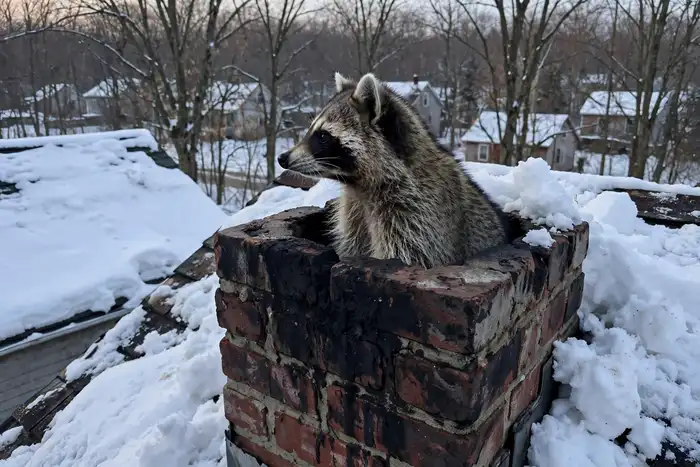
Raccoons in your Chardon home
Chardon's raccoons live well. Maple woods, gardens, sweet corn in season, bird feeders and trash on the curb feed them within a small home range, and the village's older housing — much of it built with a masonry chimney for a wood or coal fire long since retired — gives a spring female the den she is after. She wants height, dryness and quiet, and an unused flue or a deep attic over a porch delivers all three.
Raccoon jobs in Ohio are defined by two constraints that a good crew states up front. The young, born in spring, cannot travel for weeks, so removal must account for animals that cannot walk out. And state law forbids the outcome most people picture — a raccoon may not be caught and let loose somewhere else. What remains is the method that works anyway: careful inspection, exclusion timed around the litter, and sealing an animal this strong cannot undo.
The woods are close, and the law still says on-site
It surprises Chardon homeowners, with forest at the back fence, that a raccoon cannot simply be carried into it. Ohio Administrative Code 1501:31-15-03(E)(3) is explicit in effect: a caught raccoon is released on the same property or humanely euthanized, with no lawful middle option. The reason is disease geography — raccoons are a named Ohio rabies vector, and moving them moves rabies into new ground. Our crew's first tool is therefore a one-way door that lets the raccoon exit the structure itself, reserving direct handling for cases exclusion cannot reach and conducting it strictly by the rule.
Retired chimneys make ideal nurseries
Many Chardon village homes carry chimneys built for stoves and fireplaces that modern furnaces made decorative. A cold, uncapped flue is dark, vertical, rain-proof and safe from ground predators — a raccoon reads it as a hollow tree with better insulation. She nests on the smoke shelf above the damper, and the household hears the litter through the firebox. Soot-streaked paw prints at the flue and debris dropped into the fireplace confirm it. The chimney cap that prevents all this is the last step of a removal, never a first response to noises.
Kits set the calendar, not the crew
A spring litter stays where it was born for weeks, eyes opening slowly, unable to climb a flue or follow their mother through a one-way door. Seal her out with kits inside and two bad things follow: she attacks the roof or chimney to get back in, and any young she cannot reach die in the structure. A proper Chardon job inspects the flue and attic with cameras where needed, counts the litter, and plans the family's exit — or, where kits are old enough to be moved by hand, their removal — before any opening is closed.
Latrine cleanup in a deep attic
Raccoons concentrate their droppings in one latrine area, and the deep attics of older village homes let a latrine build for a long time undetected. The material can carry raccoon roundworm eggs, a durable contaminant worth treating seriously wherever stored items, insulation or children's reach is involved. Cleanup removes the fouled material — often only the affected bay, not the whole attic — and treats the area. Expect a measured answer about how much insulation truly needs to come out.
Sealing against strength and persistence
A raccoon pulls, pries and remembers. Repairs are built accordingly: heavy-gauge chimney caps, vent covers that cannot be flexed off, flashing at porch-roof junctions and dormers, and ice-loosened soffits rebuilt before they are screened. Wood patches and foam are an afternoon's work for this animal. On older homes the crew also checks the seams where additions meet the original house — settling opens gaps there that a raccoon finds before a homeowner does.
Feeding the neighborhood less
Woods will always supply Chardon with raccoons; the yard decides whether yours gets a nightly visit. Trash cans with lids a raccoon cannot lift or roll open, pet food fed and stored indoors, bird seed kept in metal containers and grills cleaned down all cut the reward for testing your roofline. Combine that with metal sealing, and the next mother raising a litter picks a hollow tree instead — which is where the arrangement works best for everyone.
Common raccoon questions in Chardon
I hear chattering in my Chardon chimney — is that a raccoon litter?+
Can you trap the raccoon and release it in the woods behind town?+
There is a raccoon on my roof in daylight — should I worry?+
Why does the crew need to check the attic before sealing?+
How much does raccoon removal cost in Chardon?+
Other Chardon problems that come with raccoons
Our wildlife crew handles these closely related problems — the ones that most often turn up with a raccoon issue.
Got more than raccoons in Chardon?
Raccoons are rarely the only thing using an attic or yard in Chardon. See everything we handle locally on the Chardon wildlife removal hub, or jump to Ohio wildlife removal.
Serving all of Geauga County
Chardon is one part of Geauga County. See wildlife removal in Geauga County, OH for the county-wide picture — the animals we get called about most, and the other towns we cover.
One call to your Chardon raccoon crew
The longer raccoons stay in the attic, the more they chew and the bigger the cleanup. Call us and tell us about the job — we will confirm the local crew for your county before any work starts.
- Local to Geauga County. ODNR-compliant handling — call to ask about licensing and insurance.
- Humane exclusion. One-way doors and steel sealing, not poison.
- Done right. Removal, exclusion and cleanup.