Dead Animal Removal in Aurora, OH
The lower-level media room smells, the guest wing does not, and nobody has seen an animal in months. On a big Aurora property, a carcass hidden along a wall run or in a remote attic bay can scent rooms a long way from where it lies. Call us and tell us about the job — we will confirm the local crew for your county before any work starts.
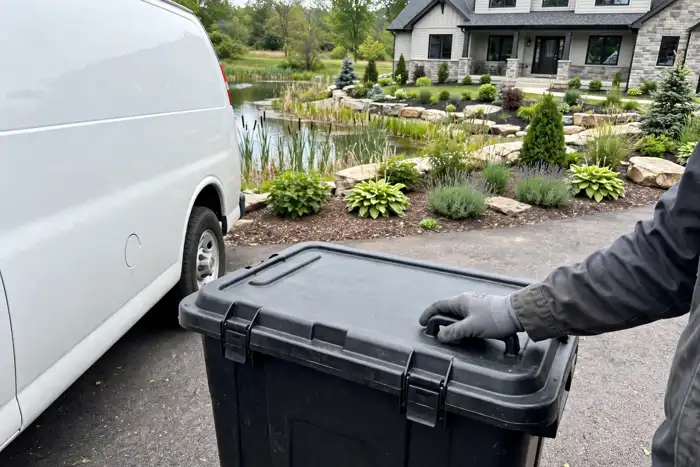
Dead Animals in your Aurora home
Scale is what makes an Aurora dead-animal search different. A large home is really several environments stitched together — a finished lower level with its own heating zone, bedroom wings at opposite ends, attic bays over rooms nobody enters weekly. Air moves between those zones along ducts, chases and long uninterrupted wall runs, carrying odor far from its origin. The room that smells worst on a given afternoon is a clue, not an answer.
So the investigation begins with the building rather than the nose: which wing, which level, which mechanical zone, and what lived where during the colder months. Around Aurora's ponds and woodlots, animals winter beneath waterside decks, inside roomy attics and down chimneys, and a death in any of those places may stay quiet until milder weather sets the evidence moving through the house.
Start with the floor plan, not the strongest room
Crews working a big house map before they open anything. Odor is compared wing by wing and floor by floor, at different times of day, because a heating zone kicking on can flood one end of the home while the other stays clear. Built-ins, finished ceilings and long hallways all distort the trail. Working from that map — plus where flies have appeared and which spaces share a wall or duct run — narrows thousands of square feet down to a single bay worth examining closely.
Long wall runs and finished basements hide the evidence
An animal traveling inside a partition can slip and come to rest at the bottom plate, which in many Aurora homes means behind the finished wall of a lower-level room. There the odor presents low, seeping at baseboards and outlets, sometimes strongest beside a bar, a fireplace surround or a run of built-in shelving. Finished ceilings add a second hiding layer, letting a death in the floor system above scent the room below while the level where the animal actually lies smells comparatively mild.
Which Aurora animals end up hidden indoors
History usually names the species. Months of faint scratching over one wing points to a squirrel that never left its attic bay. A season of mice in the finished basement suggests a small body in a partition or beneath the floor. A chimney left uncapped through winter raises the possibility of a raccoon on the smoke shelf. Setting those recollections beside the odor map tells the crew what size of cavity they are hunting and what sort of entry let the animal reach it.
Bait placed in a garage can end in your wall
Rodenticide deserves a direct question on these jobs. Pellets or blocks set out in a garage, a pool house or a neighboring outbuilding do not decide where a poisoned mouse or rat finishes its night — it retreats toward its nest, which is frequently inside a partition, under a floor or buried in insulation. Say plainly if any bait went down this season, and where. That single fact can shrink the search area by half, and it starts a useful discussion about sealing and trapping instead of repeating the cycle.
Removing it without wrecking finished rooms
Access is chosen from the least visible side whenever the structure allows: a closet back, a utility chase, an unfinished pocket behind the finished space. Inspection cameras confirm the target before any surface is touched. The carcass and the surrounding soiled insulation come out, the cavity is cleaned and treated, and the scent ends because its source is gone. If a cut in a finished surface truly cannot be avoided, settle who handles patching and paint before work starts — most wildlife crews leave finish restoration to others, and a straight answer up front prevents a surprise later.
Afterward: close the pond-side and roofline entries
A death indoors began as a live animal walking in. Once removal is complete, the route gets attention: the gap in the complex roofline, the open chimney, the unscreened void beneath the waterside deck, the penetration where a line passes into the finished basement. Each is closed in metal or masonry suited to the house. Skip that step and the same secluded bay that hid this animal will shelter the next one that finds the opening.
Common dead animal questions in Aurora
Why does our finished basement smell when the upstairs does not?+
How far from the smelly room can the animal actually be?+
Nothing made a sound all winter — how can something be dead in the house?+
We put mouse bait in the garage last fall — could that explain this?+
Will access mean cutting behind our built-ins?+
How much does dead animal removal cost in Aurora?+
Other Aurora problems that come with dead animals
Our wildlife crew handles these closely related problems — the ones that most often turn up with a dead animal issue.
Got more than dead animals in Aurora?
Dead Animals are rarely the only thing using an attic or yard in Aurora. See everything we handle locally on the Aurora wildlife removal hub, or jump to Ohio wildlife removal.
Serving all of Portage County
Aurora is one part of Portage County. See wildlife removal in Portage County, OH for the county-wide picture — the animals we get called about most, and the other towns we cover.
One call to your Aurora dead animal crew
The longer dead animals stay in the attic, the more they chew and the bigger the cleanup. Call us and tell us about the job — we will confirm the local crew for your county before any work starts.
- Local to Portage County. ODNR-compliant handling — call to ask about licensing and insurance.
- Humane exclusion. One-way doors and steel sealing, not poison.
- Done right. Removal, exclusion and cleanup.