Armadillo Removal in Jackson, GA
An armadillo treats a damp Jackson lawn the way a plough treats a field. One animal, working the soft soil along your tree line for grubs, can leave a yard looking shelled by breakfast — and it will be back tomorrow night to finish the row.
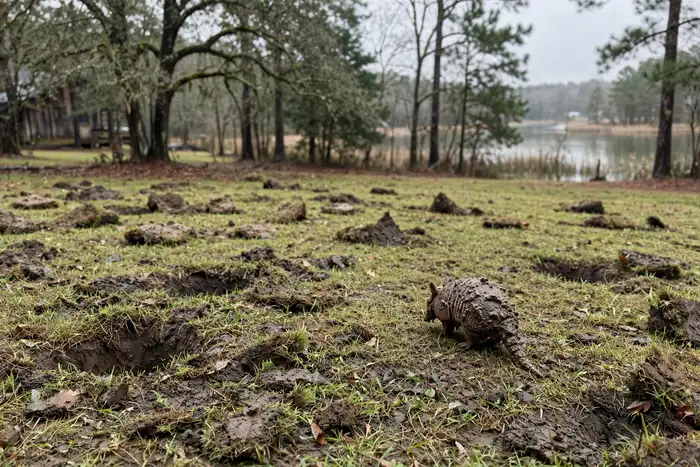
Armadillos rooting up the soft, shaded lawns of Jackson lake lots
The nine-banded armadillo has made itself thoroughly at home in Butts County, and Jackson's mix of soft soils and shade suits it ideally. Lake-area lots hold moisture in the ground long after rain, which keeps grubs and earthworms near the surface and the soil easy to root through. An armadillo does not graze a yard randomly; it works it systematically, nose down, pushing its snout into the turf and excavating neat conical holes wherever the ground smells like food, often covering a surprising amount of a lawn in a single nights circuit.
The second half of the Jackson armadillo story is underground at rest. By day the animal sleeps in a burrow — dug into a shaded bank, under a deck or porch, beneath a raised cabin, or at the base of a brush pile — and a burrow near the house becomes the fixed point its nightly feeding radiates from. Part-time lake owners meet the worst of both halves at once: weeks of undisturbed digging in a lawn nobody is watching, and a burrow deepened under a deck nobody has looked beneath since spring. By the time the pattern is noticed, it can look like the work of a whole crew rather than one persistent animal.
Soft, damp Jackson soil after rain: why lake lots get dug first
Moisture is the armadillos menu board. Ground near Lake Jackson and along Jacksons shaded drainages stays workable when higher, drier yards bake hard, and the invertebrates it hunts stay shallow in damp soil. After a wet week, owners often see digging explode across the low side of a lot while a neighbours drier yard is untouched. We read that pattern during our visit, because it predicts where the animal will work on the next wet night and where capture effort and any lawn advice will actually pay off.
Cone holes in Jackson lawns and the flower beds that get shelled
Feeding damage has a signature: holes a few inches wide and deep, turf flipped in little plugs, and mulch thrown out of beds as the animal roots along planting rows where grubs gather in rich soil. Flower beds beside a shaded Jackson porch are prime territory, and bulbs and new plantings take the worst of it. The digging is annoying, but it is also information — fresh holes mark the current circuit, older scarring shows the history, and the freshest work usually points like an arrow back toward the side of the property where the burrow sits.
Burrows under Jackson decks, porches, and raised cabins
When an armadillo chooses an address rather than a restaurant, it digs where cover meets convenience: under a low deck, beneath the steps, against a cabin foundation in the shade, or into the bank behind a woodpile. A burrow entrance is broader than the feeding holes and often fan-shaped with thrown soil, and a used burrow smells musky at its mouth on a warm day. Burrows matter beyond the armadillo — they undermine the soil at foundations and porches, and once vacated they are real estate other Jackson wildlife inspects. Locating the burrow is the centre of our plan, not an afterthought to the lawn.
How an armadillo is caught on a Jackson lot it knows by smell
Armadillos navigate more by nose than by eyes, and they are creatures of fixed route — the same gap in the fence line, the same path from burrow to lawn, night after night. That habit is what makes capture practical: effort is set along those proven travel lines and at the burrow, using fencing or guides where the lot layout calls for it, rather than baiting, which armadillos largely ignore since they hunt living food in soil. On a Jackson lake lot we will show you the route we are working, because owners who understand the path stop being surprised by where the animal appears.
Grubs, watering, and the Jackson lawn an armadillo would choose again
A lawn thick with grubs is a stocked pond to an armadillo, and heavily watered, shaded Jackson turf keeps that stock near the surface. After removal we talk through the unglamorous levers: whether a grub problem in the turf is worth treating, how watering schedules affect the soils appeal, and where fallen fruit or other ground food is supplementing the menu. We will not promise a yard no armadillo ever crosses — the woods around Jackson hold plenty — but a drier, grub-poor lawn beside a foundation with no burrow dug under it is a property the next one samples and leaves.
Armadillo digging at a Jackson place that stands empty all week
Absence changes armadillo work more than almost any other call we take. A full-time household notices the first nights holes, runs a light, walks the yard, and disturbs the routine early. A cabin visited fortnightly can be systematically excavated in the meantime, with the burrow under the deck deepened visit by visit. If you own a part-time place in Jackson and arrive to a ploughed lawn, photograph the damage and the likeliest burrow entrance before you rake anything smooth — the undisturbed pattern is the best map our crew can be handed, and raking erases it.
Common armadillo questions in Jackson
Why does an armadillo keep choosing our Jackson lawn and not the woods behind it?+
We are at our Lake Jackson house only on weekends. How fast can one armadillo wreck a yard?+
Is the big hole under our Jackson deck an armadillo burrow or something else?+
Can we just fill in the holes and burrow at our Jackson place ourselves?+
Do armadillos carry disease we should worry about at our Jackson home?+
Will removing one armadillo end the digging at our Jackson property for good?+
Other Jackson problems that come with armadillos
Our wildlife crew handles these closely related problems — the ones that most often turn up with a armadillo issue.
Got more than armadillos in Jackson?
Armadillo burrows under Jackson decks and cabins are often adopted later by other animals, and the digging itself sometimes exposes crawlspace gaps rodents use — if you have signs indoors as well as a torn-up yard, mention both and we will check the structure while we are on the ground. See everything we handle locally on the Jackson wildlife removal hub, or jump to Georgia wildlife removal.
Want the background before you call? Read our statewide guide: Armadillos tearing up your Georgia lawn.
Serving all of Butts County
Jackson is one part of Butts County. See wildlife removal in Butts County, GA for the county-wide picture — the animals we get called about most, and the other towns we cover.
One call to your Jackson armadillo crew
Catching the armadillo digging a Jackson yard tonight matters; so does the burrow it walks home to at dawn.
- Local to Butts County. Georgia DNR-compliant handling — call to ask about licensing and insurance.
- Our method follows the animal between its burrow and its buffet. We locate the burrow — under a deck, at a brushy bank, beneath a cabin — and set capture efforts along the travel lines the animal actually uses, rather than scattering effort across the whole yard. Once it is removed we talk through the conditions that made your lawn worth ploughing, from grub-heavy turf to the moist shade an armadillo prefers, so the next wanderer finds less to stay for.
- Done right. Removal, exclusion and cleanup.