Squirrel Removal in Fort Valley, GA
Here squirrels do not commute far. A peach limb, a pecan crown and a carport roof can form a complete highway from orchard canopy to your attic in one jump, and older eaves give them soft wood to widen once they land.
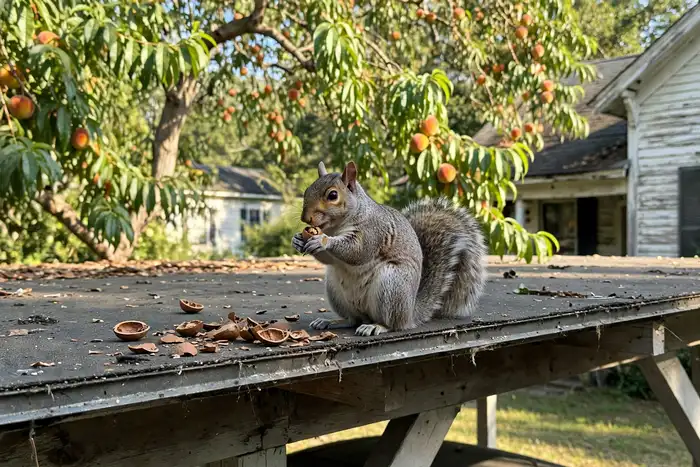
When Peach and Pecan Limbs Put Squirrels on Fort Valley Shingles All Day
In Fort Valley a squirrel in the attic is almost always a tree story first. Yards in town carry mature pecans, scattered peach trees left from home orchards and shade trees that have grown into the roof over decades. Squirrels feed in that canopy, cut fruit and nuts on a convenient limb and then step onto shingles without ever touching the ground where a dog or person might disturb them. Once on the roof they follow the warm air leaking from eave joints and attic vents, and older boxed eaves give them wood they can gnaw through in a few determined sessions.
Rentals near the university see a particular version of this. A house that sits quiet between terms gives squirrels undisturbed weeks to build a leaf nest in insulation, store nuts in a wall void and raise young overhead. The next tenants hear the activity as a sudden problem, when in fact the entry hole at the addition seam had been worked all season. When you call us, mention vacancy, recent limb breakage in a storm and any prior patch at the eaves, because those clues point us to the seam the animals favor most.
Reading Squirrel Sign in a Fort Valley Attic Full of Fruit Husks
Inside the attic we look for the debris only an orchard town produces in quantity. Pecan shells split in a neat pile, peach pits tucked along a top plate and leaf nests dragged in from yard trees separate squirrel use from rat or bat sign at a glance. Runways in insulation run from the eave entry toward the warmest part of the ceiling, often over a bathroom or kitchen vent fan. Droppings are larger and more scattered than rodent pellets. Finding the food cache matters, because a stored cache tells us the attic is a long-term den rather than a one-night shelter from a storm, and long-term dens need a fuller cleanup after removal.
Boxed Eaves and Addition Seams on Older Fort Valley Houses
The entry itself is rarely in open field of roof. Squirrels prefer a corner where two materials meet and chewing leverage is good, like the return of a boxed eave, the joint where a porch roof ties into the main wall or the flashing edge on a rear addition. Paint hides early gnawing, so we probe those joints and look for fresh pale wood, curled shavings on the ground below and daylight showing through from inside the attic. Rental houses with several additions can carry three or four such joints, and closing only the obvious hole leaves the next-weakest seam for the same animals to open within weeks.
Getting Squirrels Out of a Fort Valley Attic Without Trapping Them Inside
Removal sequencing protects both the animals and the house. We establish which entries are active, fit exclusion at the main gnaw point so squirrels can leave to feed in the trees but cannot re-enter, and verify the attic has gone quiet before final sealing. If young are present in the nest we adjust timing and method so the family clears together. Trapping inside a hot, low attic in Peach County is used selectively and explained case by case. What we will not do is seal a live den shut, because trapped squirrels chew wiring and drywall trying to escape and create a far worse bill.
Trimming the Canopy Highway Over Fort Valley Roofs
Sealing without limb work invites a repeat in this town. A limb that brushes shingles in wind also drops fruit and leaves that hold moisture against the roof and mask new gnawing. We recommend clearance that breaks the direct step from canopy to roof while keeping shade where possible, and we point out the specific limbs the squirrels actually use rather than suggesting you top every yard tree. For orchard-edge homes we also note where a fence rail or shed roof forms the middle step of the route, since cutting one link in that chain often ends the roof traffic even before the main limb is handled.
Cleaning a Fort Valley Attic After Squirrels Stored Food in It
After the animals are out and entries are closed we address what they left. Nut stores and leaf nesting hold moisture and odor, urine stains insulation along runways and chewed wire insulation needs an electrician referral if conductors are exposed. We remove concentrated nesting and contaminated material from the den area and deodorize the void so scent does not advertise the spot to the next squirrel investigating the roofline. A full attic restoration is quoted separately when damage is extensive, and we will be plain about which level your attic actually needs.
Keeping Squirrels Off Peach County Rentals Between Tenants
For landlords and managers in Fort Valley, the cheapest squirrel job is the check between occupancies. A quick eave and vent inspection when a house turns over catches fresh gnawing while it is still a small hole, before a new family settles in the attic during vacancy. Keep limbs cut back during routine yard service, replace bent vent screens with rigid covers and store no birdseed or pet food in open carport bins that hold squirrels at the house all day. We can note the vulnerable seams for your maintenance crew after a removal so future checks take minutes.
Common squirrel questions in Fort Valley
Why do squirrels pick our house when the whole Fort Valley street has pecan trees?+
We hear chewing at night in our Fort Valley attic. Is that still squirrels?+
Can squirrels get in through our packing shed and then into the house?+
Will cutting one peach limb really stop squirrel traffic on our roof?+
There are baby squirrels in the attic of our Fort Valley rental. What happens?+
Do squirrels damage wiring in older Fort Valley homes?+
Other Fort Valley problems that come with squirrels
Our wildlife crew handles these closely related problems — the ones that most often turn up with a squirrel issue.
Got more than squirrels in Fort Valley?
Squirrels sharing a roofline with bat staining at a gable or raccoon damage at a soffit panel is common in older Fort Valley homes. If we spot signs of another species while clearing squirrels, we will show you the evidence and link you to the raccoon and bat pages for how those jobs differ. See everything we handle locally on the Fort Valley wildlife removal hub, or jump to Georgia wildlife removal.
Want the background before you call? Read our statewide guide: Squirrels in the attic: what it costs and why sealing too early backfires.
Serving all of Peach County
Fort Valley is one part of Peach County. See wildlife removal in Peach County, GA for the county-wide picture — the animals we get called about most, and the other towns we cover.
One call to your Fort Valley squirrel crew
Our squirrel work in Fort Valley pairs attic removal with canopy and eave fixes, because either one alone fails here.
- Local to Peach County. Georgia DNR-compliant handling — call to ask about licensing and insurance.
- We trace the limb route, remove the animals using the void and close the gnawed entry in that order. After the attic is clear we check the whole roof perimeter for secondary gnawing, screen vents squirrels have bent and advise on limb clearance over shingles. We will confirm the local crew for your county before any work starts.
- Done right. Removal, exclusion and cleanup.