Rodent Control in Fort Valley, GA
Rodent problems in Fort Valley usually begin out in the shed, where grain, feed and stored produce hold rats and mice year-round, and arrive in the house later along a pipe run or through a crawlspace vent. We treat the shed and the house as one system.
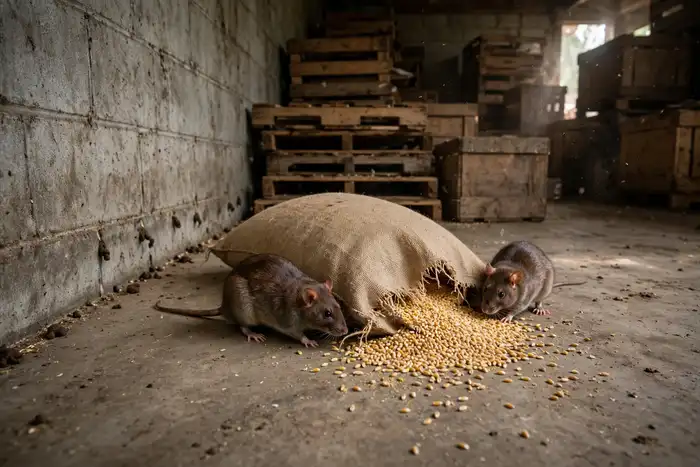
Grain and Stored Produce in Fort Valley Packing Sheds Feed Rats Into Nearby Houses
Fort Valley gives rodents a standing buffet that most towns never offer. Packing sheds and farm outbuildings hold grain bins, feed sacks, seed and stored produce through the year, orchard floors add fallen fruit in season and older homes add warm wall voids, crawlspaces and attics a short commute away. Rats and mice exploit that triangle relentlessly. A population that breeds in the cover of stacked crates moves along fence lines and pipe chases into houses, and once inside it gnaws wiring, soils insulation and contaminates pantry food. Homeowners often meet the problem backwards, hearing the wall scratching first and only later finding the shed corner where it all started.
Control that only sets a few traps in the kitchen therefore fails here. The house population is the visible tip of a shed-supported system, and it replenishes as long as food and harborage out back stay untouched. Our crew inspects both ends, reading droppings size and grease marks to separate rat traffic from mouse traffic, locating burrows in the soft sandy soil along shed foundations and tracing the exact penetrations where animals enter the dwelling. When you call us, describe sign in every building you have noticed it, not just the house, so we arrive planning a property-wide job.
Separating Rat Runs From Mouse Sign in Fort Valley Sheds and Attics
The two animals need different responses, so identification comes first. Rat droppings are capsule-sized and collect along runways by shed walls, in burrow entrances at a foundation and along attic top plates, with dark grease smears where bodies pass a stud or pipe nightly. Mice leave rice-sized pellets scattered in drawers, feed bins and insulation and can live entirely inside a structure on crumbs and stored seed. In Fort Valley packing sheds both often run at once, rats at ground level around bins and mice up in stored crates. We set trapping and sealing plans for each level rather than treating the building for a single generic pest.
Burrows in Sandy Soil Along Fort Valley Shed Foundations
Outside, rats burrow where Peach County soil lets them. Sandy loam along a shed footing, under a concrete apron by a packing shed or beneath a stacked pallet digs into a warren quickly, with multiple exits hidden by crates or growth. Surface trapping inside misses that colony core entirely. We map burrow entrances, collapse and treat the system as part of the job and advise on gravel, grading and removing ground cover against foundations so new burrowing shows immediately instead of hiding. After heavy rain burrows partially cave and animals relocate, which is why a sudden indoor spike often follows a wet week here.
Sealing Pipe Chases and Crawlspace Vents on Older Fort Valley Houses
House entry follows utilities. Rodents climb or follow plumbing stacks, enter at the gaps around pipes and conduit in a crawlspace, travel wall voids and emerge at a kitchen or pantry. Older Fort Valley homes add rusted vent screens, settled access doors and the larger gaps of successive plumbing repairs. We seal with materials rodents cannot gnaw through, screen vents rigidly and close eave and roof returns where roof rats drop from overhanging limbs. Each sealed point is noted for you, because knowing your house entry map helps you spot a future breach early.
Stored Produce, Feed Sacks and Crates That Keep Fort Valley Rodents Breeding
Food storage decides whether control holds. Feed in open sacks, grain in thin plastic bins, produce culls piled by a shed door and pet food in a carport all feed breeding through winter when field food is scarce. We recommend sealed metal or heavy containers, pallets raised and spaced from walls for inspection, cull fruit removed from the property rather than dumped at the orchard edge near houses and spills swept the day they happen. These are working farm habits, not housekeeping tips, and on orchard properties they are the difference between a one-time cleanup and a quarterly recurrence.
Rodents in Fort Valley Rentals and Vacant Houses Near Campus
A vacant rental is rodent habitat with a roof. Without people, lights and a dog in the yard, mice move into kitchens and rats test crawlspaces undisturbed, and a month of vacancy can seed a house that then greets new tenants with droppings in every cabinet. Owners in Fort Valley should schedule a rodent check during turnover cleaning, looking in the shed and garage as well as under sinks and in the attic hatch. Our crew clears active infestations in vacant properties and seals them before occupancy, which is far simpler than working around a household in residence.
Health and Wiring Risks From Rodent Runs in Peach County Walls
Inside walls and attics the damage compounds quietly. Rodents gnaw wire insulation and PEX lines, shred insulation into nesting and contaminate surfaces with urine along their runs, and a dead rodent in a wall void announces itself to the whole house in summer heat. After removal and sealing we clear accessible nesting and droppings from attics and advise where an electrician or plumber should verify gnaw damage. If odor suggests a carcass in a void, our dead animal page outlines how that separate search and cleanup is handled.
Common rodent questions in Fort Valley
Why do rodents keep coming back to our Fort Valley house after trapping?+
Can mice really get into a house from the orchard shed?+
What is the dark smear along the beam in our Fort Valley shed?+
Should we store peaches and produce away from the house during harvest?+
We hear scratching in one kitchen wall in our Fort Valley home. How big is the problem?+
Do rodent jobs in Fort Valley need ongoing visits?+
Other Fort Valley problems that come with rodents
Our wildlife crew handles these closely related problems — the ones that most often turn up with a rodent issue.
Got more than rodents in Fort Valley?
Rodents are the prey base that draws snakes into Fort Valley sheds and raccoons into bins at night. Clearing a serious rodent run often reduces both, and our snake and raccoon pages explain the sightings that should still get their own call. See everything we handle locally on the Fort Valley wildlife removal hub, or jump to Georgia wildlife removal.
Want the background before you call? Read our statewide guide: Roof rats in Georgia: why bait alone never ends it.
Serving all of Peach County
Fort Valley is one part of Peach County. See wildlife removal in Peach County, GA for the county-wide picture — the animals we get called about most, and the other towns we cover.
One call to your Fort Valley rodent crew
Lasting rodent control in orchard country means removing animals, sealing the house and cutting the shed food supply that rebuilds the population.
- Local to Peach County. Georgia DNR-compliant handling — call to ask about licensing and insurance.
- We trap and remove the active animals, seal entries on the house and outbuildings and set a storage standard for feed and produce. You will get a clear list of the gaps we sealed and the storage changes that matter most on your property. We will confirm the local crew for your county before any work starts.
- Done right. Removal, exclusion and cleanup.