Dead Animal Removal in Fort Valley, GA
The odor that takes over a Fort Valley house or workshop usually starts out of sight, under a farm outbuilding floor or deep in the crawlspace of an older home where an animal sheltered and died. Finding it is a search problem before it is a cleanup problem.
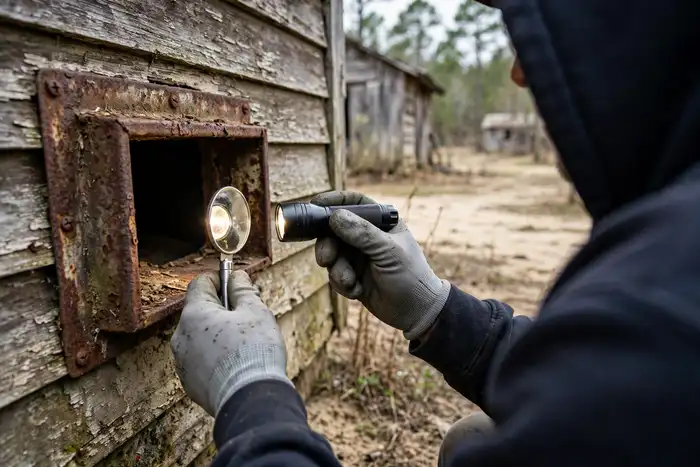
Animals Dying Under Fort Valley Outbuildings and in Older Crawlspaces
Dead animal calls in Fort Valley follow the shelter map of the town. Animals that live around orchards and outbuildings seek the same dry, dark cover when they are sick, injured or old, and they frequently die in it. That means carcasses turn up under packing shed and barn floors, beneath low porches and inside the crawlspaces of older in-town homes where access is tight and nobody looks from one year to the next. By the time odor filters up through floorboards or out of a crawlspace vent, the animal may have been there for days, and in Peach County summer heat the smell becomes impossible to live or work around.
Our job starts with locating, which is harder than it sounds in a low crawlspace crossed by ductwork and piers or under an outbuilding floor with no access panel. Odor strength shifts with wind, heat and which vents are open, flies gather at the nearest opening to the carcass and staining sometimes shows at a wall base. We work from those clues systematically instead of guessing. When you call us, tell us when the smell began, where it is strongest at different times of day and whether any animal activity, scratching or a sick animal sighting, preceded it, because that history often names the species and the void it used.
Pinpointing a Carcass in a Low Fort Valley Crawlspace
Crawlspaces under older Fort Valley homes run tight, with low clearance, older duct runs sagging toward the soil and plumbing lines crossing the darkest corners where animals travel. A carcass is usually along those travel lines, near a vent the animal entered through or in the burrow hollow it dug in the sandy soil under the house. We crawl the space in sections with lights, following odor intensity and fly activity, and check behind piers and inside duct insulation where a rodent may have died. If the carcass sits in an unreachable pocket we explain options honestly, including treating the area to speed breakdown and control odor when direct removal is physically impossible.
Dead Animals Under Packing Sheds and Farm Outbuildings in Peach County
Outbuildings hide carcasses differently. Animals slip under shed floors through washouts and burrow openings, die in the dark space beneath and announce themselves only when heat builds under the floor and odor vents at the edges. Stored produce and feed complicate the work, since contaminated areas near food storage need thorough clearing. Access may mean lifting a floor section or excavating at the foundation edge where the animal entered. We handle that access carefully and restore it after removal, and we clear soiled soil and material under the building so the smell does not persist in the ground itself.
Odor Timelines and Fly Sign in Fort Valley Heat
How an odor behaves tells us a great deal. A smell that began faint, peaked hard over several days in hot weather and is now slowly easing usually means a smaller animal partway through breakdown, while a still-strengthening odor with fresh fly swarms at a crawlspace vent points to a recent, larger carcass still present. Flies are useful evidence, since they find the nearest exit from the void, which is often directly above or beside the carcass. Note where flies cluster and when the smell peaks during the day, and pass that to our crew rather than masking it with sprays that erase the clues we navigate by.
Removing the Carcass and Soiled Material From a Fort Valley Void
Removal is done with protective equipment and sealed containment, carcass, nesting debris and the soil or insulation it contacted, because that surrounding material holds the odor long after the animal itself is gone. We treat the immediate area after extraction and ventilate the void where the structure allows. In crawlspaces we also note any chewed wiring, damaged duct or burrow that the search revealed. Homeowners should not crawl in to attempt this themselves, particularly in summer, since the combination of confined space, bacteria and possible parasite exposure is exactly what our gear and process exist to handle.
Wall Voids and Attics in Older Fort Valley Homes and Rentals
Not every carcass is under the house. Rodents die in wall voids after entering at a roofline, squirrels occasionally die in an attic corner and a rental that sat vacant can hold an animal that expired in a closet void while nobody was there to hear it weaken. Wall cases are located by odor concentration and listening walls, and sometimes require a small, repairable opening at the baseboard to extract the animal rather than weeks of waiting for breakdown. We discuss that trade-off plainly before cutting anything, and for landlords we document the work so a returning tenant understands the odor timeline.
Sealing the Way In So the Next Animal Does Not Die in the Same Place
A void that admitted one animal will admit another, so removal without sealing is a temporary fix. After extraction we identify the route, a burrow mouth under the shed, a rotted crawlspace vent, a gap at a pipe penetration or a loose access door, and advise sealing matched to that opening. Where live animals still use the space, that sealing pairs with the removal work for that species first, so nothing is trapped inside to become the next carcass call. Closing the loop this way is especially important in Fort Valley outbuildings, where burrows in sandy soil reopen entries quickly if they are only kicked shut.
Common dead animal questions in Fort Valley
How long will the smell last in our Fort Valley house if we just wait?+
The odor is strongest near a crawlspace vent on our Fort Valley home. Does that mean the animal is right there?+
We found a dead animal under our packing shed ourselves. Can we just bury it?+
Could the smell in our Fort Valley rental be from an animal that died while it was vacant?+
Do you remove dead animals from inside walls in Fort Valley?+
What should we do about flies gathering at one window in our Fort Valley home?+
Other Fort Valley problems that come with dead animals
Our wildlife crew handles these closely related problems — the ones that most often turn up with a dead animal issue.
Got more than dead animals in Fort Valley?
A carcass in a crawlspace often means rodents or another animal can enter that void at will. After removal, our rodent and raccoon pages explain how sealing and clearing the live population prevents the next death in the same hidden space. See everything we handle locally on the Fort Valley wildlife removal hub, or jump to Georgia wildlife removal.
Want the background before you call? Read our statewide guide: Dead animal in a wall or attic: how long the smell lasts.
Serving all of Peach County
Fort Valley is one part of Peach County. See wildlife removal in Peach County, GA for the county-wide picture — the animals we get called about most, and the other towns we cover.
One call to your Fort Valley dead animal crew
We locate the carcass, remove it with the soiled material around it and treat the void so the odor clears instead of lingering for weeks.
- Local to Peach County. Georgia DNR-compliant handling — call to ask about licensing and insurance.
- Our crew searches crawlspace, wall base and under-building ground methodically, working from the strongest odor gradient. We also point out the gap or burrow that let the animal into that void so it can be sealed against a repeat. We will confirm the local crew for your county before any work starts.
- Done right. Removal, exclusion and cleanup.