Snake Removal in Sebastian, FL
Banded and heavy at the dock, small and grey in the mulch, black and fast across the scrub lot. Sebastian snakes are identified before they are anything else — keep your distance, note where it settled, and describe it from there.
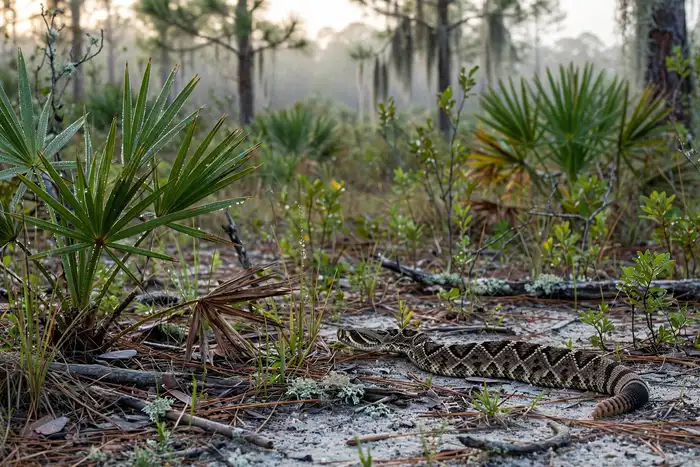
Snakes in your Sebastian home
Sebastian compresses Florida's snake file into a few habitats: the St. Sebastian River and its canals, the lagoon shoreline by the inlet road, wet garden beds in town, and dry scrub lots toward the preserve and the grove country. The venomous list for that ground is fixed and worth knowing cold — cottonmouth, eastern diamondback rattlesnake, dusky pygmy rattlesnake and eastern coral snake — and it shares every habitat with harmless snakes that are mistaken for it weekly, above all the Florida banded water snake, the cottonmouth's look-alike and the single most common snake call in this town.
So this service is identification-led in the literal sense: the first deliverable is a name, from your description or a photograph taken at a safe distance, and the plan follows the name. A venomous snake in a worked area is removed by trained hands. A banded water snake at a dock is usually an explanation and a set of bankside habits. A rat snake in the shed is, on the evidence, the best rodent control on the lot, and we will say so even though it ends the sale.
The dock question: banded water snake or cottonmouth?
Both snakes live on Sebastian's riverbanks and canal edges, both are banded and heavy-bodied, and both flatten the head when cornered, which is why the folk tests fail exactly when they are needed. The distinguishing marks are finer and they are visible in a zoomed photograph: the cottonmouth shows a dark band through the eye and a face of visible pits, and tends to hold its ground displaying the pale mouth interior it is named for; the banded water snake shows vertical bars on its lower jaw, lacks the eye band, and flees to the water at any offered chance. Until the photograph settles it, treat every thick banded snake at the bank as unidentified — keep dogs and children back, and let the name come before the decision.
Pygmy rattlesnakes: the garden-bed snake
The venomous snake Sebastian homeowners actually come close to is not the big one. The dusky pygmy rattlesnake is a foot or two of grey, dark-blotched snake with a rust-coloured stripe down its back and a rattle too small to hear at garden distance, and it lives precisely where hands go: mulch beds, leaf litter at the water's edge, the base of palms, low groundcover near canals. It is still by temperament and easy to overlook in dappled shade. Garden gloves, a torch after dark and looking before reaching are genuine safety equipment here, and a pygmy settled in a worked bed is a removal call, not a coexistence experiment.
Dry lots and scrub: diamondbacks, racers and rat snakes
West of town, on the sandy scrub and grove-edge lots, the cast changes. The eastern diamondback — large, heavy, honestly rattling when pressed — hunts the dry ground and should be given a wide, respectful berth and a removal call if it settles near a home. Sharing that ground are the harmless hunters this page defends: the southern black racer, thin and fast and hunting by daylight, and the corn snake — the red rat snake — and eastern rat snake, climbers that work sheds and pool cages after rats and birds. Racers and rat snakes on a Sebastian lot are rodent control with no invoice attached; removal is for the ones that come indoors, and even then the entry and the prey get addressed alongside the snake.
Coral snakes in the leaf litter
The eastern coral snake is Sebastian's quietest venomous resident: slender, red-banded with yellow, shy enough that most residents never knowingly see one, surfacing in mulch, litter and loose sand as it hunts other snakes and lizards. Most coral snake reports resolve, on the photograph, as the harmless scarlet snake or scarlet kingsnake, whose band order differs — an identification to make on evidence, not on a rhyme under pressure. A confirmed coral snake in a children's play area or a worked bed is removed with care; one in wild ground at the lot's edge is usually best left to its hidden life, with the household told plainly what shares the fence line.
The snakes we will not touch, and the referral we will make
The eastern indigo snake — the big, glossy blue-black, docile snake of the scrub — is fully protected, and if the large black snake on your lot is an indigo rather than a racer, our answer is to identify it, admire it from a distance and leave it entirely alone, with FWC the contact if guidance is wanted. It is not a removal under any framing. Likewise an alligator settled in a community pond is never a service of ours: that call belongs to FWC's nuisance alligator programme, and we will give you the route rather than improvise near a protected animal.
Editing a Sebastian lot so snakes stay at its edges
Prevention here is habitat housekeeping aimed at cover and prey. Rodent control removes the rat snakes' reason and shrinks the pygmies' prey base. Stored lumber, debris piles and dense groundcover tight against the house give small venomous snakes their daytime shelter, so harbourage moves away from doors, beds and play areas. River and canal lots cannot wall the water out, but a mowed bank, an elevated woodpile and pool-cage doors screened at the base move the snake encounters back to the bank, where they belong — visible, avoidable, and part of a river town's normal terms.
Common snake questions in Sebastian
There is a thick banded snake on my dock right now. What do I do?+
My dog was nosing at a small grey snake in the mulch. Should I be worried?+
A black snake crosses my scrub lot every day. Friend or problem?+
Do you charge to identify a snake from a photo?+
Will a snake fence around the yard keep river snakes out?+
Other Sebastian problems that come with snakes
Our wildlife crew handles these closely related problems — the ones that most often turn up with a snake issue.
Got more than snakes in Sebastian?
Snakes are rarely the only thing using an attic or yard in Sebastian. See everything we handle locally on the Sebastian wildlife removal hub, or jump to Florida wildlife removal.
Serving all of Indian River County
Sebastian is one part of Indian River County. See wildlife removal in Indian River County, FL for the county-wide picture — the animals we get called about most, and the other towns we cover.
One call to your Sebastian snake crew
The longer snakes stay in the attic, the more they chew and the bigger the cleanup. Call us and tell us about the job — we will confirm the local crew for your county before any work starts.
- Local to Indian River County. FWC-compliant handling — call to ask about licensing and insurance.
- Humane exclusion. One-way doors and steel sealing, not poison.
- Done right. Removal, exclusion and cleanup.