Dead Animal Removal in Sebastian, FL
The smell is coming up through the floor, or pooling in one hot room, and no animal has been seen for days. In Sebastian that usually means something died in the structure it was living in — tell us where it reads strongest and when it started.
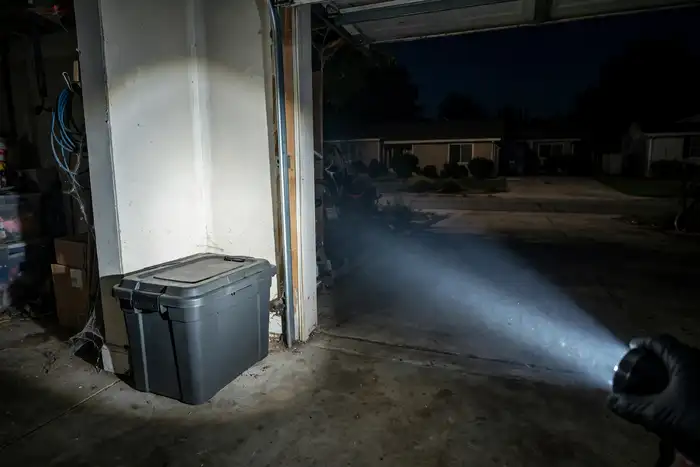
Dead Animals in your Sebastian home
Sebastian's dead-animal call has an address other towns rarely produce: beneath the floor. The enclosed void under a manufactured home is this town's favourite den for opossums, raccoons and armadillos, and it is also where a sick or elderly tenant dies — undiscovered for days in an occupied home, or for a whole summer in a closed seasonal home, until the owners' October return opens the door onto the finished story. Florida heat and humidity run the process fast, and a floor is a poor barrier to the result.
The occupied-home versions run alongside it: an animal dead in a wall void after falling from an attic, a rat in ducting, a carcass in the crawlspace or shed of a conventional house along the river. In every version the working skill is the same — treating the odor as a map rather than a nuisance, grading it room by room and hour by hour, correlating it with the floor plan and the voids, and opening the smallest access that reaches the source. Then removal, sanitising, and the step that closes the file: securing the skirting, vent or soffit that admitted the animal while it lived.
Under the manufactured home: how the search proceeds
An under-floor death announces its neighbourhood through the floor — strongest in one room, worse when the air-conditioning cycles push air through the duct runs beneath. We start at the skirting access with the odor gradient as the guide, working the void systematically rather than crawling it at random, and retrieve through the existing hatch wherever the location allows. The under-home space that made the den attractive is also what makes the search methodical: a defined, crawlable void with a finite number of corners, duct runs and insulation bays where a carcass can lie.
The seasonal-home return, Sebastian style
A home closed in May and opened in October has had a full summer to accumulate a story: an opossum that denned and died under the floor, rats that came through a dried drain trap and died in a wall, occasionally an animal that entered storm damage in August and never left. With the cooling off all summer, odor has soaked into soft furnishings in a way an occupied home's never does. We work these houses in order — locate and remove the source first, sanitise the void, then assess what the living space itself needs, which is usually ventilation and cleaning rather than the renovation owners brace for on the drive down.
Walls, attics and ducting in conventional houses
In Sebastian's site-built homes the classic cases recur: the animal that falls into a wall cavity from the attic and cannot climb the smooth studs back out, dying at the base of a wall beside a warm pipe run that broadcasts through the house; and the attic death that reads strongest at one bedroom ceiling in the afternoon heat. Duct deaths are the under-floor variant — a rat or opossum inside a torn flex run, perfuming every room the system serves. Each pattern points at its access, and a cut, when one is unavoidable, is placed from the odor evidence at a size measured in inches.
Sanitising a void, in plain terms
Out is not the same as done. Fluids from a carcass migrate into insulation, timber, sand and the dust of a void, and untreated material keeps a fainter version of the smell alive for weeks — the reason some households report that a removal 'did not work'. We remove contaminated material that can be reached, treat the surfaces of the space, and ventilate it. Under-home insulation that has absorbed contamination beyond a small bay should come out, and we will show you the photographs and the extent before recommending that scope, so the decision is made on evidence from under your own floor.
Securing the way in, or the sequel is scheduled
Every one of these deaths began as a living animal's choice of shelter: a flexed skirting panel, a vent screen gone, a soffit corner opened by a squirrel last spring. Wildlife in Sebastian knows these addresses — a void that sheltered one tenant is prospected by the next. So the job finishes with the entry found and secured, the rest of the skirting line or roofline audited for the same weakness, and, for seasonal owners, the pre-departure version of the same checklist offered while we are already under the house. Retrieval without sealing is half the service at the full price; insist on the whole thing.
Common dead animal questions in Sebastian
How long will the odor last if we do nothing?+
Will you have to pull up flooring or cut the skirting?+
We just got back and the whole house smells. Where do you start?+
Is it a health problem to stay in the house meanwhile?+
How do seasonal owners prevent the October version?+
Other Sebastian problems that come with dead animals
Our wildlife crew handles these closely related problems — the ones that most often turn up with a dead animal issue.
Got more than dead animals in Sebastian?
Dead Animals are rarely the only thing using an attic or yard in Sebastian. See everything we handle locally on the Sebastian wildlife removal hub, or jump to Florida wildlife removal.
Serving all of Indian River County
Sebastian is one part of Indian River County. See wildlife removal in Indian River County, FL for the county-wide picture — the animals we get called about most, and the other towns we cover.
One call to your Sebastian dead animal crew
The longer dead animals stay in the attic, the more they chew and the bigger the cleanup. Call us and tell us about the job — we will confirm the local crew for your county before any work starts.
- Local to Indian River County. FWC-compliant handling — call to ask about licensing and insurance.
- Humane exclusion. One-way doors and steel sealing, not poison.
- Done right. Removal, exclusion and cleanup.