Mouse & Rat Control in Mentor, OH
Droppings along the basement sill, scratching in the wall on the first cold nights, or strange trails appearing in the lawn as the snow melts? Mentor rodents work in seasons — and each one leaves a different signature. Call us and tell us about the job — we will confirm the local crew for your county before any work starts.
Rodents in your Mentor home
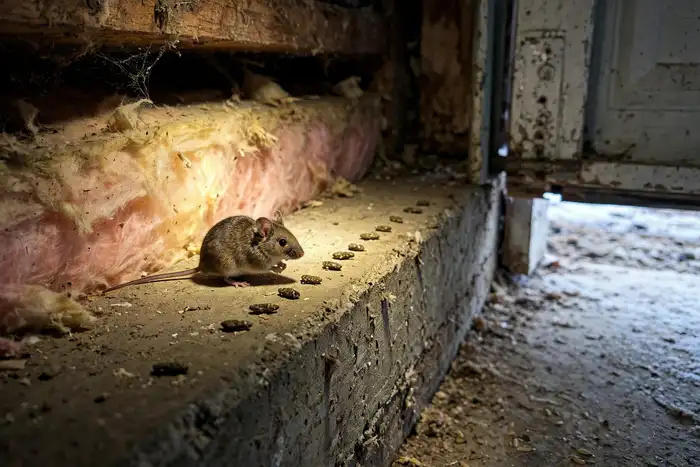
Mentor's headline rodent is the house mouse, and its season is unmistakable: the first real frost sends mice from fields, marsh edges and garages toward heated buildings, and the calls start the same week. They enter low — at the sill where the ranch house meets its basement foundation, around utility lines, under garage doors — through gaps a fraction of an inch wide, then travel the wall voids and spend the winter breeding in the warmest parts of the house.
The supporting cast is local too. Norway rats turn up near the shore, along older drainage and in outbuildings — heavier, ground-burrowing animals that stay low. And outdoors, voles tunnel under Mentor's deep snow all winter, invisible until the melt reveals a maze of trails and chewed turf across the lawn. Each animal needs a different plan, which is why identification comes before any sealing or trapping.
The first-frost mouse invasion
House mice live around Mentor homes all year — in garages, sheds, woodpiles and the marsh edge — but they live inside starting in fall. A mouse needs a gap only about the width of a pencil, and ranch construction provides them at the foundation sill, where pipes and wires enter, and at the corners of overhead garage doors. Once in, mice stay close to walls, leaving droppings and grease marks along the basement sill and behind appliances, and their scratching carries through wall voids at night. A fall inspection that seals those low entries is the single most effective rodent work in Lake County.
Norway rats near the shore and older drainage
Norway rats are a different animal in every way: large, burrowing, and tied to ground-level food and water — shoreline debris, older sewer and drainage lines, outbuildings and dumpster areas. Signs are burrows at a foundation, droppings much larger than a mouse's, and gnawing at door bases. Rat work in Mentor is methodical: identify the burrow system and food source, trap, and seal the building entries, because a rat that is only poisoned tends to die in a wall or burrow and create a second problem.
Vole trails at snowmelt — and mole ridges in summer
Every spring, Mentor lawns reveal what winter hid: vole trails — winding surface runways of chewed, dead grass snaking across the turf where voles traveled and fed under the snowpack, safe from hawks. The damage looks dramatic at melt and usually grows back, though voles also gnaw bark at the base of young trees and shrubs under snow, which can kill them. Moles are the summer counterpart: raised ridges and mounds from an animal hunting worms and grubs underground. Neither is an attic problem, but both are part of an honest Mentor rodent conversation, and our crew can tell you which you have and what, if anything, is worth doing.
Why bait alone fails — and can backfire
Poison does not close a single entry, so while it kills some mice, the sill gap that admitted them admits their replacements — and in a lakeside suburb there are always replacements. Worse, a poisoned mouse or rat typically dies where it hides: inside a wall void or under a basement floor edge, and the odor arrives days later. Mentor's winter version is crueler — a carcass in a wall in January scents the house every time the furnace runs. Sealing first and trapping the animals inside is the order that actually ends the problem.
How exclusion-first rodent control works
Our crew inspects low to high: foundation sill and utility entries, garage door corners, foundation cracks opened by freeze-thaw, then the roofline and vents for good measure. Entries are closed with metal — copper or steel mesh, flashing and hardware cloth that rodents cannot gnaw through — and traps clear the animals already inside, with follow-ups until activity stops. Cleanup guidance covers droppings in basement and attic areas, which should not be dry-swept. The result aimed for is a house mice test next October and cannot enter.
Common rodent questions in Mentor
Why do mice get into my Mentor house every fall?+
What are the trails in my lawn after the snow melts?+
How do I know if I have mice or rats?+
Will poison get rid of the mice in my walls?+
How much does rodent control cost in Mentor?+
Other Mentor problems that come with rodents
Our wildlife crew handles these closely related problems — the ones that most often turn up with a rodent issue.
Got more than rodents in Mentor?
If mice found a way into a Mentor house, the same winter-opened gaps are available to everything else on this page. See everything we handle locally on the Mentor wildlife removal hub, or jump to Ohio wildlife removal.
Serving all of Lake County
Mentor is one part of Lake County. See wildlife removal in Lake County, OH for the county-wide picture — the animals we get called about most, and the other towns we cover.
One call to your Mentor rodent crew
Every week mice spend in a Mentor wall in winter means more droppings, more chewing and a bigger spring cleanup. Call us and tell us about the job — we will confirm the local crew for your county before any work starts.
- Local to Lake County. ODNR-compliant handling — call to ask about licensing and insurance.
- Seal, then trap. Closing the foundation and roofline entries with metal, then clearing the rodents already inside — bait alone never finishes it.
- Done right. Removal, exclusion and cleanup.