Dead Animal Removal in Mentor, OH
A smell building in one part of the house through the winter, worse when the furnace kicks on, with flies at a window that makes no sense in February? Something has died out of sight. Call us and tell us about the job — we will confirm the local crew for your county before any work starts.
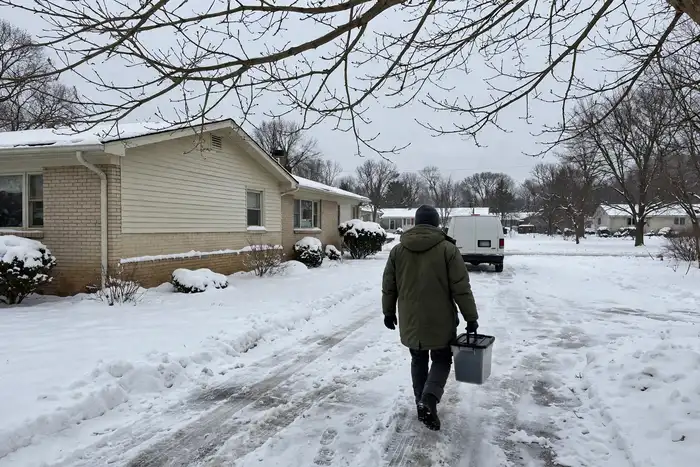
A dead animal in your Mentor walls or attic
Mentor's dead-animal season is winter, and it follows the town's wildlife calendar. Animals that denned in an attic, wall void or basement for the cold — a raccoon in a chimney, an opossum under a deck, mice in a wall, a bat that died during hibernation — sometimes do not come out in spring. In a house closed against lake-effect cold, with the furnace moving air through every duct, the odor of a carcass in a wall reaches rooms far from the source and feels impossible to escape.
The work is location first. There is no gadget that finds a carcass instantly; a pro follows the gradient of the smell, watches where flies gather even in cold months, and thinks like the animal — where would it den, where would it get stuck. Ranch houses help and hinder: one story means shorter wall voids, but low attics and basement walls give plenty of hidden places. Once found, the carcass and contaminated material come out, the area is sanitized, and the entry that admitted the animal gets closed.
Why winter is Mentor’s peak season for this call
Cold drives animals into structures in fall, and winter kills some of them there: old animals, sick animals, animals trapped in a wall void they entered during a thaw and could not leave when the cold returned. Hibernation adds its own losses — a bat that dies in a winter roost, for example. Because the house is sealed and heated, odor concentrates instead of dispersing, and homeowners often notice it first as a smell that pulses with the furnace cycle. Spring thaw is the second spike, when frozen carcasses in unheated voids warm up.
The usual sources: poison, voids and chimneys
The most common source is still a poisoned rodent — a mouse or rat that ate bait and died inside a wall, which is why our crew asks early whether bait has been used. Next come void deaths: a squirrel or opossum that fell or crawled into a wall or chimney space and could not get out, and animals sealed in by a repair done without checking for occupants. Knowing which story fits your house narrows the search from the whole building to a few likely voids.
Finding it in a ranch house
In a one-story Mentor ranch, the search covers the low attic, the wall voids above the basement, the chimney chase and the spaces over attached garages. Our crew works room by room, comparing odor strength, checking vents and outlets, and using access points that already exist before considering any opening in a wall. Flies are honest guides even in winter — a cluster at one window or light fixture usually sits close to the source. The goal is a small, correct opening if one is needed at all, not exploratory holes.
Removal, cleanup and the honest limits
Once located, the carcass is removed along with insulation or material too contaminated to treat, and the area is cleaned and deodorized at the source — masking sprays over an untreated void accomplish nothing. If a wall or ceiling must be opened, we keep it as small and well-placed as possible; be aware that most wildlife companies do not perform drywall repair, so ask up front whether patching is included or whether you will want your own contractor for that finish work.
Closing the entry winter made
Every indoor carcass began as a live entry, and in Mentor that entry usually has a winter cause — a soffit split by ice, a chimney without a cap, a sill gap at the basement. After removal, our crew identifies and seals that entry with metal, and flags the other spots the same winter has been working on. Without that step, the fall push refills the void, and the same smell returns next winter with a new occupant.
Common dead animal questions in Mentor
There is a dead smell in my Mentor house this winter. What is it likely to be?+
How long will the smell last if I do nothing?+
Why is the smell worse when the furnace runs?+
Will you have to open a wall?+
How much does dead animal removal cost in Mentor?+
Other Mentor problems that come with dead animals
Our wildlife crew handles these closely related problems — the ones that most often turn up with a dead animal issue.
Got a live animal problem in Mentor too?
An animal that died inside got inside alive first — the entry it used is still open, and in Mentor it was likely opened by winter. See everything we handle locally on the Mentor wildlife removal hub, or jump to Ohio wildlife removal.
Serving all of Lake County
Mentor is one part of Lake County. See wildlife removal in Lake County, OH for the county-wide picture — the animals we get called about most, and the other towns we cover.
One call to your Mentor dead animal crew
Left alone, a dead-animal smell can run for weeks in a closed-up winter house. Finding and removing the source is the only real end to it. Call us and tell us about the job — we will confirm the local crew for your county before any work starts.
- Local to Lake County. ODNR-compliant handling — call to ask about licensing and insurance.
- Find it, remove it, clean it. Tracking odor and fly activity to the carcass, removing it, and treating the area at the source.
- Done right. Removal, exclusion and cleanup.