Dead Animal Removal in Lorain, OH
An odor building in one part of a Lorain house as the weather warms, flies gathering at a single window — in a city of tall old houses with deep wall voids, something has died where you cannot see it. The job is to find it, remove it cleanly and close its route in. Call us and tell us about the job — we will confirm the local crew for your county before any work starts.
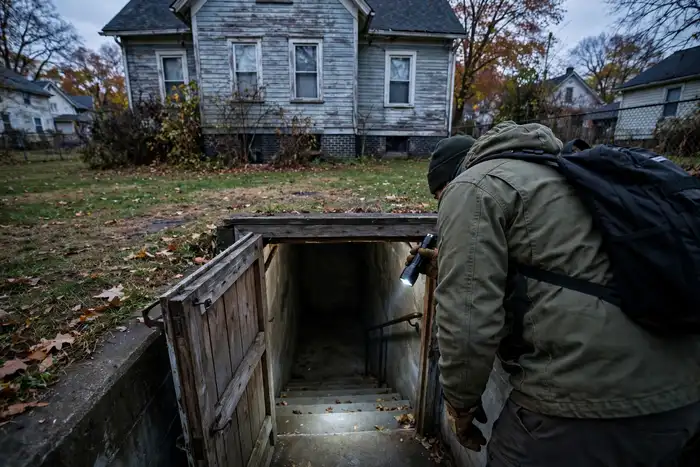
A dead animal in your Lorain walls or attic
Lorain's dead-animal calls peak at the thaw. A hard lake winter seals animals into the city's older houses — mice and squirrels that entered in fall, an opossum under a porch, a raccoon kit left behind in a chimney the previous spring — and cold preserves what warm weather will announce. When the house warms, the smell arrives room by room, often far from the source, because old Lorain construction is full of vertical chases, boxed eaves and porch voids that carry both animals and odor.
The work is investigative before it is physical. A pro reads the pattern of the smell and the flies, narrows the cavity, and removes the source with as little disturbance to the house as possible — then treats the real cause, which is always an entry a living animal used first.
Locating a source in a tall, old house
In a two-story Lorain house with an attic, the search space is vertical. Odor strongest on the first floor can mean a carcass at the bottom of a wall void that an animal entered from the attic; a smell in one upstairs room may trace to a knee-wall space or the void over a porch roof. Flies are the second witness — they gather at the window or light nearest the source. Pros work both clues systematically, checking the predictable resting places: wall bottoms near plumbing, insulation over ceilings, chimney chases, porch voids and basement ceiling cavities, before any opening is made.
The usual Lorain stories behind the smell
Patterns repeat. Rodent bait is the most common author — a poisoned rat or mouse dies where it nests, inside a wall, and in the older east-side housing a rat carcass is a substantial odor event. Next is the sealed-in young animal: a spring exclusion or a homeowner's quick patch that closed an entry before a litter was accounted for. Then the winter death — an animal that entered in fall and died in a cold wall or porch void, discovered at thaw. Knowing which story you are in — especially whether bait was used, and when — cuts the search dramatically, so mention it when you call.
Removal and cleanup, kept measured
Once found, the carcass and the material immediately around it come out, and the cavity is cleaned and treated at the source. The goal is removal, not renovation: a good technician locates precisely so that, if drywall or a ceiling must be opened, the opening is small and correctly placed. Ask up front about patching — most wildlife crews do not perform drywall or plaster repair, and in an older Lorain house with plaster walls you may prefer your own person for that finish work anyway. Everything is handled as the biohazard it is, with the area sanitized before the crew leaves.
If you choose to wait
Unremoved, an odor typically builds, peaks and fades over roughly two weeks — longer for a larger animal or a cold location, and flies can outlast the worst of the smell. Heat and ductwork spread it further than the source warrants. Waiting is a tolerable choice for a faint, clearly fading case in an unused space; it is a miserable one for a strong smell in a bedroom, and in every case it leaves the entry route open for the next animal to repeat the story next season.
Tracing the route so it ends here
The final step is the one that makes the call worthwhile: walking the house for the entry the animal used. In Lorain that means foundation cracks and pipe entries for rodents, soffit and trim gaps for squirrels, porch voids for opossums and skunks, chimney condition for raccoons and bats. Sealing that route — in metal, with the porch screened or the chimney capped as the case requires — converts a bad two weeks into a permanent fix, and it is included in how our crew scopes the job rather than sold as an afterthought.
Common dead animal questions in Lorain
There is a dead-animal smell in my Lorain wall — what do I do?+
Why did the smell only start when the weather warmed up?+
I used rat poison in the basement and now the smell is upstairs — how?+
Will you need to cut into my wall or ceiling?+
How much does dead animal removal cost in Lorain?+
Other Lorain problems that come with dead animals
Our wildlife crew handles these closely related problems — the ones that most often turn up with a dead animal issue.
Got more than dead animals in Lorain?
Dead Animals are rarely the only thing using an attic or yard in Lorain. See everything we handle locally on the Lorain wildlife removal hub, or jump to Ohio wildlife removal.
Serving all of Lorain County
Lorain is one part of Lorain County. See wildlife removal in Lorain County, OH for the county-wide picture — the animals we get called about most, and the other towns we cover.
One call to your Lorain dead animal crew
The longer dead animals stay in the attic, the more they chew and the bigger the cleanup. Call us and tell us about the job — we will confirm the local crew for your county before any work starts.
- Local to Lorain County. ODNR-compliant handling — call to ask about licensing and insurance.
- Humane exclusion. One-way doors and steel sealing, not poison.
- Done right. Removal, exclusion and cleanup.