Rodent Control in Lorain, OH
In Lorain's older housing, rodents are a foundation-level fact until someone seals the foundation. Rats in east-side basements, mice arriving with the first lake cold, voles writing their winter in the lawn — each needs its own answer. Call us and tell us about the job — we will confirm the local crew for your county before any work starts.
Rodents in your Lorain home
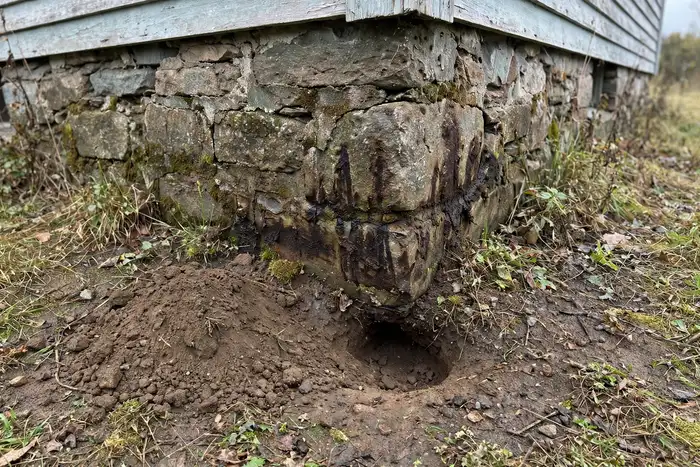
Lorain's signature rodent is the Norway rat, and its address is the older housing near the water and the mills' old neighborhoods, the east side especially. Rats live where the foundations are oldest: they burrow under basement slabs and along walls, slip in where a drain or water line pierces stone or early block, and run nightly routes between the burrow, the alley trash and any food a house offers. A vacant house on the street raises the pressure on every occupied one around it.
Behind the rats comes the rest of the Lorain cast. House mice invade every fall as lake-effect cold arrives, needing only a pencil-width gap at a pipe or a basement window. Voles work the surface all winter under snow, exposed at melt as clipped trails across the lawn, while moles ridge the soil in spring and fall. Bait stations alone have never sealed a single Lorain foundation — identification, exclusion and trapping, in that order, are what end these problems.
Norway rats in older Lorain foundations
A rat burrow system announces itself with entrances a few inches wide at a foundation or slab edge, soil cast beside them, and greasy rub marks where bodies brush the same wall corner nightly. Inside an old Lorain basement, look for droppings along wall runs, gnawed stored goods, and travel lines behind the furnace and water heater. Rats are cautious — new objects on their routes get avoided for days — which is why amateur trapping so often fails and why a pro works their established runs with pre-baited, unset traps before setting. The colony's food and harborage decide its size: unsecured trash, dog food in a garage, and clutter along foundations are the three levers a homeowner actually controls.
The fall mouse arrival, lake edition
House mice ride the first real cold off the lake into Lorain basements, and an older foundation gives them a menu of entries: pipe and conduit holes, coal-era openings never sealed, basement windows in rusted wells, the gap under a side door. Once in, they travel pipe chases upward and nest in wall voids and stored material. Rice-grain droppings along basement walls and in kitchen drawers, plus faint night scratching, are the early signs; a fall inspection that seals entries with copper mesh and metal — never foam alone, which mice chew as nesting material — prevents the winter population from ever establishing.
Voles under snow, moles in the lawn
Lorain's lake-effect snowpack is vole habitat: a stable, insulated layer under which voles run surface trails all winter, clipping grass and gnawing the bark of young trees and shrubs at the snow line. The reveal comes at melt, when a lawn can look mapped. Moles are a different animal doing different damage — solitary insect hunters pushing raised ridges through lawns in the soft soil of spring and fall, not eating plants but drying roots and giving voles ready-made tunnels. Treating a vole problem as a mole problem, or the reverse, wastes a season; the surface trails versus raised ridges distinction is the whole diagnosis.
Why bait-first fails in these houses
Poison has three failures in an older Lorain house. It closes no entries, so the street's rats and the next fall's mice re-enter freely. It kills rodents inside walls and ceilings, converting a rodent problem into a dead-animal odor that can last weeks. And outdoors, it endangers the dogs, hawks and owls that hunt rodents along the river corridor. Exclusion-first control inverts it: seal the foundation and roofline entries in chew-proof material, trap out the residents sealed inside, clean the contaminated areas, and verify quiet on follow-up. Bait, where used at all, supports that program rather than replacing it.
Vacant houses, alleys and the street-wide picture
Honesty about Lorain rat work includes the street. A single sealed house next to a vacant property with an open foundation will still see rats in its yard — exclusion protects the house, which is the part that matters for your basement and kitchen, but neighborhood pressure is real. Securing your own trash, reporting chronically open vacant structures through the city, and keeping foundation plantings trimmed so rats cannot travel unseen all reduce what arrives at your walls. Our crew will tell you plainly which parts of a problem are your house's and which are the block's.
Common rodent questions in Lorain
Why are there rats in my Lorain basement?+
How do mice get into an older Lorain house every fall?+
What made the trails across my lawn when the snow melted?+
Will poison solve a rat problem in an old foundation?+
How much does rodent control cost in Lorain?+
Other Lorain problems that come with rodents
Our wildlife crew handles these closely related problems — the ones that most often turn up with a rodent issue.
Got more than rodents in Lorain?
Rodents are rarely the only thing using an attic or yard in Lorain. See everything we handle locally on the Lorain wildlife removal hub, or jump to Ohio wildlife removal.
Serving all of Lorain County
Lorain is one part of Lorain County. See wildlife removal in Lorain County, OH for the county-wide picture — the animals we get called about most, and the other towns we cover.
One call to your Lorain rodent crew
The longer rodents stay in the attic, the more they chew and the bigger the cleanup. Call us and tell us about the job — we will confirm the local crew for your county before any work starts.
- Local to Lorain County. ODNR-compliant handling — call to ask about licensing and insurance.
- Humane exclusion. One-way doors and steel sealing, not poison.
- Done right. Removal, exclusion and cleanup.