Bat Removal & Exclusion in Cleveland, OH
Droppings collecting under a gable vent or along the foundation below a roost? In Cleveland that usually means big brown bats in a tall old attic — and in Ohio, when the work can happen matters as much as how. Call us and tell us about the job — we will confirm the local crew for your county before any work starts.
Bats in your Cleveland home
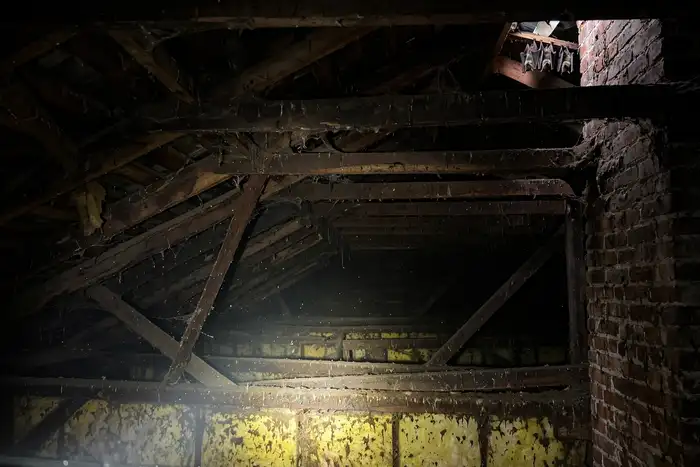
The bat in a Cleveland attic is overwhelmingly the big brown bat, and the city's older housing suits it perfectly. Tall attics on colonials and doubles stay warm under the roof in summer and — unlike in milder climates — stay cold and stable enough in winter that big browns often hibernate in the same attic rather than leaving for a cave. A colony can therefore be a year-round resident, not a summer visitor, and homeowners find it by droppings under the entry, staining at a gable vent, or a bat that wanders into the living space.
Ohio treats bats more strictly than almost any other animal on this page. Exclusion is the only legal removal method, only a licensed operator may do it for hire, and the calendar is fixed by rule. Understanding that calendar is the difference between a colony removed cleanly and one sealed in to die.
The two blackout windows — and the two open ones
Ohio Administrative Code 1501:31-15-03(H)(5) bars bat exclusion from May 16 through July 31 when five or more bats are present, because that is maternity season and the pups cannot fly — and from October 15 through March 31, because bats may be hibernating in the structure. Either window can only be overridden with prior written permission from the Chief of the ODNR Division of Wildlife. That leaves two legal windows: April 1 to May 15 and August 1 to October 15. A bat call in June or January is still worth making — the inspection, entry mapping and scheduling happen then, so the exclusion runs the moment the window opens.
Big brown bats hibernate in Cleveland attics
This is the part that surprises people. A big brown bat colony does not necessarily leave in fall. Big browns tolerate cold roosts and commonly overwinter inside Ohio buildings, tucked into wall voids and attic corners in a state of hibernation. Sealing a house in midwinter on the assumption that the bats have gone can entomb animals that are very much still there — which is precisely why the October-to-March blackout exists. A winter inspection looks for hibernating bats, not just summer entry points.
Where bats enter an older Cleveland house
A bat needs a gap about the width of a finger, and older Cleveland houses offer them at gable vents with failed screening, at chimney flashing pried open by freeze and thaw, behind corner boards and trim that have shrunk, and along the seam where a porch roof meets the wall. Droppings on the ground, a porch floor or a basement window well directly below an entry are the most reliable sign, and they also tell the crew which gaps are active rather than merely possible.
Guano, rabies and a bat in the bedroom
Guano accumulates under a long-used roost and dried droppings can carry the fungus associated with histoplasmosis, so cleanup belongs to someone with proper protection. Bats are also Ohio's most frequently confirmed rabies species, which is why a bat found in a room where someone was sleeping is a health matter, not just a nuisance: do not handle it, keep the room closed, and contact your doctor or local health department for guidance. A bat colony that stays in the attic is not aggressive — the risks are the droppings and any direct contact, not the bats themselves.
How a timed exclusion works
Inside a legal window, the crew seals every gap on the house except the active entries, then fits those with one-way bat valves that let bats drop out at dusk to feed and prevent them returning. Once inspections confirm the colony has left, the valves come off and the last openings are sealed permanently. The job is measured in visits, not hours, and the colony size and the number of gaps on an older, many-gabled house decide how many.
What not to do
Do not caulk the entry gap when you find it. In summer that traps flightless pups; in winter it traps hibernating adults; at any season with bats still inside, it pushes them into the walls and living space. Mothballs, sprays and ultrasonic devices do not move a colony. The legal, working sequence is inspect, wait for the window if needed, exclude one-way, then seal.
Common bat questions in Cleveland
I have bats in my Cleveland attic — how do I get them out?+
Why can't the bats be removed in July or in the middle of winter?+
A bat got into my living room — what should I do?+
How do I know if bats are hibernating in my attic?+
How much does bat removal cost in Cleveland?+
Other Cleveland problems that come with bats
Our wildlife crew handles these closely related problems — the ones that most often turn up with a bat issue.
Got more than bats in Cleveland?
In an older Cleveland house, the gap a bat colony uses is rarely the only opening the freeze-thaw cycle has made. See everything we handle locally on the Cleveland wildlife removal hub, or jump to Ohio wildlife removal.
Serving all of Cuyahoga County
Cleveland is one part of Cuyahoga County. See wildlife removal in Cuyahoga County, OH for the county-wide picture — the animals we get called about most, and the other towns we cover.
One call to your Cleveland bat crew
Bats do not chew their way in, but a colony's droppings build up for years in an old attic, and sealing at the wrong time traps pups or hibernating bats inside. Call us and tell us about the job — we will confirm the local crew for your county before any work starts.
- Local to Cuyahoga County. ODNR-compliant handling — call to ask about licensing and insurance.
- Timed, one-way exclusion. Bat valves in the April 1–May 15 or August 1–October 15 windows, then permanent sealing once every bat is out.
- Done right. Removal, exclusion and cleanup.