Bat Removal & Exclusion in Hampton, GA
Small dark droppings piling up on the porch or the ground under a vent, and shapes darting out of the roof at dusk? That's a bat roost, and in Hampton the time of year decides what can be done about it. Call us and tell us about the job — we will confirm the local crew for your county before any work starts.
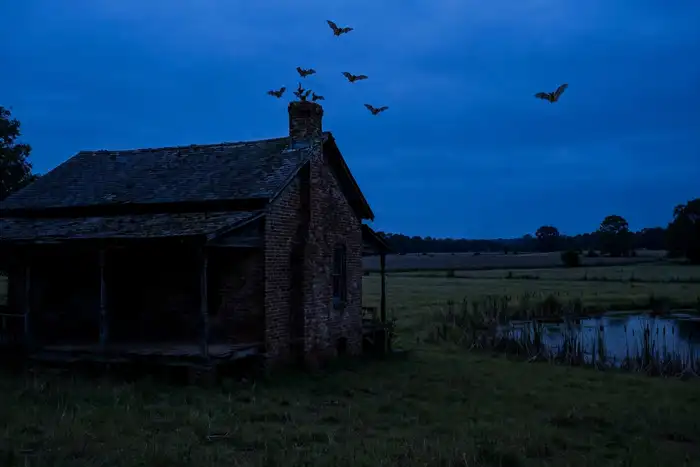
Bats in your Hampton home
Summer is the one real wildlife season in Georgia, and in Hampton that means bats. On warm evenings, farm ponds, hay fields and the wide open land around town produce a lot of insects, and bats come out at dusk to feed on them. During the day they need a warm, dark place to roost. On older Hampton houses, a gable vent with a gap behind the louvers, a loose board at the roof peak, or an old chimney fits that need well. The species pros most often find in attics in this part of Georgia are big brown bats and little brown bats.
Bats don't chew and don't make much noise, so most people find them by their droppings. Look for small dark pellets on the ground, a windowsill or the porch right under where the bats get in. That is the number one sign. Bats are protected, so the work is a timed exclusion, never killing or trapping. The time of year decides when it can be done.
April 1 to July 31: the maternity window
From April 1 through July 31, female bats are raising pups that can't fly. If the exits are sealed during those months, the adults may get out but the pups stay inside and die. That is a smell problem and a legal problem at the same time. The safe times are early spring, before pups are born, and from August into fall, once the young can fly. Georgia DNR does allow exclusion during the window when a licensed Nuisance Wildlife Control Operator does it, but good pros save that for real health risks. If no one can confirm there are no flightless young, the bats stay until August. An inspection can be done any time.
Gable vent only, or the whole attic?
The first thing the inspection decides is how far the bats have spread. Sometimes a small group is roosting only in the space behind a gable vent and hasn't moved into the attic. That's a smaller job: exclude them and seal the vent. Other times there is a full colony spread through the attic with guano built up in the insulation. That's a much bigger job that includes cleanup. Ask your pro which situation you have, because it changes the scope of the work and the quote.
Guano, histoplasmosis and a bat in the house
Bat guano isn't just a mess. Dried guano can carry the fungus that causes histoplasmosis, a lung infection. Its spores get into the air when the guano is swept or disturbed, so cleanup is protected, contained work. If guano can be removed, it should be. But many attics need less insulation replacement than some companies recommend, so ask to see why before you agree to a full tear-out. A single bat in a living area is a different matter. Any bat can carry rabies, so if one is found near a sleeping person or a child, don't let it go and don't handle it. Call your local public health office.
How exclusion works: valves, waiting, sealing
The pro watches the bats come out at dusk to find which openings they use, then hangs bat valves or one-way tubes over those openings. Bats can fly out to feed but can't get back in. Every other gap gets sealed. Most jobs take two or three visits: one to set up, and later ones to confirm the roost is empty, take down the valves and close the last openings. Small, simple roosts can sometimes be finished in one visit.
What not to do
Don't fill the hole with spray foam or caulk while you're up the ladder. If bats are inside, especially pups, they'll die in the wall, and because bats are protected you may also have a legal problem. Ultrasonic devices and repellent sprays don't move a colony out. Neither do mothballs, which should never be put in an attic. The right order is always the same: inspect, wait for the right season, exclude, then seal.
Common bat questions in Hampton
I have bats in my attic in Hampton — how do I get them out?+
When can bats legally and safely be removed in Georgia?+
Are the bats dangerous — what about histoplasmosis or rabies?+
There are bats coming out of my chimney at dusk — what do I do?+
Can't I just seal the gap where the bats get in?+
How much does bat removal cost in Hampton?+
Other Hampton problems that come with bats
Our wildlife crew handles these closely related problems — the ones that most often turn up with a bat issue.
Got more than bats in Hampton?
If bats found a gap in your Hampton roofline, other animals may have found one too. See everything we handle locally on the Hampton wildlife removal hub, or jump to Georgia wildlife removal.
Want the background before you call? Read our statewide guide: Bats in your attic: Georgia law, maternity season and what exclusion costs.
Serving all of Henry County
Hampton is one part of Henry County. See wildlife removal in Henry County, GA for the county-wide picture — the animals we get called about most, and the other towns we cover.
One call to your Hampton bat crew
A bat roost grows every summer, and sealing it at the wrong time traps pups inside the wall. Call us and tell us about the job — we will confirm the local crew for your county before any work starts, and we can plan the exclusion around the calendar.
- Local to Henry County. Georgia DNR-compliant handling — call to ask about licensing and insurance.
- Timed exclusion. Bat valves and one-way devices outside April 1–July 31, then permanent sealing once the roost is empty.
- Done right. Removal, exclusion and cleanup.