Roof Rat & Mouse Control in Hampton, GA
Scratching inside the walls after bedtime, or droppings in the cabinets or along the garage wall? Hampton's fields and older crawlspace houses keep rats and mice busy all year. Call us and tell us about the job — we will confirm the local crew for your county before any work starts.
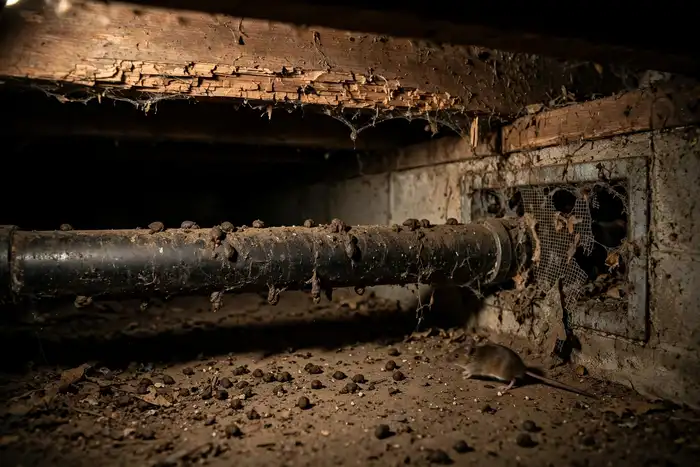
Rodents in your Hampton home
Hampton has rodents for a few reasons. Pasture and hay fields hold large mouse populations, wooded edges hold roof rats, and on busy event weekends at the speedway there is extra food from trash and dropped food around the parking and camping areas. Rats and mice don't need much to settle near people, and in Georgia's mild weather they breed all year.
The house usually provides the way in. Many older Hampton homes sit on crawlspaces, and a missing vent screen or a gap around a pipe lets mice right in under the floor. Roof rats come in higher. They climb brick, siding and downspouts as easily as tree trunks and get in at gable vents and gaps at the roofline. Two things tell you which you have: the time of the noise (rodents are active at night, squirrels in early morning and late afternoon) and the droppings.
Roof rat, Norway rat or mouse?
A roof rat is slender, dark and long-tailed. It climbs, and it nests in the attic and upper walls. A Norway rat is heavier and digs, so it stays low, in crawlspaces, under slabs and around sheds. A mouse is small and leaves scattered droppings in cabinets, drawers and along baseboards. Hampton homes near fields can have more than one kind at once. Knowing which kinds you have tells the pro whether to start sealing at the roof, at the foundation, or both.
Trimming trees isn't enough
The usual advice is to cut back branches that touch the roof. That helps, but roof rats can climb brick, siding and utility lines just as well as a tree. On a house with no trees near it at all, rats can still go up a downspout to an open gable vent. Every entry has to be sealed. Taking away one route to the roof doesn't stop them.
Crawlspaces: the low road in
Crawlspaces are common in this part of Georgia, and rodents of every kind like them. Older houses have foundation vents with rusted or missing screens, gaps where plumbing and wiring pass through the block wall, and access doors that don't close tightly. Mice and Norway rats get in under the floor, then move up into the walls along pipes and wires. Sealing the crawlspace with metal screening and hardware cloth is often the most important part of a rodent job on an older Hampton house.
Why bait alone fails
Poison kills some rodents but does nothing to stop new ones from coming in. With fields full of mice next door, more will come. Poisoned rodents also tend to die inside walls, so a rat problem turns into a dead-animal smell. Bait can be part of a plan, but sealing is what fixes the problem, and trapping clears out the rodents already inside.
Droppings, rub marks and typhus
Rodents leave clear signs. Droppings pile up along the paths they travel. Dark greasy rub marks build up where they squeeze through the same gap or run along the same beam. Fresh chew marks show up on wires, food packaging and wood trim. Rodents also carry disease. They are linked to salmonella, and in the Southeast roof rats are associated with murine (flea-borne) typhus. That's why a full rodent job includes cleaning up droppings, not just catching rodents.
How the job runs
The pro inspects the whole house, from the roof down to the crawlspace, and makes a list of every opening. Each one is sealed with metal: steel mesh, flashing or hardware cloth, because rodents chew through foam and wood. Traps go inside and are checked until no more rodents are being caught. A large infestation takes longer to clear, and a good technician will tell you about how long to expect. Last, contaminated areas are cleaned.
Common rodent questions in Hampton
I hear scratching in my walls at night in Hampton — is it rats?+
Why do I keep getting rodents living in a rural area?+
Will poison or bait get rid of my rats?+
How do roof rats get into the attic?+
Are rats and mice a health risk?+
How much does rodent control cost in Hampton?+
Other Hampton problems that come with rodents
Our wildlife crew handles these closely related problems — the ones that most often turn up with a rodent issue.
Got more than rodents in Hampton?
A gap big enough for a rat lets other animals into a Hampton house too. See everything we handle locally on the Hampton wildlife removal hub, or jump to Georgia wildlife removal.
Want the background before you call? Read our statewide guide: Roof rats in Georgia: why bait alone never ends it.
Serving all of Henry County
Hampton is one part of Henry County. See wildlife removal in Henry County, GA for the county-wide picture — the animals we get called about most, and the other towns we cover.
One call to your Hampton rodent crew
Rats and mice keep breeding through Georgia's mild winters, and every gap you leave open lets more in. Call us and tell us about the job — we will confirm the local crew for your county before any work starts and get the house sealed.
- Local to Henry County. Georgia DNR-compliant handling — call to ask about licensing and insurance.
- Seal first, then trap. Every entry closed with metal, the rodents inside trapped out, and droppings cleaned up.
- Done right. Removal, exclusion and cleanup.