Dead Animal Removal in Brunswick, OH
A smell rising in one room of a nearly new house, stronger each day, with flies gathering at a window in cold weather? In a tight new build, one animal dead in a wall or attic scents the whole home. Call us and tell us about the job — we will confirm the local crew for your county before any work starts.
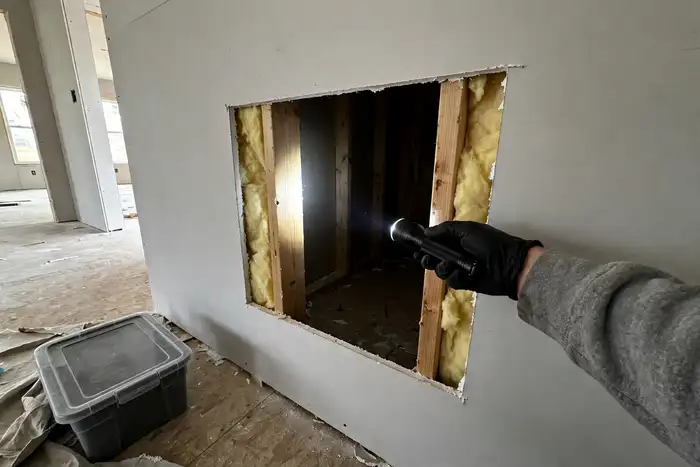
A dead animal in your Brunswick walls or attic
Brunswick homeowners are often baffled that a house this new can have a dead animal inside it. The mechanism is the town's usual one: wildlife from the surrounding fields enters through a construction gap — a mouse at a utility entry in October, an opossum in a deck void, a squirrel in an unsealed roof return — and some of those animals die where they shelter, especially over winter, in a wall void, an attic corner or a chimney chase. The house being new does not keep animals out; it was their ground first, and the gaps were built in.
New construction then amplifies the symptom. Tightly sealed walls and a duct system sized for the whole house move odor from a single void into every room on the run, and Brunswick families often smell a carcass everywhere except where it is. Locating it is methodical work: following the odor gradient room by room, watching fly activity, and reasoning from how animals enter new builds. Then the carcass and contaminated material come out, the void is sanitized, and the entry — the real cause — is sealed.
Winter deaths in new walls
The Brunswick dead-animal peak is winter, and it tracks the fall mouse invasion: animals that entered at first frost sometimes die in the voids they sheltered in — from cold snaps in unheated wall sections, from age or illness, or trapped in a chase they could enter but not leave. Bats that hibernated in an attic can die there too. Because the home is closed and heated all winter, the odor presents strongly and early; spring thaw then reveals anything that froze in an unheated garage wall or deck void.
The bait connection in subdivisions
Ask a street of new Brunswick homes what changed before the smell, and the common answer is that someone put out mouse bait after the fall invasion. Poisoned mice die where they hide — in walls and voids — and a new home's ductwork distributes the result. If bait was used in the last few weeks and a smell has bloomed, that connection is the first hypothesis our crew tests, and the long-term answer is the exclusion work that makes bait unnecessary: seal the entries, trap the indoor mice, end the cycle.
Locating a carcass in a new build
New houses help the search in one way: their voids are predictable. Walls, chases and attic bays follow the plan, utility runs are where drawings say they are, and access panels often exist. Our crew works the odor from the faintest room to the strongest, checks vents and outlets on suspect walls, and watches where flies cluster — even a few flies at one winter window is information. Most carcasses are reached through attics, basements or existing access; a wall opening, when unavoidable, is kept small and placed by evidence, not guesswork.
Removal, sanitation and the repair question
The carcass comes out with the insulation or material immediately around it that cannot be treated, and the void is cleaned and deodorized at the source — air fresheners over an untreated void are theater. Ask about wall repair before work begins: most wildlife companies do not patch drywall, so if an opening proves necessary, plan on your builder, a handyman or your own patch for the finish. On a new Brunswick home still under any builder warranty, that is a question worth asking early — though animal entries are rarely a warranted item.
Sealing the gap that started it
Every carcass in a wall is a receipt for an entry the house should not have. After removal, our crew identifies how the animal got in — in Brunswick, usually a construction gap at a utility pass-through, a roof return, a garage corner or a deck void — and seals it in metal as part of the same plan. Skip that step and the fall invasion restocks the void, and you will meet this smell again in a future winter.
Common dead animal questions in Brunswick
How can a dead animal be inside my new Brunswick house?+
I used mouse bait and now there is a terrible smell. Connected?+
How long would the smell last on its own?+
Will walls have to be opened?+
How much does dead animal removal cost in Brunswick?+
Other Brunswick problems that come with dead animals
Our wildlife crew handles these closely related problems — the ones that most often turn up with a dead animal issue.
Got a live animal problem in Brunswick too?
Whatever died inside entered alive — usually through a construction gap that is still open and still on our crew's sealing list. See everything we handle locally on the Brunswick wildlife removal hub, or jump to Ohio wildlife removal.
Serving all of Medina County
Brunswick is one part of Medina County. See wildlife removal in Medina County, OH for the county-wide picture — the animals we get called about most, and the other towns we cover.
One call to your Brunswick dead animal crew
In a sealed, ducted new home the odor does not stay in one room for long. Finding and removing the source is the only fix that works on your schedule. Call us and tell us about the job — we will confirm the local crew for your county before any work starts.
- Local to Medina County. ODNR-compliant handling — call to ask about licensing and insurance.
- Find it, remove it, clean it. Tracing odor and fly activity to the void, extracting the carcass, and sanitizing at the source.
- Done right. Removal, exclusion and cleanup.