Bat Removal in Zebulon, GA
Bats in Zebulon pick the buildings with history: high farmhouse attics nobody enters twice a year and older in-town rooflines full of small, sun-warmed gaps. Finding the colony means reading an old roof closely.
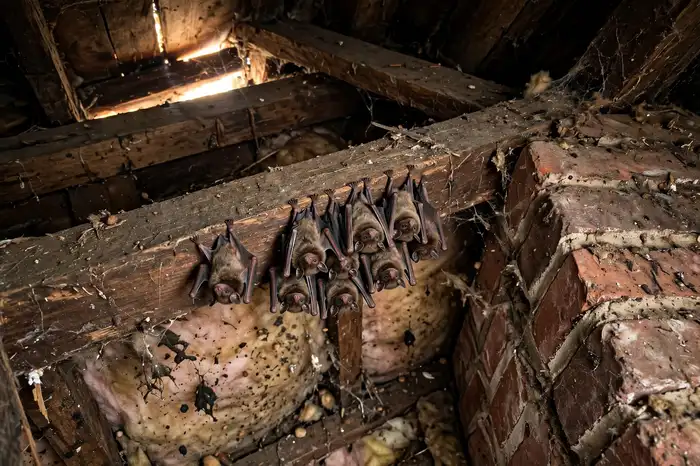
Bat Colonies Settled Into Zebulon Farmhouse and In-Town Attics
The buildings bats love in Zebulon were built long before sealed construction. A farmhouse attic with a high ridge, a brick chimney warming in afternoon sun and louvered vents at each gable is, to a bat, a cliff face with shelter. Older in-town homes near the courthouse core offer the same package on a smaller lot: layered additions, old flashing and quiet roof voids nobody disturbs.
Colonies announce themselves subtly out here. A faint, musky smell in an upstairs room on a hot day. Droppings peppered on a porch roof below one particular eave. Soft chittering at dusk from a wall that faces the last light. Country quiet, which hides so much, actually helps — many Zebulon homeowners first pinpoint a roost by standing in the yard at sundown and watching bats pour from a single gap.
Tall Farmhouse Attics: Pike County’s Favourite Bat Roost
Height and stillness sell a farmhouse attic to bats. Tall rooflines hold warm air near the ridge where colonies cluster, and an attic entered only at Christmas stays undisturbed for seasons. We look high first — ridge boards, chimney shoulders, the warm slope above a south-facing wall — and we check insulation below those points for the droppings that rain down quietly all summer.
Layered Rooflines on Older In-Town Zebulon Homes
Every addition a house gained over fifty years left a seam, and bats collect seams. Where a porch roof meets a wall, where an old vent stack was capped, where flashing around a chimney has curled — each is a gap a bat can vanish into and a homeowner cannot see from the yard. Our dusk watch settles arguments: bats leaving at sundown mark the true entries far better than a ladder tour at noon.
Georgia Maternity Season and Zebulon Bat Timing
Timing is law-driven, not preference-driven. In Georgia, bat exclusion is restricted from April 1 through July 31, the maternity season, because flightless pups cannot leave and sealing a colony in would trap them. If signs point to bats, calling before that window — or as soon as it closes — keeps your options open. We will tell you honestly where your call falls in the season and what can and cannot be done in it.
Guano, Staining and the Quiet Evidence in a Rural Attic
Bat sign accumulates slowly and specifically. Droppings gather in piles beneath a roost rather than scattering like rodent sign, rub marks darken the wood around a well-used gap, and urine staining can speckle insulation below a ridge cluster. We photograph what we find, estimate colony size from the accumulation, and discuss cleaning honestly — a small recent roost and a decade-old colony are very different attic conversations.
One-Way Exclusion on an Old Pike County Roofline
Exclusion works because bats are loyal but not stubborn: fit one-way devices on the active exits, seal every other gap first, and the colony leaves at dusk and finds its doors locked by morning over successive nights. Old rooflines make the sealing half long — there are always more seams than the first count — but rushing it fails, because a colony shut out of gap one will test gap two the same night.
After the Colony Leaves a Zebulon Attic
Once flight is gone for good, the one-way devices come off and those final openings get permanent seals. We re-check the roost points at dusk before closing the job, because one missed seam on a farmhouse with five roof planes restarts the whole story next spring. You will know which gaps were active, which were sealed in advance, and what a returning bat would sound like.
Common bat questions in Zebulon
A bat got inside our Zebulon farmhouse — does that mean there is a colony?+
Why can’t the bats in our attic just be excluded right now?+
How do bats get into an older in-town Zebulon house?+
We found droppings on the porch roof below one eave — is that bats?+
Will bats come back to our Pike County attic next year?+
Is bat guano in a farmhouse attic something to worry about?+
Other Zebulon problems that come with bats
Our wildlife crew handles these closely related problems — the ones that most often turn up with a bat issue.
Got more than bats in Zebulon?
Old attics rarely host only bats. If we find squirrel chewing at the eaves or rodent trails in the same insulation while we are up there, we will show you the evidence and talk through that work separately. See everything we handle locally on the Zebulon wildlife removal hub, or jump to Georgia wildlife removal.
Want the background before you call? Read our statewide guide: Bats in your attic: Georgia law, maternity season and what exclusion costs.
Serving all of Pike County
Zebulon is one part of Pike County. See wildlife removal in Pike County, GA for the county-wide picture — the animals we get called about most, and the other towns we cover.
One call to your Zebulon bat crew
Call us when the first bat appears indoors — earlier calls give us far better options on timing.
- Local to Pike County. Georgia DNR-compliant handling — call to ask about licensing and insurance.
- We let the colony leave on its own wings, then close its doors. Our crew locates roost points and flight paths at dusk, fits one-way exclusion so bats exit and cannot re-enter, and seals the secondary gaps old Pike County rooflines collect — all scheduled lawfully around the young in the colony.
- Done right. Removal, exclusion and cleanup.